

Best selling Consumer Behavior notes
Lecture notes
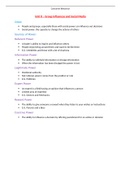
Lecture notes Consumer Behaviour Unit 8: Group Influences and Social Media (5BUS1118-0206-2021)
PopularUnit Objectives 1. Other people and groups, especially those that possess social power, influence our decisions. 2. Word-of-mouth communication is the most important driver of product choice. 3. Opinion leaders’ recommendations are more influential than others when we decide what to buy. 4. Social media changes the way we learn about and select products.
 todd-200
Lecture notes
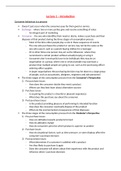
Lecture notes Consumer Behaviour Unit 1 Intoduction (5BUS1118-0206-2021)
PopularLecture notes of the introduction to consumer behaviour
todd-200
Lecture notes
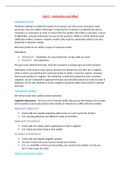
Lecture notes Consumer Behaviour Unit 5: Motivation and Affect (5BUS1118-0206-2021)
PopularUnit Objectives 1. Products can satisfy a range of consumer needs. 2. Consumers experience a range of affective responses to products and marketing messages. 3. The way we evaluate and choose a product depends on our degree of involvement with the product, the marketing message, or the purchase situation
todd-200
Lecture notes
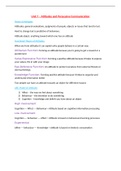
Lecture notes Consumer Behaviour Unit 7: Attiudes and Pursasive Communication(5BUS1118-0206-2021)
PopularUnit Objectives: 1. It’s important for consumer researchers to understand the nature and power of attitudes. 2. We form attitudes in several ways. 3. A need to maintain consistency among all of our attitudinal components motivates us to alter one or more of them. 4. Marketers can try to change attitudes through persuasion in several ways. 5. The communications model identifies several important components when marketers try to change consumers’ attitudes toward products and services. ...
todd-200
Lecture notes
Lecture notes Consumer Behaviour Unit 2: Desicion Making, Buying, Using and Disposing (5BUS1118-0206-2021)
PopularUnit Objectives: 1. The three categories of consumer decision-making are cognitive, habitual, and affective. 2. A cognitive purchase decision is the outcome of a series of stages that results in the selection of one product over competing options. 3. We often fall back on well-learned “rules-of-thumb” to make decisions. 4. Marketers often need to understand consumers’ behaviour rather than a consumer’s behaviour. 5. Many factors at time of purchase influence consumer’s decisio...
todd-200
Lecture notes
Lecture notes Consumer Behaviour Unit 6: The Self, Mind, Gender and Body (5BUS1118-0206-2021)
PopularUnit Objectives 1. Self-concept strongly influences consumer behaviour and why. 2. Products often play a pivotal role in defining self-concept. 3. There are various self-concept theories. 4. The way we think about our bodies is a key component of self-esteem.
todd-200
Lecture notes
Lecture notes Consumer Behaviour Unit 3: Perception (5BUS1118-0206-2021)
PopularUnit Objectives 1. Products and commercial messages often appeal to our senses, but we won’t be influenced by most of them. 2. Perception is a three-stage process that translates raw stimuli into meaning. 3. We interpret the stimuli to which we do pay attention according to learned patterns and expectations. 4. The field of semiotics helps us to understand how marketers use symbols to create meaning.
todd-200
Lecture notes
Lecture notes Consumer Behaviour Unit 4: Learning and Memory (5BUS1118-0206-2021)
PopularUnit Objective 1. It’s important for marketers to understand how consumers learn about products and services. 2. Conditioning results in learning. 3. Learned associations can generalize to other things and why this is important to marketers. 4. We learn by observing others’ behaviour. 5. Our brains process information about brands to retain them in memory. 6. Marketers measure our memories about products.
todd-200
Lecture notes
Consumer Behaviour
PopularStudy notes on the entire consumer behaviour module with notes from Consumer Behaviour: Buying, Having and Being 13th Edition. Including: Unit 1: Intoduction - Chapter 1: Buying, Havign and Being -Chapter 2: Consumer and Social Wellbeing Unit 2: Decion Making -Chapter 9: Decision Making -Chapter 10: Buying, Having and Disposing Unit 3: Perspective Unit 4: Learning and Memory -Chapter 4: Learning and Memory Unit 5: Motivation and Affect -Chapter 5: Motivation and Affect Unit 6: The...
todd-200
Newest Consumer Behavior summaries
Lecture notes
Consumer Behaviour
NewStudy notes on the entire consumer behaviour module with notes from Consumer Behaviour: Buying, Having and Being 13th Edition. Including: Unit 1: Intoduction - Chapter 1: Buying, Havign and Being -Chapter 2: Consumer and Social Wellbeing Unit 2: Decion Making -Chapter 9: Decision Making -Chapter 10: Buying, Having and Disposing Unit 3: Perspective Unit 4: Learning and Memory -Chapter 4: Learning and Memory Unit 5: Motivation and Affect -Chapter 5: Motivation and Affect Unit 6: The...
todd-200
Lecture notes
Lecture notes Consumer Behaviour Unit 2: Desicion Making, Buying, Using and Disposing (5BUS1118-0206-2021)
NewUnit Objectives: 1. The three categories of consumer decision-making are cognitive, habitual, and affective. 2. A cognitive purchase decision is the outcome of a series of stages that results in the selection of one product over competing options. 3. We often fall back on well-learned “rules-of-thumb” to make decisions. 4. Marketers often need to understand consumers’ behaviour rather than a consumer’s behaviour. 5. Many factors at time of purchase influence consumer’s decisio...
todd-200
Lecture notes
Lecture notes Consumer Behaviour Unit 7: Attiudes and Pursasive Communication(5BUS1118-0206-2021)
NewUnit Objectives: 1. It’s important for consumer researchers to understand the nature and power of attitudes. 2. We form attitudes in several ways. 3. A need to maintain consistency among all of our attitudinal components motivates us to alter one or more of them. 4. Marketers can try to change attitudes through persuasion in several ways. 5. The communications model identifies several important components when marketers try to change consumers’ attitudes toward products and services. ...
todd-200
Lecture notes
Lecture notes Consumer Behaviour Unit 4: Learning and Memory (5BUS1118-0206-2021)
NewUnit Objective 1. It’s important for marketers to understand how consumers learn about products and services. 2. Conditioning results in learning. 3. Learned associations can generalize to other things and why this is important to marketers. 4. We learn by observing others’ behaviour. 5. Our brains process information about brands to retain them in memory. 6. Marketers measure our memories about products.
todd-200
Lecture notes
Lecture notes Consumer Behaviour Unit 3: Perception (5BUS1118-0206-2021)
NewUnit Objectives 1. Products and commercial messages often appeal to our senses, but we won’t be influenced by most of them. 2. Perception is a three-stage process that translates raw stimuli into meaning. 3. We interpret the stimuli to which we do pay attention according to learned patterns and expectations. 4. The field of semiotics helps us to understand how marketers use symbols to create meaning.
todd-200
Lecture notes
Lecture notes Consumer Behaviour Unit 8: Group Influences and Social Media (5BUS1118-0206-2021)
NewUnit Objectives 1. Other people and groups, especially those that possess social power, influence our decisions. 2. Word-of-mouth communication is the most important driver of product choice. 3. Opinion leaders’ recommendations are more influential than others when we decide what to buy. 4. Social media changes the way we learn about and select products.
todd-200
Lecture notes
Lecture notes Consumer Behaviour Unit 5: Motivation and Affect (5BUS1118-0206-2021)
NewUnit Objectives 1. Products can satisfy a range of consumer needs. 2. Consumers experience a range of affective responses to products and marketing messages. 3. The way we evaluate and choose a product depends on our degree of involvement with the product, the marketing message, or the purchase situation
todd-200
Lecture notes
Lecture notes Consumer Behaviour Unit 6: The Self, Mind, Gender and Body (5BUS1118-0206-2021)
NewUnit Objectives 1. Self-concept strongly influences consumer behaviour and why. 2. Products often play a pivotal role in defining self-concept. 3. There are various self-concept theories. 4. The way we think about our bodies is a key component of self-esteem.
todd-200
Lecture notes
Lecture notes Consumer Behaviour Unit 1 Intoduction (5BUS1118-0206-2021)
NewLecture notes of the introduction to consumer behaviour
todd-200