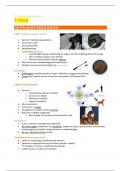
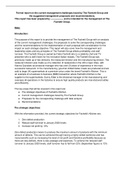
English Literature Poetry Anthology Notes (IGCSE Edexcel)
* English notes are colour coded according to language, form and structure
My Last Duchess Notes
Theme Technique Effect
Power Irony in Title Suggests poem focuses on Duchess but
‘My Last Duchess’ reader learns more about Duke
Indicates power dynamics
Dramatic Monologue Single voice in poem
Form appropriate to poem - focuses on controlling man
Personal Pronouns Reveals Duke’s narcissistic persona
‘My and I’ Emphasised by repetition
Imperative Tone Reveals controlling nature
‘Will't you please look at her?’
Iambic Pentameter Reflects inflexible temperament
Contractions used to fit rhythm of 10 beats per line reflects
Duke controlling others to conform to personal desires
Visually Fixed Structure Stubborn Duke
Jealousy Parenthesis Reveals Duke’s feelings in retrospect
‘How shall I say?’ Pause of hesitation for appropriate means of expressing thoughts
Repetition Emphasises Duke’s anger towards Duchess for excess behaviour
‘Too soon made glad’ Duchess’ gregarious personality regarded as flirtatious
Too easily impressed’
Fricative Tone conveys duke’s jealousy in response to insulted pride
‘Officious fool’
Pride Intensifier Pride prevents Duke from addressing concerns with Duchess
‘I choose never to stoop’ Refusal to compromise as it would be perceived as submissive
Duke decision influenced by poem context: ‘Dowry’ + written 1845
Idea of patriarchal society widely adopted
Caesura Dramatic pause reflects finality of death
End Stopped Line Allows reader to comprehend Duke’s actions (kill Duchess)
‘This grew; I gave commands’
Allusion to Neptune Art reflects Duke’s identity - narcissistic/power-hungry
, Piano Notes
Theme Technique Effect
Loss Rhyme Scheme Harmonious structure reflects persona’s state of fulfilment
A, A, B, B when playing piano
Allows connectivity with reader on feelings of loss
Quartet Stanza Regular stanzas reflects simplicity of childhood
contrasted with harsh sense of loss without piano
Metaphor Lack of guidance without piano
‘The tinkling piano our guide’ Inclusive pronoun to include reader
Encourages resonance with state of emptiness
Nostalgia Sensory Language Encourages reader to resonate with emotions of persona
Sound, Vision, Warmth
Semantic Field of warmth Lawrence reminiscing on physical/emotional childhood warmth
Antithesis Warmth contrasted with ‘winter outside’
Shows harsh reality is product of age
Plosives Reflect persona’s negative emotions
‘Betrays me back’
Enjambment Shows memory cannot be contained
Persona’s uncontrollable emotion
Metaphor Loss of emotional control
‘Flood of remembrance’
Verb choice Conveys deep longing
Passive Voice Controlling/cannot be suppressed
‘The heart of me weeps’
Musical Terminology Reflects impassioned persona
‘Appassionato’ Implies connection between music and emotion
Childhood Symbolism Symbolic of early age
v ‘In the dusk’ Suggests poem is retrospective
Manhood Poet recognises innocence of childhood
Sibilance Conveys soothing piano
‘Vista of years till I see’ Comfort of childhood
Three Stanzas Reflect three stages of life: Childhood, Adulthood, Old Age
Stage changes level of responsibility
Metaphor Responsibility of manhood inhibits pursuing personal desires
’my manhood is cast’ Reinforced by context of poem:
Written in 1913 - Idea of patriarchal society was widely adopted
Simile
‘I weep like a child’ Remembrance of childhood brought persona to innocent state
* English notes are colour coded according to language, form and structure
My Last Duchess Notes
Theme Technique Effect
Power Irony in Title Suggests poem focuses on Duchess but
‘My Last Duchess’ reader learns more about Duke
Indicates power dynamics
Dramatic Monologue Single voice in poem
Form appropriate to poem - focuses on controlling man
Personal Pronouns Reveals Duke’s narcissistic persona
‘My and I’ Emphasised by repetition
Imperative Tone Reveals controlling nature
‘Will't you please look at her?’
Iambic Pentameter Reflects inflexible temperament
Contractions used to fit rhythm of 10 beats per line reflects
Duke controlling others to conform to personal desires
Visually Fixed Structure Stubborn Duke
Jealousy Parenthesis Reveals Duke’s feelings in retrospect
‘How shall I say?’ Pause of hesitation for appropriate means of expressing thoughts
Repetition Emphasises Duke’s anger towards Duchess for excess behaviour
‘Too soon made glad’ Duchess’ gregarious personality regarded as flirtatious
Too easily impressed’
Fricative Tone conveys duke’s jealousy in response to insulted pride
‘Officious fool’
Pride Intensifier Pride prevents Duke from addressing concerns with Duchess
‘I choose never to stoop’ Refusal to compromise as it would be perceived as submissive
Duke decision influenced by poem context: ‘Dowry’ + written 1845
Idea of patriarchal society widely adopted
Caesura Dramatic pause reflects finality of death
End Stopped Line Allows reader to comprehend Duke’s actions (kill Duchess)
‘This grew; I gave commands’
Allusion to Neptune Art reflects Duke’s identity - narcissistic/power-hungry
, Piano Notes
Theme Technique Effect
Loss Rhyme Scheme Harmonious structure reflects persona’s state of fulfilment
A, A, B, B when playing piano
Allows connectivity with reader on feelings of loss
Quartet Stanza Regular stanzas reflects simplicity of childhood
contrasted with harsh sense of loss without piano
Metaphor Lack of guidance without piano
‘The tinkling piano our guide’ Inclusive pronoun to include reader
Encourages resonance with state of emptiness
Nostalgia Sensory Language Encourages reader to resonate with emotions of persona
Sound, Vision, Warmth
Semantic Field of warmth Lawrence reminiscing on physical/emotional childhood warmth
Antithesis Warmth contrasted with ‘winter outside’
Shows harsh reality is product of age
Plosives Reflect persona’s negative emotions
‘Betrays me back’
Enjambment Shows memory cannot be contained
Persona’s uncontrollable emotion
Metaphor Loss of emotional control
‘Flood of remembrance’
Verb choice Conveys deep longing
Passive Voice Controlling/cannot be suppressed
‘The heart of me weeps’
Musical Terminology Reflects impassioned persona
‘Appassionato’ Implies connection between music and emotion
Childhood Symbolism Symbolic of early age
v ‘In the dusk’ Suggests poem is retrospective
Manhood Poet recognises innocence of childhood
Sibilance Conveys soothing piano
‘Vista of years till I see’ Comfort of childhood
Three Stanzas Reflect three stages of life: Childhood, Adulthood, Old Age
Stage changes level of responsibility
Metaphor Responsibility of manhood inhibits pursuing personal desires
’my manhood is cast’ Reinforced by context of poem:
Written in 1913 - Idea of patriarchal society was widely adopted
Simile
‘I weep like a child’ Remembrance of childhood brought persona to innocent state