Biology Notes (IGCSE Edexcel)
1. The nature and variety of living organisms
Characteristics of living organisms:
What are the 8 characteristics shared Movement, Respiration, Sensitivity, Nutrition, Excretion, Reproduction,
by all living organisms (1.1) Growth, Homeostasis
MRSNERGH
Movement (1.1) Organisms can move towards/away
Respiration (1.1) Transferring energy from glucose aerobically or anaerobically
Sensitivity (1.1) Reacting to stimuli in surroundings
Nutrition (1.1) Consuming nutrients in food for energy
Excretion (1.1) Removal of metabolic waste from body
e.g. CO2 from lungs, urea/water from kidneys
Reproduction (1.1) Production of offspring (children) sexually or asexually
Growth (1.1) Permanent increase in size/mass → organism develops into adult form
Homeostasis (1.1) Maintenance of a constant internal environment in the body
Within a narrow range
Magnification Calculations 1. Measure scale bar in mm
2. Convert units if required
3. USE IAM Triangle
Scale Conversions μm → mm → cm → dm → m → km
Calculator - Engineer Symbols 1000 10 10 10 1000
→=÷
←=x
,Variety of living organisms:
Define and give examples of Complex organisms w/ a nucleus
eukaryotic organisms (1.2) E.g. Fungi, Animals, Plants, Protoctists
EIFAPP
Describe the common features shown Multicellular
by plants and give examples (1.2) Chloroplasts → photosynthesis
Cellulose cell walls
Store carbohydrates as sucrose or starch
E.g. Cereals (Maize), Herbaceous Legumes (Peas & Beans)
Describe the common features shown Multicellular
by animals and give examples (1.2) No chloroplast → no photosynthesis
No cellulose cell walls
Store carbohydrates as glycogen
Nervous system → rapid response to changes in environment
Move around
E.g. Mammals (Humans), Insects (Houseflies & Mosquitoes)
Describe the common features shown Some are single-celled
by fungi and give examples (1.2) Others made of hyphae (thread-like structures forming mycelium)
No chloroplast → no photosynthesis
Chitin cell walls
Store carbohydrates as glycogen
Feed on dead organisms by saprotrophic nutrition
(secrete extracellular digestive enzymes into area outside body to digest
food and absorb nutrients)
Some are parasitic (feed on living material)
E.g. Yeast (Single-celled), Mucor (Multicellular)
Describe the common features shown Single-celled and microscopic
by protoctists and give examples (1.2) Some have chloroplasts ∴ like plant cells
Some are like animal cells and usually aquatic
E.g. Chlorella (Like plant cell), Amoeba (Like animal cell)
Define and give examples of Simple organisms w/o nucleus
prokaryotic organisms (1.3) E.g. Bacteria
Describe the common features shown Single-celled and microscopic
by bacteria and give examples (1.3) No nucleus
Murein cell wall
Flagellum to move
Circular chromosome of DNA
Some can photosynthesise
Others respire to gain energy to digest organic matter
E.g. Lactobacillus Bulgaricus, Pneumococcus
Define and give examples of Microorganism that cause disease
pathogenic organisms (1.4) E.g. Influenza virus → flu, HIV → aids,
Tobacco Mosaic Virus → leaf discolours b/c chloroplast can’t form
,Describe the common features shown Particles smaller than bacteria
by viruses (1.4) Only live and reproduce inside living cells
Infect all types of living organisms
Vary in size/shape
Protein coat around genetic material (DNA/RNA)
, 2. Structure and functions in living organisms
Level of Organisation:
What is an organelle (2.1) Small specialised structure found inside cells that perform a particular function
How can organelles be Using a high resolution and high light intensity microscope
viewed
What is a cell (2.1) Group of organelles that work together to perform a function
What is a tissue (2.1) Group of cells that work together to perform the same function
E.g. Xylem and Phloem
What is an organ (2.1) Group of tissues that work together to perform the same function
E.g. Lungs in mammals and leaves on plants
What is an organ system (2.1) Group of organs that work together to perform the same function
E.g. Digestive, Respiratory, Circulatory, Reproduction, Nervous, Excretory, Endocrine
What is an organism (2.1) Group of organ systems that work together to perform the same function
Cell Structure:
Describe the structure and function Organelle containing genetic information (DNA)
of the nucleus (2.2, 2.3) Controls cell activity
Describe the structure and function Structure surrounding cell made of lipids
of the cell membrane (2.2, 2.3) Controls what goes in/out of the cell (e.g. water, glucose, amino acids)
Describe the structure and function Protein rich solution containing cell organelles
of the cytoplasm (2.2, 2.3) Site of chemical reactions
Describe the structure and function Small, highly folded organelle w/ large surface area
of the mitochondria (2.2, 2.3) Site of aerobic respiration
Makes ATP
Describe the structure and function Small organelle
of the ribosome (2.2, 2.3) Produces proteins
Describe the structure and function Organelle containing green chlorophyll
of the chloroplast (2.2, 2.3) → photosynthesis (conversion of light energy to chemical energy)
Describe the structure and function Rigid structure made of cellulose surrounding cell membrane
of the cell wall (2.2, 2.3) Supports cell by allowing it to become turgid
Describe the structure and function Large organelle containing cell sap (weak solution of water sugar, salts)
of the vacuole (2.2, 2.3) Supports cell by allowing turgor pressure to develop
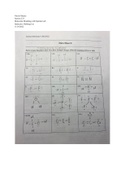
Show the similarities and differences
in the structure of plant and animal
cells (2.4)
1. The nature and variety of living organisms
Characteristics of living organisms:
What are the 8 characteristics shared Movement, Respiration, Sensitivity, Nutrition, Excretion, Reproduction,
by all living organisms (1.1) Growth, Homeostasis
MRSNERGH
Movement (1.1) Organisms can move towards/away
Respiration (1.1) Transferring energy from glucose aerobically or anaerobically
Sensitivity (1.1) Reacting to stimuli in surroundings
Nutrition (1.1) Consuming nutrients in food for energy
Excretion (1.1) Removal of metabolic waste from body
e.g. CO2 from lungs, urea/water from kidneys
Reproduction (1.1) Production of offspring (children) sexually or asexually
Growth (1.1) Permanent increase in size/mass → organism develops into adult form
Homeostasis (1.1) Maintenance of a constant internal environment in the body
Within a narrow range
Magnification Calculations 1. Measure scale bar in mm
2. Convert units if required
3. USE IAM Triangle
Scale Conversions μm → mm → cm → dm → m → km
Calculator - Engineer Symbols 1000 10 10 10 1000
→=÷
←=x
,Variety of living organisms:
Define and give examples of Complex organisms w/ a nucleus
eukaryotic organisms (1.2) E.g. Fungi, Animals, Plants, Protoctists
EIFAPP
Describe the common features shown Multicellular
by plants and give examples (1.2) Chloroplasts → photosynthesis
Cellulose cell walls
Store carbohydrates as sucrose or starch
E.g. Cereals (Maize), Herbaceous Legumes (Peas & Beans)
Describe the common features shown Multicellular
by animals and give examples (1.2) No chloroplast → no photosynthesis
No cellulose cell walls
Store carbohydrates as glycogen
Nervous system → rapid response to changes in environment
Move around
E.g. Mammals (Humans), Insects (Houseflies & Mosquitoes)
Describe the common features shown Some are single-celled
by fungi and give examples (1.2) Others made of hyphae (thread-like structures forming mycelium)
No chloroplast → no photosynthesis
Chitin cell walls
Store carbohydrates as glycogen
Feed on dead organisms by saprotrophic nutrition
(secrete extracellular digestive enzymes into area outside body to digest
food and absorb nutrients)
Some are parasitic (feed on living material)
E.g. Yeast (Single-celled), Mucor (Multicellular)
Describe the common features shown Single-celled and microscopic
by protoctists and give examples (1.2) Some have chloroplasts ∴ like plant cells
Some are like animal cells and usually aquatic
E.g. Chlorella (Like plant cell), Amoeba (Like animal cell)
Define and give examples of Simple organisms w/o nucleus
prokaryotic organisms (1.3) E.g. Bacteria
Describe the common features shown Single-celled and microscopic
by bacteria and give examples (1.3) No nucleus
Murein cell wall
Flagellum to move
Circular chromosome of DNA
Some can photosynthesise
Others respire to gain energy to digest organic matter
E.g. Lactobacillus Bulgaricus, Pneumococcus
Define and give examples of Microorganism that cause disease
pathogenic organisms (1.4) E.g. Influenza virus → flu, HIV → aids,
Tobacco Mosaic Virus → leaf discolours b/c chloroplast can’t form
,Describe the common features shown Particles smaller than bacteria
by viruses (1.4) Only live and reproduce inside living cells
Infect all types of living organisms
Vary in size/shape
Protein coat around genetic material (DNA/RNA)
, 2. Structure and functions in living organisms
Level of Organisation:
What is an organelle (2.1) Small specialised structure found inside cells that perform a particular function
How can organelles be Using a high resolution and high light intensity microscope
viewed
What is a cell (2.1) Group of organelles that work together to perform a function
What is a tissue (2.1) Group of cells that work together to perform the same function
E.g. Xylem and Phloem
What is an organ (2.1) Group of tissues that work together to perform the same function
E.g. Lungs in mammals and leaves on plants
What is an organ system (2.1) Group of organs that work together to perform the same function
E.g. Digestive, Respiratory, Circulatory, Reproduction, Nervous, Excretory, Endocrine
What is an organism (2.1) Group of organ systems that work together to perform the same function
Cell Structure:
Describe the structure and function Organelle containing genetic information (DNA)
of the nucleus (2.2, 2.3) Controls cell activity
Describe the structure and function Structure surrounding cell made of lipids
of the cell membrane (2.2, 2.3) Controls what goes in/out of the cell (e.g. water, glucose, amino acids)
Describe the structure and function Protein rich solution containing cell organelles
of the cytoplasm (2.2, 2.3) Site of chemical reactions
Describe the structure and function Small, highly folded organelle w/ large surface area
of the mitochondria (2.2, 2.3) Site of aerobic respiration
Makes ATP
Describe the structure and function Small organelle
of the ribosome (2.2, 2.3) Produces proteins
Describe the structure and function Organelle containing green chlorophyll
of the chloroplast (2.2, 2.3) → photosynthesis (conversion of light energy to chemical energy)
Describe the structure and function Rigid structure made of cellulose surrounding cell membrane
of the cell wall (2.2, 2.3) Supports cell by allowing it to become turgid
Describe the structure and function Large organelle containing cell sap (weak solution of water sugar, salts)
of the vacuole (2.2, 2.3) Supports cell by allowing turgor pressure to develop
Show the similarities and differences
in the structure of plant and animal
cells (2.4)