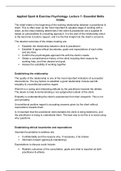
Applied Sport & Exercise Psychology- Lecture 7- Essential Skills
Intake
The initial intake is the beginning of the working relationship between a practitioner &
client. This is often seen as the most important & valuable stage of working with a
client, as the initial meeting determines if the client & practitioner are a suitable fit
based on personalities & consulting approach. It is the start of the relationship which
is the best time to build a rapport, and it is the first insight into the client’s concerns.
The desired outcomes of the intake meeting are:
Establish the relationship between client & practitioner.
Establish & agree ethical boundaries, goals and expectations of each other,
and any fees.
Confirm the psychologists approach fits with the client’s needs.
Obtain a comprehensive history of the client including their reasons for
wanting help, and their desired end goal.
Assess the suitability of working together.
Establishing the relationship
The quality of the relationship is one of the most important indicators of successful
interventions. The key factors to establish a good relationship include warmth,
empathy & unconditional positive regard.
Warmth is a caring and interesting attitude by the practitioner towards the athlete.
The desire to help & demonstrating a non-judgmental outlook of the client.
Empathy is understanding the client’s experiences from their viewpoint. This is not
just sympathy.
Unconditional positive regard is accepting answers given by the client without
reservations towards them.
Is it important that the practitioner demonstrates the client is being listened to, and
the practitioner is trying to understand them. The best way to do this is to avoid using
why questions.
Establishing ethical boundaries and expectations
Important boundaries to address are:
Confidentiality and the reasons why, if necessary, it be broken.
Informed consent (gaining & maintaining)
Expectations to discuss could include:
Realistic outcomes of the consultation, goals and what is required od both
practitioner & athlete.
Intake
The initial intake is the beginning of the working relationship between a practitioner &
client. This is often seen as the most important & valuable stage of working with a
client, as the initial meeting determines if the client & practitioner are a suitable fit
based on personalities & consulting approach. It is the start of the relationship which
is the best time to build a rapport, and it is the first insight into the client’s concerns.
The desired outcomes of the intake meeting are:
Establish the relationship between client & practitioner.
Establish & agree ethical boundaries, goals and expectations of each other,
and any fees.
Confirm the psychologists approach fits with the client’s needs.
Obtain a comprehensive history of the client including their reasons for
wanting help, and their desired end goal.
Assess the suitability of working together.
Establishing the relationship
The quality of the relationship is one of the most important indicators of successful
interventions. The key factors to establish a good relationship include warmth,
empathy & unconditional positive regard.
Warmth is a caring and interesting attitude by the practitioner towards the athlete.
The desire to help & demonstrating a non-judgmental outlook of the client.
Empathy is understanding the client’s experiences from their viewpoint. This is not
just sympathy.
Unconditional positive regard is accepting answers given by the client without
reservations towards them.
Is it important that the practitioner demonstrates the client is being listened to, and
the practitioner is trying to understand them. The best way to do this is to avoid using
why questions.
Establishing ethical boundaries and expectations
Important boundaries to address are:
Confidentiality and the reasons why, if necessary, it be broken.
Informed consent (gaining & maintaining)
Expectations to discuss could include:
Realistic outcomes of the consultation, goals and what is required od both
practitioner & athlete.