

Aight Summary of All the Sexy Fun Things :)
Hematology
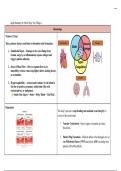
Virchow’s Triad
Three primary factors contribute to thrombosis (clot formation):
1. Endothelial Injury – Damage to the vessel lining (from
trauma, surgery, or inflammation) exposes collagen and
triggers platelet adhesion.
2. Stasis of Blood Flow – Slow or stagnant flow (as in
immobility, varicose veins, long flights) allows clotting factors
to accumulate.
3. Hypercoagulability – An increased tendency for the blood to
clot due to genetics, pregnancy, medications (like oral
⭐
contraceptives), or malignancy.
Stands Out: Injury + Stasis + Sticky Blood = Clot Risk ↑.
Hemostasis
The body’s process to stop bleeding and maintain vessel integrity. It
occurs in three main steps:
1. Vascular Constriction – Injury triggers vasospasm to reduce
blood flow.
2. Platelet Plug Formation – Platelets adhere to the damaged site via
von Willebrand Factor (VWF) and release ADP, recruiting more
platelets (#PutAPatchOnIt).
, 3. Coagulation Cascade – A series of clotting reactions converting
fibrinogen → fibrin, forming a stable clot. Requires calcium &
⭐
vitamin K.
Stands Out: Platelets start it → fibrin seals it.
Factors Leading to Clot Formation Venous Stasis: Pooling blood in low-pressure veins (legs) from
immobility or weak calf-muscle pumping.
Hypercoagulability: From cancer, pregnancy, or meds like oral
contraceptives.
Vascular Injury: Seen in atherosclerosis or diabetes; the body
⭐
responds by forming clots.
Stands Out: Stasis + Sticky Blood + Vessel Damage =
Perfect Storm for Clots.
Fibrin / Lysis Once a clot has done its job, it must dissolve. Within 24–48 hours, tPA
(tissue plasminogen activator) converts plasminogen → plasmin, which
⭐
digests fibrin strands and restores circulation.
Stands Out: tPA = Clot Buster; Plasmin = Fibrin Eraser.
Disorder of Hemostasis: formation of too many clots (inappropriate clot formation)
Thrombosis + risk factors? Thrombosis: Formation of a clot inside a vessel → blocks flow
(commonly legs = DVT).
Risks: Immobility, pregnancy, malignancy.
Risk Factors: immobility, pregnancy, malignancy
Hypocoagulation: evidence of clots/ thrombosis
,Embolism
⭐
When a clot breaks free and travels to another site (heart, lungs, brain).
Stands Out: Thrombosis = stationary clot; Embolism = traveling
clot.
Clotting Factors! Clotting Cascade
,
Hematology
Virchow’s Triad
Three primary factors contribute to thrombosis (clot formation):
1. Endothelial Injury – Damage to the vessel lining (from
trauma, surgery, or inflammation) exposes collagen and
triggers platelet adhesion.
2. Stasis of Blood Flow – Slow or stagnant flow (as in
immobility, varicose veins, long flights) allows clotting factors
to accumulate.
3. Hypercoagulability – An increased tendency for the blood to
clot due to genetics, pregnancy, medications (like oral
⭐
contraceptives), or malignancy.
Stands Out: Injury + Stasis + Sticky Blood = Clot Risk ↑.
Hemostasis
The body’s process to stop bleeding and maintain vessel integrity. It
occurs in three main steps:
1. Vascular Constriction – Injury triggers vasospasm to reduce
blood flow.
2. Platelet Plug Formation – Platelets adhere to the damaged site via
von Willebrand Factor (VWF) and release ADP, recruiting more
platelets (#PutAPatchOnIt).
, 3. Coagulation Cascade – A series of clotting reactions converting
fibrinogen → fibrin, forming a stable clot. Requires calcium &
⭐
vitamin K.
Stands Out: Platelets start it → fibrin seals it.
Factors Leading to Clot Formation Venous Stasis: Pooling blood in low-pressure veins (legs) from
immobility or weak calf-muscle pumping.
Hypercoagulability: From cancer, pregnancy, or meds like oral
contraceptives.
Vascular Injury: Seen in atherosclerosis or diabetes; the body
⭐
responds by forming clots.
Stands Out: Stasis + Sticky Blood + Vessel Damage =
Perfect Storm for Clots.
Fibrin / Lysis Once a clot has done its job, it must dissolve. Within 24–48 hours, tPA
(tissue plasminogen activator) converts plasminogen → plasmin, which
⭐
digests fibrin strands and restores circulation.
Stands Out: tPA = Clot Buster; Plasmin = Fibrin Eraser.
Disorder of Hemostasis: formation of too many clots (inappropriate clot formation)
Thrombosis + risk factors? Thrombosis: Formation of a clot inside a vessel → blocks flow
(commonly legs = DVT).
Risks: Immobility, pregnancy, malignancy.
Risk Factors: immobility, pregnancy, malignancy
Hypocoagulation: evidence of clots/ thrombosis
,Embolism
⭐
When a clot breaks free and travels to another site (heart, lungs, brain).
Stands Out: Thrombosis = stationary clot; Embolism = traveling
clot.
Clotting Factors! Clotting Cascade
,


