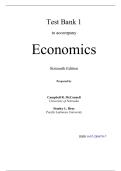
TEST BANK FOR
Contemporary Nursing Issues Trends and Management 7th Edition by Cherry, Jacob
Chapter 1-28
students for legal practice, with specializations that may include constitutional law, criminal law, corporate law, human rights law, or intellectual property law.2.2. Structure of Law ExamsLaw exams typically
have a more structured format compared to business exams, often requiring students to
, Table of Contents
1. The evolution of professional nursing
2. The contemporary image of professional nursing
3. The influence of contemporary trends and issues on nursing education
4. Nursing licensure and certification
5. Theories of nursing practice
6. Nursing research and evidence-based practice
7. Paying for health care in America: Rising costs and challenges
8. Legal issues in nursing and health care
9. Ethical and bioethical issues in nursing and health care
10. Cultural competency and social issues in nursing and health care
11. Complementary and alternative healing
12. Palliative care
13. Workforce advocacy for a professional nursing practice environment
14. Collective bargaining and unions in today’s workplace
15. Information technology in the clinical setting
16. Emergency preparedness and response for today’s world
17. Nursing leadership and management
18. Budgeting basics for nurses
19. Effective communication and conflict resolution
20. Effective delegation and supervision
21. StafÏng and nursing care delivery models
22. Quality improvement and patient safety
23. Health policy and politics: Get involved!
24. Making the transition from student to professional nurse
25. Managing time: The path to high self-performance
26. Contemporary nursing roles and career opportunities
27. Job search: Finding your match
28. The NCLEX-RN ® examination
IntroductionExams serve as a fundamental tool in evaluating a student's understanding of a subject, particularly in fields as diverse as business, law, and mathematics. These disciplines not only have distinct
, Chapter 01: The Evolution of Professional Nursing
Cherry & Jacob: Contemporary Nursing: Issues, Trends, and Management,
7th Edition
MULTIPLE CHOICE
1. Clara Barton is known for:
a.
becoming the first black public health nurse.
b.
establishing the Henry Street Settlement.
c.
founding the American Red Cross.
d.
publicizing the inadequacies of hospital-based nursing schools.
ANS: C
The American Red Cross, founded by Clara Barton in 1882, assisted in efforts to
continue public health nursing.
DIF: Knowledge REF: p. 11
2. Students are assigned to write to their state leaders about an issue affecting their
community. One student writes about the need among rural community for greater access to
acute care services. Which of the following pieces of legislation should the student use as a
reference?
a.
Social Security Act
b.
Hill-Burton Act
c.
Sheppard-Towner Act
d.
U.S. Civil Service Act
ANS: B
The purpose of the Hill-Burton Act was to provide funding to construct hospitals and to
help states in plan for other health care facilities in accordance with the needs of
communities.
IntroductionExams serve as a fundamental tool in evaluating a student's understanding of a subject, particularly in fields as diverse as business, law, and mathematics. These disciplines not only
have distinct structured format compared to business exams, often requiring students to
DIF: Knowledge REF: p. 13
3. The practice of public health nursing and the Henry Street Settlement are credited to:
a.
Mary Breckenridge.
b.
Mary Seacole.
c.
Clara Barton.
d.
Lillian Wald.
ANS: D
Lillian Wald, a pioneer in public health nursing, is best known for the development
and establishment of the Henry Street Settlement.
DIF: Knowledge REF: p. 6
4. Occupational health nursing features beliefs similar to those of which early nursing pioneer?
a.
Lillian Wald
b.
Florence Nightingale
c.
Clara Barton
d.
Mary Seacole
ANS: A
, Lillian Wald developed the first nursing service for occupational health.
DIF: Comprehension REF: p. 10
5. What historical event first led to the recognition of the contribution of blacks to nursing?
a.
Florence Nightingale’s acceptance of black nurses into the first nursing school
b.
The contributions of black nurses at the Pennsylvania Hospital, the first hospital
in America
c.
Mary Seacole’s efforts to care for soldiers during the Crimean War
d.
The work done by wives of wealthy black nobles who carried food and
medicine from house to house during the Middle Ages
ANS: C
Although Nightingale’s school refused Seacole, she was able to make a difference in
the Crimean War and later was recognized for her efforts.
DIF: Comprehension REF: pp. 8-9
IntroductionExams serve as a fundamental tool in evaluating a student's understanding of a subject, particularly in fields as diverse as business, law, and mathematics. These disciplines not only
have distinct
6. World War I contributed to the advancement of health care by:
a.
increasing the number of private care hospitals and decreasing the role of
public health services.
b.
employing a large number of civilians to provide care to returning soldiers
through the Red Cross.
c.
introducing specialists in nursing such as nurse anesthetists.
d.
increasing the number of community health nurses.
ANS: C
World War I offered nurses a chance to enter into new fields of specialization, as is seen in
the example of nurse anesthetists, who became part of surgical teams at the front lines.
DIF: Comprehension REF: p. 11
7. The primary purpose of the Social Security Act of 1935 was to:
a.
increase research that focused on minority groups.
b.
provide medical care for chemically impaired persons.
c.
ensure health care for older adults through a national insurance system.
d.
decrease the public’s financial burden by limiting services offered by local
health departments.
ANS: C
By providing health insurance for older adults, the Social Security Act of 1935 set the
precedent for the passage of the Medicare and Medicaid Acts that followed in 1965, but
the act also provided maternal and child welfare services, rehabilitation for the mentally
and physically challenged, medical care for blind individuals and crippled children, and
unemployment benefits.
DIF: Comprehension REF: p. 12
8. A client asks the nurse, “Can you explain Medicare, an amendment to the Social
Security Act?” The nurse responds that Medicare:
a.
led to many hospital closings, along with a decrease in acute care hospital–
based nursing care.
Contemporary Nursing Issues Trends and Management 7th Edition by Cherry, Jacob
Chapter 1-28
students for legal practice, with specializations that may include constitutional law, criminal law, corporate law, human rights law, or intellectual property law.2.2. Structure of Law ExamsLaw exams typically
have a more structured format compared to business exams, often requiring students to
, Table of Contents
1. The evolution of professional nursing
2. The contemporary image of professional nursing
3. The influence of contemporary trends and issues on nursing education
4. Nursing licensure and certification
5. Theories of nursing practice
6. Nursing research and evidence-based practice
7. Paying for health care in America: Rising costs and challenges
8. Legal issues in nursing and health care
9. Ethical and bioethical issues in nursing and health care
10. Cultural competency and social issues in nursing and health care
11. Complementary and alternative healing
12. Palliative care
13. Workforce advocacy for a professional nursing practice environment
14. Collective bargaining and unions in today’s workplace
15. Information technology in the clinical setting
16. Emergency preparedness and response for today’s world
17. Nursing leadership and management
18. Budgeting basics for nurses
19. Effective communication and conflict resolution
20. Effective delegation and supervision
21. StafÏng and nursing care delivery models
22. Quality improvement and patient safety
23. Health policy and politics: Get involved!
24. Making the transition from student to professional nurse
25. Managing time: The path to high self-performance
26. Contemporary nursing roles and career opportunities
27. Job search: Finding your match
28. The NCLEX-RN ® examination
IntroductionExams serve as a fundamental tool in evaluating a student's understanding of a subject, particularly in fields as diverse as business, law, and mathematics. These disciplines not only have distinct
, Chapter 01: The Evolution of Professional Nursing
Cherry & Jacob: Contemporary Nursing: Issues, Trends, and Management,
7th Edition
MULTIPLE CHOICE
1. Clara Barton is known for:
a.
becoming the first black public health nurse.
b.
establishing the Henry Street Settlement.
c.
founding the American Red Cross.
d.
publicizing the inadequacies of hospital-based nursing schools.
ANS: C
The American Red Cross, founded by Clara Barton in 1882, assisted in efforts to
continue public health nursing.
DIF: Knowledge REF: p. 11
2. Students are assigned to write to their state leaders about an issue affecting their
community. One student writes about the need among rural community for greater access to
acute care services. Which of the following pieces of legislation should the student use as a
reference?
a.
Social Security Act
b.
Hill-Burton Act
c.
Sheppard-Towner Act
d.
U.S. Civil Service Act
ANS: B
The purpose of the Hill-Burton Act was to provide funding to construct hospitals and to
help states in plan for other health care facilities in accordance with the needs of
communities.
IntroductionExams serve as a fundamental tool in evaluating a student's understanding of a subject, particularly in fields as diverse as business, law, and mathematics. These disciplines not only
have distinct structured format compared to business exams, often requiring students to
DIF: Knowledge REF: p. 13
3. The practice of public health nursing and the Henry Street Settlement are credited to:
a.
Mary Breckenridge.
b.
Mary Seacole.
c.
Clara Barton.
d.
Lillian Wald.
ANS: D
Lillian Wald, a pioneer in public health nursing, is best known for the development
and establishment of the Henry Street Settlement.
DIF: Knowledge REF: p. 6
4. Occupational health nursing features beliefs similar to those of which early nursing pioneer?
a.
Lillian Wald
b.
Florence Nightingale
c.
Clara Barton
d.
Mary Seacole
ANS: A
, Lillian Wald developed the first nursing service for occupational health.
DIF: Comprehension REF: p. 10
5. What historical event first led to the recognition of the contribution of blacks to nursing?
a.
Florence Nightingale’s acceptance of black nurses into the first nursing school
b.
The contributions of black nurses at the Pennsylvania Hospital, the first hospital
in America
c.
Mary Seacole’s efforts to care for soldiers during the Crimean War
d.
The work done by wives of wealthy black nobles who carried food and
medicine from house to house during the Middle Ages
ANS: C
Although Nightingale’s school refused Seacole, she was able to make a difference in
the Crimean War and later was recognized for her efforts.
DIF: Comprehension REF: pp. 8-9
IntroductionExams serve as a fundamental tool in evaluating a student's understanding of a subject, particularly in fields as diverse as business, law, and mathematics. These disciplines not only
have distinct
6. World War I contributed to the advancement of health care by:
a.
increasing the number of private care hospitals and decreasing the role of
public health services.
b.
employing a large number of civilians to provide care to returning soldiers
through the Red Cross.
c.
introducing specialists in nursing such as nurse anesthetists.
d.
increasing the number of community health nurses.
ANS: C
World War I offered nurses a chance to enter into new fields of specialization, as is seen in
the example of nurse anesthetists, who became part of surgical teams at the front lines.
DIF: Comprehension REF: p. 11
7. The primary purpose of the Social Security Act of 1935 was to:
a.
increase research that focused on minority groups.
b.
provide medical care for chemically impaired persons.
c.
ensure health care for older adults through a national insurance system.
d.
decrease the public’s financial burden by limiting services offered by local
health departments.
ANS: C
By providing health insurance for older adults, the Social Security Act of 1935 set the
precedent for the passage of the Medicare and Medicaid Acts that followed in 1965, but
the act also provided maternal and child welfare services, rehabilitation for the mentally
and physically challenged, medical care for blind individuals and crippled children, and
unemployment benefits.
DIF: Comprehension REF: p. 12
8. A client asks the nurse, “Can you explain Medicare, an amendment to the Social
Security Act?” The nurse responds that Medicare:
a.
led to many hospital closings, along with a decrease in acute care hospital–
based nursing care.