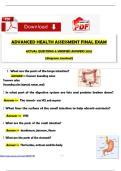
ADVANCED HEALTH ASSESSMENT FINAL EXAM
ACTUAL QUESTIONS & VERIFIED ANSWERS 2025
[diagrams involved]
1. What are the parts of the large intestine?
ANSWER >> Cecum
2. In what part of the digestive system are fats and proteins broken down?
Answer >> The stomach - uses HCL and enzymes
3. What lines the surface of the small intestine to help absorb nutrients?
Answer >> Villi
4. What are the parts of the small intestine?
Answer >> duodenum, jejunum, ileum
5. What are the parts of the stomach?
Answer >> The fundus, antrum and the body
https://www.stuvia.com/user/MBOFFIN
, 6. What is peristalsis?
Answer >> The sequential autonomic muscular contractions that move nutrients along the digestive
tract
7. What part of the digestive system is responsible absorbing water, lubricating
contents, and putrefaction?
Answer >> Large intestine
8. What is putrefaction?
Answer >> Changes produced by action of bacteria and microorganisms to decompose undigested food,
unabsorbed animo acids, cell debris, and dead bacteria
9. What is the function of the gallbladder?
Answer >> Concentrates and stores bile
10. What abdominal organ has both exocrine and endocrine functions? What are
the functions?
Answer >> Exocrine - produces digestive enzymes
Endocrine - produces insulin
11. What is the function of the spleen?
Answer >> Filter blood and help fight infections
https://www.stuvia.com/user/MBOFFIN
, 12. What abdominal organ(s) is located in the retroperitoneum?
Answer >> Kidneys
13. What part of the social history do you always want to make sure you
ask about when assessing and abdominal complaint?
Answer >> Alcohol use/abuse
14. When you are palpating your patient's abdomen where do you want to
look for clues to the severity of their pain?
Answer >> Their face
15. What is pyrosis?
Answer >> Heartburn
https://www.stuvia.com/user/MBOFFIN
, 16. What type of disease is IBS, generally? Answer >> Functional
17. 45 y/o female presents to your office complaining of achey, burning epigas-
tric pain, especially after she eats. Your cardiac workup is negative. What is high
on your differential? What lifestyle modifications do you suggest? Answer >>
GERD
Stay sitting up after eating
Wait a few hours after eating to go to sleep
Avoid spicy foods, chocolate, catteine, acidic foods, etc
18. Your patient comes in with loss of appetite for the last few weeks. What
chronic medical disease do you want to keep on your differential? Answer >>
Malignancy
19. Proton pump inhibitors can increase the risk of what infectious disease?
Answer >> C. dif
20. When you are working up a patient with a chief complaint of nausea
what do you want to ask them? Answer >> Pregnant?
When nauseous?
Have you taken anything?
Vomiting?
Relationship to food?
Bowel changes?
Taking medications?
https://www.stuvia.com/user/MBOFFIN
ACTUAL QUESTIONS & VERIFIED ANSWERS 2025
[diagrams involved]
1. What are the parts of the large intestine?
ANSWER >> Cecum
2. In what part of the digestive system are fats and proteins broken down?
Answer >> The stomach - uses HCL and enzymes
3. What lines the surface of the small intestine to help absorb nutrients?
Answer >> Villi
4. What are the parts of the small intestine?
Answer >> duodenum, jejunum, ileum
5. What are the parts of the stomach?
Answer >> The fundus, antrum and the body
https://www.stuvia.com/user/MBOFFIN
, 6. What is peristalsis?
Answer >> The sequential autonomic muscular contractions that move nutrients along the digestive
tract
7. What part of the digestive system is responsible absorbing water, lubricating
contents, and putrefaction?
Answer >> Large intestine
8. What is putrefaction?
Answer >> Changes produced by action of bacteria and microorganisms to decompose undigested food,
unabsorbed animo acids, cell debris, and dead bacteria
9. What is the function of the gallbladder?
Answer >> Concentrates and stores bile
10. What abdominal organ has both exocrine and endocrine functions? What are
the functions?
Answer >> Exocrine - produces digestive enzymes
Endocrine - produces insulin
11. What is the function of the spleen?
Answer >> Filter blood and help fight infections
https://www.stuvia.com/user/MBOFFIN
, 12. What abdominal organ(s) is located in the retroperitoneum?
Answer >> Kidneys
13. What part of the social history do you always want to make sure you
ask about when assessing and abdominal complaint?
Answer >> Alcohol use/abuse
14. When you are palpating your patient's abdomen where do you want to
look for clues to the severity of their pain?
Answer >> Their face
15. What is pyrosis?
Answer >> Heartburn
https://www.stuvia.com/user/MBOFFIN
, 16. What type of disease is IBS, generally? Answer >> Functional
17. 45 y/o female presents to your office complaining of achey, burning epigas-
tric pain, especially after she eats. Your cardiac workup is negative. What is high
on your differential? What lifestyle modifications do you suggest? Answer >>
GERD
Stay sitting up after eating
Wait a few hours after eating to go to sleep
Avoid spicy foods, chocolate, catteine, acidic foods, etc
18. Your patient comes in with loss of appetite for the last few weeks. What
chronic medical disease do you want to keep on your differential? Answer >>
Malignancy
19. Proton pump inhibitors can increase the risk of what infectious disease?
Answer >> C. dif
20. When you are working up a patient with a chief complaint of nausea
what do you want to ask them? Answer >> Pregnant?
When nauseous?
Have you taken anything?
Vomiting?
Relationship to food?
Bowel changes?
Taking medications?
https://www.stuvia.com/user/MBOFFIN