Psychology 100 Final Exam
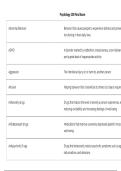
Abnormal Behavior Behavior that causes people to experience distress and preven
functioning in their daily lives.
ADHD A disorder marked by inattention, impulsiveness, a low toleranc
and a great deal of inappropriate activity
Aggression The intentional injury of, or harm to, another person
Altruism Helping behavior that is beneficial to others but clearly require
Antianxiety drugs Drugs that reduce the level of anxiety a person experiences, e
reducing excitability and increasing feelings of well-being
Antidepressant drugs Medications that improve a severely depressed patient's mood
well-being
Antipsychotic Drugs Drugs that temporarily reduce psychotic symptoms such as ag
hallucinations, and delusions.
, Psychology 100 Final Exam
Antisocial Personality Disorder A disorder in which individuals show no regard for the moral an
of society or the rights of others.
Anxiety Disorder The occurrence of anxiety without an obvious external cause, a
functioning.
Assumed-similarity bias The tendency to think of people being similar to oneself, even
them for the first time
Attitudes Evaluations of a particular person, behavior, belief, or concept
Attribution Theory The theory of personality that seeks to explain how we decide
samples of an individual's behavior, what the specific causes of
behavior are.
Autism A severe developmental disability that impairs children's ability
and relate to others.
Aversive conditioning A form of therapy that reduces the frequency of undesired beh
an aversive, unpleasant stimulus with undesired behavior
Abnormal Behavior Behavior that causes people to experience distress and preven
functioning in their daily lives.
ADHD A disorder marked by inattention, impulsiveness, a low toleranc
and a great deal of inappropriate activity
Aggression The intentional injury of, or harm to, another person
Altruism Helping behavior that is beneficial to others but clearly require
Antianxiety drugs Drugs that reduce the level of anxiety a person experiences, e
reducing excitability and increasing feelings of well-being
Antidepressant drugs Medications that improve a severely depressed patient's mood
well-being
Antipsychotic Drugs Drugs that temporarily reduce psychotic symptoms such as ag
hallucinations, and delusions.
, Psychology 100 Final Exam
Antisocial Personality Disorder A disorder in which individuals show no regard for the moral an
of society or the rights of others.
Anxiety Disorder The occurrence of anxiety without an obvious external cause, a
functioning.
Assumed-similarity bias The tendency to think of people being similar to oneself, even
them for the first time
Attitudes Evaluations of a particular person, behavior, belief, or concept
Attribution Theory The theory of personality that seeks to explain how we decide
samples of an individual's behavior, what the specific causes of
behavior are.
Autism A severe developmental disability that impairs children's ability
and relate to others.
Aversive conditioning A form of therapy that reduces the frequency of undesired beh
an aversive, unpleasant stimulus with undesired behavior