Emergency Med Exam 1
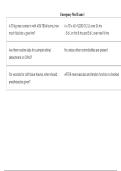
A 70 kg man comes in with 40% TBSA burns, how 4 x 70 x 40 =11,200 (11.2 L) over 24 hrs
much fluid do u give him? - 5.6 L in first 8 hrs and 5.6 L over next 16 hrs
Are there routine labs for a simple retinal No unless other comorbidities are present
detachment or CRVO?
For wounds for soft tissue trauma, when should AFTER neurovascular and tendon function is checked
anesthesia be given?
, Emergency Med Exam 1
How are burns classified? 1st degree: epidermis involved, looks like sunburn
- features: red, dry, painful, blanches w pressure, NO BL
- healing: 3-6 days and no scar
2nd degree: epidermis + some dermis
- superficial partial thickness: blisters form, moist, weep
blanches; heals in 2-3 weeks
- deep partial thickness: pale or mottled, some blisterin
blanching, less painful; may need graft to heal and high
scarring
3rd degree: epidermis and dermis destroyed
- features: leathery, dry, charred, not painful, no blanchi
- healing: needs graft
4th degree: all the way through skin to muscle, fat, bone
- features: eschar, painless, loss of muscle or bone
- healing: needs surgery or amputation
, Emergency Med Exam 1
How are FB and bites managed in the ED? FB:
- remove if safe
- X-RAY for glass/metal, US for wood/plastic
Bites:
Dog = crush/tear → get X-RAY
Cat = puncture → high infx risk
Human = high infx risk
Prophylaxis:
- rabies & tetanus
- amoxicillin clavulanate
, Emergency Med Exam 1
How can Neuroleptic Malignant Syndrome be Onset:
differentiated from Seratonin Syndrome? - SS = acute
- NMS = more gradual
Neuro signs:
- SS = hyperreflexia, clonus, tremor
- NMS = hyperreflexia, lead pipe rigidity
Pupils:
- SS = dilated
- NMS = normal
GI:
- SS = diarrhea
- NMS = normal
How does TBSA for burns translate to < 10% = outpatient
management? > 10% = burn center
A 70 kg man comes in with 40% TBSA burns, how 4 x 70 x 40 =11,200 (11.2 L) over 24 hrs
much fluid do u give him? - 5.6 L in first 8 hrs and 5.6 L over next 16 hrs
Are there routine labs for a simple retinal No unless other comorbidities are present
detachment or CRVO?
For wounds for soft tissue trauma, when should AFTER neurovascular and tendon function is checked
anesthesia be given?
, Emergency Med Exam 1
How are burns classified? 1st degree: epidermis involved, looks like sunburn
- features: red, dry, painful, blanches w pressure, NO BL
- healing: 3-6 days and no scar
2nd degree: epidermis + some dermis
- superficial partial thickness: blisters form, moist, weep
blanches; heals in 2-3 weeks
- deep partial thickness: pale or mottled, some blisterin
blanching, less painful; may need graft to heal and high
scarring
3rd degree: epidermis and dermis destroyed
- features: leathery, dry, charred, not painful, no blanchi
- healing: needs graft
4th degree: all the way through skin to muscle, fat, bone
- features: eschar, painless, loss of muscle or bone
- healing: needs surgery or amputation
, Emergency Med Exam 1
How are FB and bites managed in the ED? FB:
- remove if safe
- X-RAY for glass/metal, US for wood/plastic
Bites:
Dog = crush/tear → get X-RAY
Cat = puncture → high infx risk
Human = high infx risk
Prophylaxis:
- rabies & tetanus
- amoxicillin clavulanate
, Emergency Med Exam 1
How can Neuroleptic Malignant Syndrome be Onset:
differentiated from Seratonin Syndrome? - SS = acute
- NMS = more gradual
Neuro signs:
- SS = hyperreflexia, clonus, tremor
- NMS = hyperreflexia, lead pipe rigidity
Pupils:
- SS = dilated
- NMS = normal
GI:
- SS = diarrhea
- NMS = normal
How does TBSA for burns translate to < 10% = outpatient
management? > 10% = burn center