TORT LAW
2024-2025
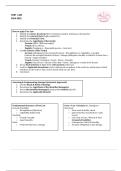
How to apply Tort Law
1. Identify the Actors Involved (Direct victims/secondary, tortfeasors, third party)
2. Identify the relevant facts (legal perspective)
3. Identify the Potential Torts
4. Determine the Legal Basis of the tort(s)
- German: (§823 I BGB may apply)
- French: (Art 1240 Cc)
- English: (Negligence – Reasonable person – Case law)
5. List the Criteria of the Tort(s)
- German: Infringement of a protected interest - Wrongfulness or culpability - Causality
between the wrongful behavior & harm / damage (Adequate causality as called in German Law =
Factual + Legal causality)
- French: Conduct / Omission > Fault > Harm > Causality
- English: Duty of Care > Breach of the duty > Harm / damage as a result of the breach
6. Assess Each Criterion in light of the relevant facts of the case
7. Look for Applicable Exceptions (such as defenses & exceptions to the mail rule, which may be listed
elsewhere in the Code or may even be based solely on case law)
8. Conclusion
Assessing & Compensating damage (Systematic Approach)
1. List the Heads & Kinds of damage
2. Determine the Legal Basis of the identified damage(s)
3. Assess the identified damage(s) and provide evidence (proof)
4. Determine the Applicable Remedy
Fundamental Structure of Tort Law Facts + Law = Decision Ex: Donoghue v
Ground of Liability Stevenson
o Wrongfulness (Objective) o Facts: snail in bottle, shock,
o Culpability (Subjective) o gastroenteritis, manufacturer could
Causality revent
o Factual Casuality o Law: Duty of Care / Breach of Duty
o Legal Causality (Ground of Liability)
Harm o Consequence: Harm & Causality
o Protected Interests / damage o Decision: Obligation to pay damage
, Tort Law
FAULT LIABILITY
Type of liability in which the claimant must prove that the defendants conduct was either negligent or
intentional and it is responsible for causing the damage, different than strict liability where liability does
not depend on actual negligence or intent to harm but instead, a person is legally responsible for the
consequences flowing from an activity even in the absence of fault or criminal intent.
Fault liability only occurs when we are dealing with physical injury and property damage. All other types
of torts (e.g., employers or state liability)
ENGLAND
Fault liability under English law is considered negligence.
How to asses negligence: (4 steps)
1. Was there a duty of care owed?
To see if a duty of care is owed, 3 things must be analyzed:
- Proximity
- Foreseeability
- Whether is just and reasonable to hold the defendant liable
2. Was the duty of care breached?
In the first step whether it was established that there was a duty of care owed. Considering that there is a
duty of care and asses this, 5 factors (relevant in all 3 jurisdictions also known as 4 factor test ) have to be
analyzed:
- Probability of causing the harm: probability was above the socially accepted level and whether the
activity that caused the harms was indeed negligent, (if the victim acted in a way that made the harm
more likely) then the probability of causing the harm was high
- Seriousness of the expected harm: The more serious the harm, the higher the threshold of care that
should have been exercised; Consider the following diagram.
Pure economic loss < Damage to personality rights < Property damage < Personal injury < Death
- The burden of precautionary measures : What the defendant could have done to avoid the harm. And
one-off v continuous measures.
- Character and benefit of the conduct : Was the conduct beneficial to society in general?
Was the defendant acting in the public interest?
- Skills of the defendan/Reasonable person: Personal capacities of the defendant, what he ought to know
or had known to avoid the risk, (here is mentioned that an objective test is applied) Robinson v Chief
Constable of West Yorkshire Police [2018] UKSC 4.
3. What damage has been done?
The damage suffered by the claimant (physical injury or pain and suffer) which are non-pecuniary losses.
Consequential economic loss including loss of income and medical cost or if the was pure economic loss (all
these are material losses). Note: pure economic loss is only compensated in France.
4. Causation (see chapter on causation for a more detailed evaluation):
In England, this is done using the “but-for test”, to explain whether there was more than 50% probability that
such act would have caused the damage. Hence, it must be shown that if it had not been for the defendant’s
action, the loss would have never occurred, also if the damage identified (in step 3) was foreseeable.
SECONDARY VICTIMS
Primary victims are those who suffer the loss. But there are also secondary victims that do not suffer
the direct damage but can be for example; the spouse, parent, sibling of the primary victim.
Page 2
, Tort Law
ENGLAND
Under English law, secondary victims are never compensated any economic losses. they can only be awarded damages
of loss of amenity, pain and suffering, which are non-pecuniary losses. To see if they can be awarded mental harm or
loss of consortium the Alcock v. Chief constable of South Yorkshire police established 5 criteria that have to be met:
1. The mental harm must be recognized illness as a consequence of the event
2. There should be a proximity of relationship between the primary and secondary victim
3. There should be a proximity between time and space with the accident (e.g., did the secondary victim witness
the accident or the aftermath of it?)
4. The harm must be caused from shock (English law defines shock as something that does not develop over
time but happens immediately)
5. It must have been foreseeable that a normal person would develop mental harm as a consequence of the
event.
FAULT LIABILITY
GERMANY
1) Anyone who intentionally or negligently violates the life, body, health, freedom, property or any other right of
another person is obliged to compensate the other person for the resulting damage.
2) The same obligation applies to anyone who violates a law intended to protect another. If, according to the
content of the law, a violation of this is possible even without fault, the obligation to pay compensation only
applies in the case of fault.
Fault liability in Germany requires:
A. Tatbestand (infringement) objective fault, Breach of a right § 823I, statute §823II, contra bonos
mores-intentional §826,
B. Rechtswidrigkeit (Unlawfulness/wrongfulness)
C. Verschulden (culpability, attributable) subjective fault §276 BGB harm and casualty.
Main Grounds:
- Violation of Protected Interest → §823 I
- Violation of written legal norm (statutory duty) → §823 II
- Violation of good morals → §826
Specific Grounds:
- Breach of official duty → §839
- Statements endangering another’s creditworthiness → §824
- Violation sexual integrity → §825
Strict liability
- Liability for the harm/damage caused by employees → §831
- Liability for supervisors of minors/mentally incapable persons → §832
- Liability for harm/damage caused by animals → §833
- Liability for the harm/damage caused by objects → §836-38
1. Violation of a codified normative rule: Here mentioning provision §823I is important, which states that
the infringement of the right to life, physical integrity, health, personal liberty and other right constitutes a
violation of this rule. On the other hand, if the act was intentional or contra bonos more the §826 can be
mentioned.
2. Unlawfulness: If one of the above provisions was breached, then the conduct was unlawful, unless, there is
ground for justification, thus, is necessary to mention how the provisions above were violated by the
defendant.
Page 3
, Tort Law
3. Negligence Assessment: Always begin this step by mentioning provision §276
Verschulden which states that a person acts negligently if he fails to exercised reasonable care required by
society (objective test). Then to see if indeed there was no reasonable care, the 5 negligent factors under
English law (4 Factors approach for negligence / Global factor approach), apply in the exact same manner
(probability of causing the harm, seriousness of the harm, burden of precautionary measures, character of
conduct and skills of the defendant).
4. Damage: same as English law applies, the type of damage done (physical injury? Consequential economic
loss, mental harm...) note that pure economic loss is rarely compensated under German law.
5. Causation (see chapter on causation for a more detailed evaluation)
a. Two rules used under German law to establish causation
Adequacy theory: whether an optimal observer would have understood that the defendants conduct could
indeed lead to the type of damage done
b. Scope of the rule: whether the violated rule – covers the damage done (e.g., if it falls under the
protected interests stated in the provision)
SECONDARY VICTIMS
GERMANY
Loss of amenity is never compensated to secondary victims, neither is economic loss, unless the primary victim died as
the result of the tort. Loss of consortium is compensated, according to §844 - 845 for both death and injury to the
primary victim. In the case of mental harm, which does not have to be a recognized illness, as long as the primary and
secondary victims had a close relationship.
To claim mental harm when a victim is only injured, then some criteria have to be met:
a. They are close relatives
b. The secondary victim suffered a recognized mental illness
c. A dramatic event took place that caused the mental harm
d. It was foreseeable that the secondary victim would have suffered the mental harm as a result of the
defendants conduct to the primary victim
FAULT LIABILITY
FRANCE
To determine fault liability the following 3 steps, have to be taken into account:
1. Show faute intention or negligence:
You must always mention that faute must be present to hold the defendant liable under French law. Then, you
mention Art. 1240 and 1241;
- Article 1240 CC: “Any human action whatsoever which causes harm to another creates an obligation in
the person by whose fault it occurred to make reparation for it.”
- Article 1241 CC: “Everyone is liable for harm which he has caused not only by his action, but also by his
failure to act or his lack of care.”
The former states that any person who causes harm to another must provide reparation for it. The latter
states that a person is liable if acted negligently against the standard of bonus pater families (Refers to a
standard of care, analogous to that if the reasonable man in English law). Therefore, these two elements are
what constitute faute.
Hence, you first say that Art. 1240 has been breached and explain how, then, you mention Art. 1241 and
analyze the 5 negligence criteria that are the same in all jurisdictions or (4 Factors approach for negligence /
Global factor approach)
Page 4
2024-2025
How to apply Tort Law
1. Identify the Actors Involved (Direct victims/secondary, tortfeasors, third party)
2. Identify the relevant facts (legal perspective)
3. Identify the Potential Torts
4. Determine the Legal Basis of the tort(s)
- German: (§823 I BGB may apply)
- French: (Art 1240 Cc)
- English: (Negligence – Reasonable person – Case law)
5. List the Criteria of the Tort(s)
- German: Infringement of a protected interest - Wrongfulness or culpability - Causality
between the wrongful behavior & harm / damage (Adequate causality as called in German Law =
Factual + Legal causality)
- French: Conduct / Omission > Fault > Harm > Causality
- English: Duty of Care > Breach of the duty > Harm / damage as a result of the breach
6. Assess Each Criterion in light of the relevant facts of the case
7. Look for Applicable Exceptions (such as defenses & exceptions to the mail rule, which may be listed
elsewhere in the Code or may even be based solely on case law)
8. Conclusion
Assessing & Compensating damage (Systematic Approach)
1. List the Heads & Kinds of damage
2. Determine the Legal Basis of the identified damage(s)
3. Assess the identified damage(s) and provide evidence (proof)
4. Determine the Applicable Remedy
Fundamental Structure of Tort Law Facts + Law = Decision Ex: Donoghue v
Ground of Liability Stevenson
o Wrongfulness (Objective) o Facts: snail in bottle, shock,
o Culpability (Subjective) o gastroenteritis, manufacturer could
Causality revent
o Factual Casuality o Law: Duty of Care / Breach of Duty
o Legal Causality (Ground of Liability)
Harm o Consequence: Harm & Causality
o Protected Interests / damage o Decision: Obligation to pay damage
, Tort Law
FAULT LIABILITY
Type of liability in which the claimant must prove that the defendants conduct was either negligent or
intentional and it is responsible for causing the damage, different than strict liability where liability does
not depend on actual negligence or intent to harm but instead, a person is legally responsible for the
consequences flowing from an activity even in the absence of fault or criminal intent.
Fault liability only occurs when we are dealing with physical injury and property damage. All other types
of torts (e.g., employers or state liability)
ENGLAND
Fault liability under English law is considered negligence.
How to asses negligence: (4 steps)
1. Was there a duty of care owed?
To see if a duty of care is owed, 3 things must be analyzed:
- Proximity
- Foreseeability
- Whether is just and reasonable to hold the defendant liable
2. Was the duty of care breached?
In the first step whether it was established that there was a duty of care owed. Considering that there is a
duty of care and asses this, 5 factors (relevant in all 3 jurisdictions also known as 4 factor test ) have to be
analyzed:
- Probability of causing the harm: probability was above the socially accepted level and whether the
activity that caused the harms was indeed negligent, (if the victim acted in a way that made the harm
more likely) then the probability of causing the harm was high
- Seriousness of the expected harm: The more serious the harm, the higher the threshold of care that
should have been exercised; Consider the following diagram.
Pure economic loss < Damage to personality rights < Property damage < Personal injury < Death
- The burden of precautionary measures : What the defendant could have done to avoid the harm. And
one-off v continuous measures.
- Character and benefit of the conduct : Was the conduct beneficial to society in general?
Was the defendant acting in the public interest?
- Skills of the defendan/Reasonable person: Personal capacities of the defendant, what he ought to know
or had known to avoid the risk, (here is mentioned that an objective test is applied) Robinson v Chief
Constable of West Yorkshire Police [2018] UKSC 4.
3. What damage has been done?
The damage suffered by the claimant (physical injury or pain and suffer) which are non-pecuniary losses.
Consequential economic loss including loss of income and medical cost or if the was pure economic loss (all
these are material losses). Note: pure economic loss is only compensated in France.
4. Causation (see chapter on causation for a more detailed evaluation):
In England, this is done using the “but-for test”, to explain whether there was more than 50% probability that
such act would have caused the damage. Hence, it must be shown that if it had not been for the defendant’s
action, the loss would have never occurred, also if the damage identified (in step 3) was foreseeable.
SECONDARY VICTIMS
Primary victims are those who suffer the loss. But there are also secondary victims that do not suffer
the direct damage but can be for example; the spouse, parent, sibling of the primary victim.
Page 2
, Tort Law
ENGLAND
Under English law, secondary victims are never compensated any economic losses. they can only be awarded damages
of loss of amenity, pain and suffering, which are non-pecuniary losses. To see if they can be awarded mental harm or
loss of consortium the Alcock v. Chief constable of South Yorkshire police established 5 criteria that have to be met:
1. The mental harm must be recognized illness as a consequence of the event
2. There should be a proximity of relationship between the primary and secondary victim
3. There should be a proximity between time and space with the accident (e.g., did the secondary victim witness
the accident or the aftermath of it?)
4. The harm must be caused from shock (English law defines shock as something that does not develop over
time but happens immediately)
5. It must have been foreseeable that a normal person would develop mental harm as a consequence of the
event.
FAULT LIABILITY
GERMANY
1) Anyone who intentionally or negligently violates the life, body, health, freedom, property or any other right of
another person is obliged to compensate the other person for the resulting damage.
2) The same obligation applies to anyone who violates a law intended to protect another. If, according to the
content of the law, a violation of this is possible even without fault, the obligation to pay compensation only
applies in the case of fault.
Fault liability in Germany requires:
A. Tatbestand (infringement) objective fault, Breach of a right § 823I, statute §823II, contra bonos
mores-intentional §826,
B. Rechtswidrigkeit (Unlawfulness/wrongfulness)
C. Verschulden (culpability, attributable) subjective fault §276 BGB harm and casualty.
Main Grounds:
- Violation of Protected Interest → §823 I
- Violation of written legal norm (statutory duty) → §823 II
- Violation of good morals → §826
Specific Grounds:
- Breach of official duty → §839
- Statements endangering another’s creditworthiness → §824
- Violation sexual integrity → §825
Strict liability
- Liability for the harm/damage caused by employees → §831
- Liability for supervisors of minors/mentally incapable persons → §832
- Liability for harm/damage caused by animals → §833
- Liability for the harm/damage caused by objects → §836-38
1. Violation of a codified normative rule: Here mentioning provision §823I is important, which states that
the infringement of the right to life, physical integrity, health, personal liberty and other right constitutes a
violation of this rule. On the other hand, if the act was intentional or contra bonos more the §826 can be
mentioned.
2. Unlawfulness: If one of the above provisions was breached, then the conduct was unlawful, unless, there is
ground for justification, thus, is necessary to mention how the provisions above were violated by the
defendant.
Page 3
, Tort Law
3. Negligence Assessment: Always begin this step by mentioning provision §276
Verschulden which states that a person acts negligently if he fails to exercised reasonable care required by
society (objective test). Then to see if indeed there was no reasonable care, the 5 negligent factors under
English law (4 Factors approach for negligence / Global factor approach), apply in the exact same manner
(probability of causing the harm, seriousness of the harm, burden of precautionary measures, character of
conduct and skills of the defendant).
4. Damage: same as English law applies, the type of damage done (physical injury? Consequential economic
loss, mental harm...) note that pure economic loss is rarely compensated under German law.
5. Causation (see chapter on causation for a more detailed evaluation)
a. Two rules used under German law to establish causation
Adequacy theory: whether an optimal observer would have understood that the defendants conduct could
indeed lead to the type of damage done
b. Scope of the rule: whether the violated rule – covers the damage done (e.g., if it falls under the
protected interests stated in the provision)
SECONDARY VICTIMS
GERMANY
Loss of amenity is never compensated to secondary victims, neither is economic loss, unless the primary victim died as
the result of the tort. Loss of consortium is compensated, according to §844 - 845 for both death and injury to the
primary victim. In the case of mental harm, which does not have to be a recognized illness, as long as the primary and
secondary victims had a close relationship.
To claim mental harm when a victim is only injured, then some criteria have to be met:
a. They are close relatives
b. The secondary victim suffered a recognized mental illness
c. A dramatic event took place that caused the mental harm
d. It was foreseeable that the secondary victim would have suffered the mental harm as a result of the
defendants conduct to the primary victim
FAULT LIABILITY
FRANCE
To determine fault liability the following 3 steps, have to be taken into account:
1. Show faute intention or negligence:
You must always mention that faute must be present to hold the defendant liable under French law. Then, you
mention Art. 1240 and 1241;
- Article 1240 CC: “Any human action whatsoever which causes harm to another creates an obligation in
the person by whose fault it occurred to make reparation for it.”
- Article 1241 CC: “Everyone is liable for harm which he has caused not only by his action, but also by his
failure to act or his lack of care.”
The former states that any person who causes harm to another must provide reparation for it. The latter
states that a person is liable if acted negligently against the standard of bonus pater families (Refers to a
standard of care, analogous to that if the reasonable man in English law). Therefore, these two elements are
what constitute faute.
Hence, you first say that Art. 1240 has been breached and explain how, then, you mention Art. 1241 and
analyze the 5 negligence criteria that are the same in all jurisdictions or (4 Factors approach for negligence /
Global factor approach)
Page 4