
NSG 124 Exam -Questions with Complete
Solutions
Save
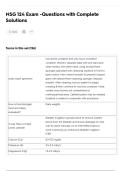
Terms in this set (126)
Use sterile container and only touch outsideof
container. Women: separate labia with one hand and
clean meatus with other hand, using at least three
sponges (saturated with cleansing solution) in front to
back motion. Men: retract foreskin (if present) cleanse
clean catch specimen glans with atleast three cleansing sponges. Replace
foreskin. After cleaning, instruct patient to begin
urinating & then continue to void into container. Initial
voided urine flushes out contaminants in
urethra/perineal area. Catheterization may be needed
if patient is unable to cooperate with procedure.
How is fluid loss/gain Daily weights
most accurately
evaluated?
Bladder irrigation typically done to remove clotted
blood from the bladder and ensure drainage of urine.
3-way Foley or triple
Can be done manually on an intermittent basis or
lumen catheter
more commonly as continuous bladder irrigation.
(CBI).
Calcium (Ca) 8.2-10.2 mg/dL
Potassium (K) 3.5-5.5 mEq/L
Magnesium (Mg) 1.5-2.5 mEq/L
,Sodium (Na) 136-145 mEq/L
Blood clots expected first 24-36 hours, but bright red
blood is not. Displacement of catheter, dislodgment
of lg clot, or abdominal pressure are abnormal
3way Foley stuff
findings. Sitting and walking for prolonged periods
should be avoided, also avoid straining/Valsalva
Maneuver.
Ditropan. Antispasmodic. Indicated for Urinary
symptoms that may be associated with neurogenic
bladder including:
Oxybutynin Frequent urination,
Urgency,
Nocturia,
Urge incontinence.
, Past Health History: Hypertension, Diabetes, gout and
other metabolic problems, connective tissue
disorders (ex. Lupus), skin, upper respiratory
infections, viral hepatitis, congenital disorders,
neurological disorders or trauma. Note all
medications, some can be "Nephrotoxic".
Subjective: painful urination? Changes in color of
urine? Changes in characteristics of urination
(diminished, excessive)? Nocturnal?
Diagnostic: BUN/Creatinine. Urinalysis. Urine Culture
and Sensitivity.
Assessment of Urinary
System
Objective: Inspect Abdomen. Urinary meatus for
inflammation or discharge.
Palpate: abdomen for bladder distention, masses, or
tenderness.
Percuss: costovertebral angle for tenderness.
Female Urethra 1-2 inches long
Male 8-10 inches long
Kidneys sit from T12 to L3. Right kidney at 12th rib,
slightly lower.
Normal post void residual 50-75mL
Double voiding: urinate, sit on toilet 3-4 minutes, and
then urinate again before exiting the bathroom.
Urinary Retention
Intermittent Catheterization, or perhaps indwelling if
Interventions
obstruction is the cause of retention. Drug Therapy.
Scheduled toileting..
Solutions
Save
Terms in this set (126)
Use sterile container and only touch outsideof
container. Women: separate labia with one hand and
clean meatus with other hand, using at least three
sponges (saturated with cleansing solution) in front to
back motion. Men: retract foreskin (if present) cleanse
clean catch specimen glans with atleast three cleansing sponges. Replace
foreskin. After cleaning, instruct patient to begin
urinating & then continue to void into container. Initial
voided urine flushes out contaminants in
urethra/perineal area. Catheterization may be needed
if patient is unable to cooperate with procedure.
How is fluid loss/gain Daily weights
most accurately
evaluated?
Bladder irrigation typically done to remove clotted
blood from the bladder and ensure drainage of urine.
3-way Foley or triple
Can be done manually on an intermittent basis or
lumen catheter
more commonly as continuous bladder irrigation.
(CBI).
Calcium (Ca) 8.2-10.2 mg/dL
Potassium (K) 3.5-5.5 mEq/L
Magnesium (Mg) 1.5-2.5 mEq/L
,Sodium (Na) 136-145 mEq/L
Blood clots expected first 24-36 hours, but bright red
blood is not. Displacement of catheter, dislodgment
of lg clot, or abdominal pressure are abnormal
3way Foley stuff
findings. Sitting and walking for prolonged periods
should be avoided, also avoid straining/Valsalva
Maneuver.
Ditropan. Antispasmodic. Indicated for Urinary
symptoms that may be associated with neurogenic
bladder including:
Oxybutynin Frequent urination,
Urgency,
Nocturia,
Urge incontinence.
, Past Health History: Hypertension, Diabetes, gout and
other metabolic problems, connective tissue
disorders (ex. Lupus), skin, upper respiratory
infections, viral hepatitis, congenital disorders,
neurological disorders or trauma. Note all
medications, some can be "Nephrotoxic".
Subjective: painful urination? Changes in color of
urine? Changes in characteristics of urination
(diminished, excessive)? Nocturnal?
Diagnostic: BUN/Creatinine. Urinalysis. Urine Culture
and Sensitivity.
Assessment of Urinary
System
Objective: Inspect Abdomen. Urinary meatus for
inflammation or discharge.
Palpate: abdomen for bladder distention, masses, or
tenderness.
Percuss: costovertebral angle for tenderness.
Female Urethra 1-2 inches long
Male 8-10 inches long
Kidneys sit from T12 to L3. Right kidney at 12th rib,
slightly lower.
Normal post void residual 50-75mL
Double voiding: urinate, sit on toilet 3-4 minutes, and
then urinate again before exiting the bathroom.
Urinary Retention
Intermittent Catheterization, or perhaps indwelling if
Interventions
obstruction is the cause of retention. Drug Therapy.
Scheduled toileting..


