NSG 316 EXAM 3 QUESTIONS AND
ANSWERS GRADED A+ 2025/2026
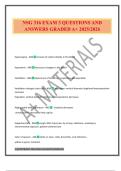
Myocardium
heart muscle that surrounds ventricles and atrium
Atria are thinner as they need to pump less strong
pericardium
external layer that protects heart from injury/infection
endocardium
3 layered membrane that lines heart chambers
blockage of coronary arteries can lead to
heart attack or stroke
heart failure
increased pressure of cardiac overload
-pulm congestion
-inc amount of blood in pulm capillaries
Left sided heart failure
dyspnea/SOB, pulmonary edema
right sided heart failure
blood back up in the periphery and will present with edema
cardiomegaly
abnormal enlargement of the heart due to over working to compensate for decreased function
1 @COPYRIGHT 2025/2026 ALLRIGHTS RESERVED.
,frequency
high pitched or low pitched
what should you use the diaphragm of a stethoscope for
high pitched, normal sounds
what should you use the bell of a stethoscope for
low pitched, abnormal heart sounds, murmurs
intensity/loudness
loud or soft
duration
short heart sounds, or silent periods
timing
systole or diastole
carotid artery/pulse
found in the neck. feel one at a time. S1 is felt
what is the most diminished pulse in the aging adult
pedal pulse
normal heart sounds
S1 and S2
S1 heart sound
-occurs with closure of mitral and tricuspid valves (AV valve)
-"lub" sound
-loudest at apex (5th intercostal space at midclavicular line)
S2 heart sound
-occurs with closure of aortic and pulmonic valves (semilunar valves)
-"dub" sound
-loudest at base of heart (2nd intercostal space)
abnormal heart sounds
2 @COPYRIGHT 2025/2026 ALLRIGHTS RESERVED.
, S3 and S4 sounds, murmurs, and bruits
S3 heart sounds
-not usually heard
-gallop sound
-indication of HF
-occurs with ventricular resistance of filling
S4 heart sounds
-create vibrations
-can be heard right before S1 sound
-occurs at end of diastole when ventricles resist filling
murmurs
-from turbulent blood flow
-heard directly over heart
-gentle blowing/swooshing sound
murmur loudness scale
1-3: no thrill
4: feel thrill
5-6: feel and hear thrill
5: hear thrill through stethoscope
6: can hear thrill without stethoscope
timing of murmur
early, middle, late, systole/diastole (S1/S2)
murmur pitch
high, medium, low
murmur pattern
grows louder or softer
murmur quality
musical, flowing, harsh
murmur location
3 @COPYRIGHT 2025/2026 ALLRIGHTS RESERVED.
ANSWERS GRADED A+ 2025/2026
Myocardium
heart muscle that surrounds ventricles and atrium
Atria are thinner as they need to pump less strong
pericardium
external layer that protects heart from injury/infection
endocardium
3 layered membrane that lines heart chambers
blockage of coronary arteries can lead to
heart attack or stroke
heart failure
increased pressure of cardiac overload
-pulm congestion
-inc amount of blood in pulm capillaries
Left sided heart failure
dyspnea/SOB, pulmonary edema
right sided heart failure
blood back up in the periphery and will present with edema
cardiomegaly
abnormal enlargement of the heart due to over working to compensate for decreased function
1 @COPYRIGHT 2025/2026 ALLRIGHTS RESERVED.
,frequency
high pitched or low pitched
what should you use the diaphragm of a stethoscope for
high pitched, normal sounds
what should you use the bell of a stethoscope for
low pitched, abnormal heart sounds, murmurs
intensity/loudness
loud or soft
duration
short heart sounds, or silent periods
timing
systole or diastole
carotid artery/pulse
found in the neck. feel one at a time. S1 is felt
what is the most diminished pulse in the aging adult
pedal pulse
normal heart sounds
S1 and S2
S1 heart sound
-occurs with closure of mitral and tricuspid valves (AV valve)
-"lub" sound
-loudest at apex (5th intercostal space at midclavicular line)
S2 heart sound
-occurs with closure of aortic and pulmonic valves (semilunar valves)
-"dub" sound
-loudest at base of heart (2nd intercostal space)
abnormal heart sounds
2 @COPYRIGHT 2025/2026 ALLRIGHTS RESERVED.
, S3 and S4 sounds, murmurs, and bruits
S3 heart sounds
-not usually heard
-gallop sound
-indication of HF
-occurs with ventricular resistance of filling
S4 heart sounds
-create vibrations
-can be heard right before S1 sound
-occurs at end of diastole when ventricles resist filling
murmurs
-from turbulent blood flow
-heard directly over heart
-gentle blowing/swooshing sound
murmur loudness scale
1-3: no thrill
4: feel thrill
5-6: feel and hear thrill
5: hear thrill through stethoscope
6: can hear thrill without stethoscope
timing of murmur
early, middle, late, systole/diastole (S1/S2)
murmur pitch
high, medium, low
murmur pattern
grows louder or softer
murmur quality
musical, flowing, harsh
murmur location
3 @COPYRIGHT 2025/2026 ALLRIGHTS RESERVED.