Review
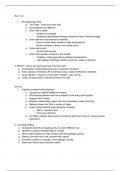
Derivative Rules
·
(f(x) = g(x))) =
f(x) =
g(x) power rule -
(f(x)g(x))) =
f'(x)g(x) + f(x)g'(x)
F
quotient rule
-
( =
g
Trig Derivatives Derivative Rules
positive negative power role-(ax") = anx-
- -
one Sin X = COSX =
(a*)' Ina-a
tereared
COS X - sin X
exponent rue
- =
-
+anx = co+ x=
Secx-cs2X chain rule -
(f(g(x)))) = f ' (g(x))g'(x)
See X = CSCX =
two
term SecXtax-cscXcotX
Integration Rules
·
limit definition :
Sf(x)dx na =
+
x)Ax
g 0
b
f(x)dx =
f(x)x =
-Six Saf(x)dx a) f(x)dx
=
rule-Saxdx =
**
x +
power
exponential rule -
Sa" =
ia +
Chain rule -
Sf' (g(x)g'(x)dx f(g(x)) = +C
, Functions
in this class !
Algebraic +
Trig-covered
AlgebraicFunctions
in
&
S
-
- 3xn
Definition of Functions
function -
a
curve/graph that is both :
continuous (no jumps/breaks)
·
differentiable (can take a derivative)
repeating x-values (Vertical
no Line Test
One-to-one function -
no
repeating y-values (Horizontal Line Test
function can be flipped over
y =X
one number in, one number out
used to determine if the inverse of a function can be taken
If
-
a function is not one-to-one, an interval can be used to make it one-to-one .
ex .. f(x) = Sin(x)
One-to-one on
es [0,]
, FTC
Definition -
Iff(x) is continuous on the interval [2 b]
, ,
then
f(x) has a derivative.
-
used to find the derivative of the
integral
Formula :
F(Adt =
f(x) + Co-
3 + (A)d+ =
f(g(x)) g((x)
- + c
an tent
Use when :
there is an X in the top bound of the integral
may need to flip the integral using integral properties
Derivative Rules
·
(f(x) = g(x))) =
f(x) =
g(x) power rule -
(f(x)g(x))) =
f'(x)g(x) + f(x)g'(x)
F
quotient rule
-
( =
g
Trig Derivatives Derivative Rules
positive negative power role-(ax") = anx-
- -
one Sin X = COSX =
(a*)' Ina-a
tereared
COS X - sin X
exponent rue
- =
-
+anx = co+ x=
Secx-cs2X chain rule -
(f(g(x)))) = f ' (g(x))g'(x)
See X = CSCX =
two
term SecXtax-cscXcotX
Integration Rules
·
limit definition :
Sf(x)dx na =
+
x)Ax
g 0
b
f(x)dx =
f(x)x =
-Six Saf(x)dx a) f(x)dx
=
rule-Saxdx =
**
x +
power
exponential rule -
Sa" =
ia +
Chain rule -
Sf' (g(x)g'(x)dx f(g(x)) = +C
, Functions
in this class !
Algebraic +
Trig-covered
AlgebraicFunctions
in
&
S
-
- 3xn
Definition of Functions
function -
a
curve/graph that is both :
continuous (no jumps/breaks)
·
differentiable (can take a derivative)
repeating x-values (Vertical
no Line Test
One-to-one function -
no
repeating y-values (Horizontal Line Test
function can be flipped over
y =X
one number in, one number out
used to determine if the inverse of a function can be taken
If
-
a function is not one-to-one, an interval can be used to make it one-to-one .
ex .. f(x) = Sin(x)
One-to-one on
es [0,]
, FTC
Definition -
Iff(x) is continuous on the interval [2 b]
, ,
then
f(x) has a derivative.
-
used to find the derivative of the
integral
Formula :
F(Adt =
f(x) + Co-
3 + (A)d+ =
f(g(x)) g((x)
- + c
an tent
Use when :
there is an X in the top bound of the integral
may need to flip the integral using integral properties