ADVS 1110 – EXAM 4 BEEF CATTLE INDUSTRY STRUCTURE AND
PRODUCTION STUDY GUIDE UTAH STATE UNIVERSITY
lOMoAR cPSD| 22896205
ADVS 1110 – EXAM 4 BEEF CATTLE INDUSTRY STRUCTURE AND
PRODUCTION STUDY GUIDE UTAH STATE UNIVERSITY
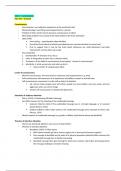
Beef Cattle
• Structure of beef cattle industry o Production arm
Seed stock (genetics)
• ~70,000 to produce 80 breeds in the U.S.
• Top 6 breeds in U.S. semen sales: o Angus o
Simmental o Red Angus o Polled Hereford o
Charolais o Hereford
Commercial cow/calf producers
• ~800,000 producers to raise ~26 million calves for market
• Produce calves destined for other industry segments
Stocker/yearlings
• Add weight to weaned cales before finishing at feedlot ~12.5
million in U.S.
• ~60% in Plains States
Feedlots
• Feed from weaning/stocker to harvest weight/condition (1100-
1500)
• Confined feeding operation
• High grain ration for 100-250 days o ~82,000 feedlots
• Improved efficiency o Lower greenhouse gas emissions
o Processing/Wholesale arm
Packers
• Harvest cattle
• Fabricate into primals/subprimals o Round, loin, rib, chuck, ribeye,
tenderloin
• Sort and “box” beef
• JBS, Tyson, Cargill, National Beef
Retailers
pg. 1
, ADVS 1110 – EXAM 4 BEEF CATTLE INDUSTRY STRUCTURE AND
PRODUCTION STUDY GUIDE UTAH STATE UNIVERSITY
lOMoAR cPSD| 22896205
• 10 largest = 69% of total food retail volume
• Wal-Mart = 20% of market share
• Supermarkets = 32% of beef market
• Diffuse and diverse nature of the beef industry vs integrated/consolidated in
other industries like swine, poultry
o Pros & cons
The beef industry is diffuse and diverse due to a longer biological process,
geographically dispersed operations, and an added production stage, while
the swine and poultry industries are more vertically
integrated/consolidated.
• Production trends o Historical
Beef production trends show rising output despite shrinking cattle numbers,
driven by significant gains in productivity like heavier carcass weights and
better feed efficiency.
o Recent
Trends show a tightening supply due to shrinking
cow herds, but production levels are surprisingly
stable thanks to significantly heavier cattle weights
and increased beef imports.
• Where are beef cows located o Mid-West Texas
Oklahoma
Missouri
Nebraska
South Dakota
• What are some of the characteristics of beef cattle and the beef
cattle industry structure that contribute to its success o Specialized
production segments that leverage cattle’s natural ability to
convert forage into high-value protein, combined with strategic
genetics and sophisticated management for efficiency, all while
adapting to diverse environments and market demands for traits
like marbling, muscling, and sustainability.
pg. 2
PRODUCTION STUDY GUIDE UTAH STATE UNIVERSITY
lOMoAR cPSD| 22896205
ADVS 1110 – EXAM 4 BEEF CATTLE INDUSTRY STRUCTURE AND
PRODUCTION STUDY GUIDE UTAH STATE UNIVERSITY
Beef Cattle
• Structure of beef cattle industry o Production arm
Seed stock (genetics)
• ~70,000 to produce 80 breeds in the U.S.
• Top 6 breeds in U.S. semen sales: o Angus o
Simmental o Red Angus o Polled Hereford o
Charolais o Hereford
Commercial cow/calf producers
• ~800,000 producers to raise ~26 million calves for market
• Produce calves destined for other industry segments
Stocker/yearlings
• Add weight to weaned cales before finishing at feedlot ~12.5
million in U.S.
• ~60% in Plains States
Feedlots
• Feed from weaning/stocker to harvest weight/condition (1100-
1500)
• Confined feeding operation
• High grain ration for 100-250 days o ~82,000 feedlots
• Improved efficiency o Lower greenhouse gas emissions
o Processing/Wholesale arm
Packers
• Harvest cattle
• Fabricate into primals/subprimals o Round, loin, rib, chuck, ribeye,
tenderloin
• Sort and “box” beef
• JBS, Tyson, Cargill, National Beef
Retailers
pg. 1
, ADVS 1110 – EXAM 4 BEEF CATTLE INDUSTRY STRUCTURE AND
PRODUCTION STUDY GUIDE UTAH STATE UNIVERSITY
lOMoAR cPSD| 22896205
• 10 largest = 69% of total food retail volume
• Wal-Mart = 20% of market share
• Supermarkets = 32% of beef market
• Diffuse and diverse nature of the beef industry vs integrated/consolidated in
other industries like swine, poultry
o Pros & cons
The beef industry is diffuse and diverse due to a longer biological process,
geographically dispersed operations, and an added production stage, while
the swine and poultry industries are more vertically
integrated/consolidated.
• Production trends o Historical
Beef production trends show rising output despite shrinking cattle numbers,
driven by significant gains in productivity like heavier carcass weights and
better feed efficiency.
o Recent
Trends show a tightening supply due to shrinking
cow herds, but production levels are surprisingly
stable thanks to significantly heavier cattle weights
and increased beef imports.
• Where are beef cows located o Mid-West Texas
Oklahoma
Missouri
Nebraska
South Dakota
• What are some of the characteristics of beef cattle and the beef
cattle industry structure that contribute to its success o Specialized
production segments that leverage cattle’s natural ability to
convert forage into high-value protein, combined with strategic
genetics and sophisticated management for efficiency, all while
adapting to diverse environments and market demands for traits
like marbling, muscling, and sustainability.
pg. 2