NUR 445 FINAL REVIEW
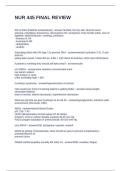
S/S of DKA (Diabetic Ketoacidosis) - answer flushed, hot dry skin, blurred vision,
polyuria, polydipsia, drowsiness, decreased LOC, tachypnea, fruity breath odour, loss of
appetite, abdominal pain, vomiting, confusion
- ketones in UA
- kussmaul's RR
- dehydration
- acidotic
Educating client with DM type 1 to prevent DKA - answermaintain hydration 2-3L, if sick
and not
eating take insulin, check BG q4, if BG > 240 check for ketones, drink sport drinks/juice
if patient is vomiting they should still take what? - answerinsulin
s/s SIADH - answerurine retention concentrated urine
low serum sodium
high sodium in urine
urine osmolality high > 300
Cushing's syndrome - answerhypersecretion of cortisol
How would you know if Cushing patient is getting better - answerLosing weight,
electrolyte balance
back to normal, edema decreases, hypertension decreases
What are pts that we give Cushing's to at risk for - answerhyperglycemia, infection (safe
environment, BG levels, CBC)
ABGs - answerArterial Blood Gases
pH 7.35- 7.45
HCO3 (Bicarbonate) normal values 22-26 mEq/L
PaCO2 ( CO2 or carbon dioxide content) 35-45 mm Hg
PaO2 (oxygen saturation in arteria blood)- 80-100 mm Hg
ss/s ARDS - answerSOB, tachypnea, hypoxia, vented!
ARDS pt getting corticosteroids, what should we give to prevent complications -
answerprotonics to
prevent ulcers
Dilated cardiomyopathy (usually left side) s/s - answerSOB, crackles, fatigue
, Goal for pacemaker - answerimproved CO, increased energy, not dizzy
AFIB - answeratrium isn't beating correctly which is what is causing your symptoms.
You can live in A
fib but youre tired because youre not perfusing like you should and can lead to clots
Arm cast and fingers are numb and cyanotic - answercompartment syndrome
What would you do if a pt came in with compartment syndrome and you didn't have a
cast
remover - answercall the DR, elevate the extremity to provide venous return
How would you know if compartment syndrome is resolved - answerdistal pulses, pain
reduced, cap
refill < 3sec, CMS (color movement sensation)
To assess severity of burn, what would you assess - answerTBSA, depth, what kind of
burn it was
caused by, location and whether respiratory system was involved and do we need to
intubate,
assess for other injuries SATAAAAAA... we won't know what degree the burn is until
post 24 hr
Pt had severe burns and youre doing fluid resus. Urine < .25 so they need more fluids.
Which order would we question? - answerGiving furosemide
Client with major burn injury, what urine output do they need ml/kg/hr --> - answer0.5 kg
Interventions for pt with major burn injury - answerwarm, free of infx, hydration, IV
access (more
than 1), assess for fluid overload
Priority assessment for trauma - answerGCS
Pt in MVC and they have seat belt sign - answerinternal bleeding, other injuries
How would you know someone is developing DIC - answerbruising, bleeding from
everywhere
(around IV, old IV sites)
What med should we give Pt with HIT - answerargatroban
Pt going for kidney transplant, what diagnostic tests would be done - answerurine
analysis
S/S of DKA (Diabetic Ketoacidosis) - answer flushed, hot dry skin, blurred vision,
polyuria, polydipsia, drowsiness, decreased LOC, tachypnea, fruity breath odour, loss of
appetite, abdominal pain, vomiting, confusion
- ketones in UA
- kussmaul's RR
- dehydration
- acidotic
Educating client with DM type 1 to prevent DKA - answermaintain hydration 2-3L, if sick
and not
eating take insulin, check BG q4, if BG > 240 check for ketones, drink sport drinks/juice
if patient is vomiting they should still take what? - answerinsulin
s/s SIADH - answerurine retention concentrated urine
low serum sodium
high sodium in urine
urine osmolality high > 300
Cushing's syndrome - answerhypersecretion of cortisol
How would you know if Cushing patient is getting better - answerLosing weight,
electrolyte balance
back to normal, edema decreases, hypertension decreases
What are pts that we give Cushing's to at risk for - answerhyperglycemia, infection (safe
environment, BG levels, CBC)
ABGs - answerArterial Blood Gases
pH 7.35- 7.45
HCO3 (Bicarbonate) normal values 22-26 mEq/L
PaCO2 ( CO2 or carbon dioxide content) 35-45 mm Hg
PaO2 (oxygen saturation in arteria blood)- 80-100 mm Hg
ss/s ARDS - answerSOB, tachypnea, hypoxia, vented!
ARDS pt getting corticosteroids, what should we give to prevent complications -
answerprotonics to
prevent ulcers
Dilated cardiomyopathy (usually left side) s/s - answerSOB, crackles, fatigue
, Goal for pacemaker - answerimproved CO, increased energy, not dizzy
AFIB - answeratrium isn't beating correctly which is what is causing your symptoms.
You can live in A
fib but youre tired because youre not perfusing like you should and can lead to clots
Arm cast and fingers are numb and cyanotic - answercompartment syndrome
What would you do if a pt came in with compartment syndrome and you didn't have a
cast
remover - answercall the DR, elevate the extremity to provide venous return
How would you know if compartment syndrome is resolved - answerdistal pulses, pain
reduced, cap
refill < 3sec, CMS (color movement sensation)
To assess severity of burn, what would you assess - answerTBSA, depth, what kind of
burn it was
caused by, location and whether respiratory system was involved and do we need to
intubate,
assess for other injuries SATAAAAAA... we won't know what degree the burn is until
post 24 hr
Pt had severe burns and youre doing fluid resus. Urine < .25 so they need more fluids.
Which order would we question? - answerGiving furosemide
Client with major burn injury, what urine output do they need ml/kg/hr --> - answer0.5 kg
Interventions for pt with major burn injury - answerwarm, free of infx, hydration, IV
access (more
than 1), assess for fluid overload
Priority assessment for trauma - answerGCS
Pt in MVC and they have seat belt sign - answerinternal bleeding, other injuries
How would you know someone is developing DIC - answerbruising, bleeding from
everywhere
(around IV, old IV sites)
What med should we give Pt with HIT - answerargatroban
Pt going for kidney transplant, what diagnostic tests would be done - answerurine
analysis