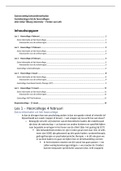
NEUROLOGY
A QUEEN SQUARE TEXTBOOK
3RD EDITION
• AUTHOR(S)ROBIN HOWARD
TEST BANK
1
Reference
Ch. 1 — Global Burden of Neurological Disease — Introduction
Stem
A 72-year-old man from a low-resource region presents with
sudden right facial weakness and slurred speech. Local primary
care notes that stroke is the most common cause of acute
neurological disability in their district and that many patients
Page | 1
,arrive late due to transport barriers. You are asked to design an
in-hospital pathway to reduce time to thrombolysis. Which
system change is most likely to address the major determinant
of delayed reperfusion in this setting?
Options
A. Expand MRI availability for rapid stroke diagnosis.
B. Implement community education and prehospital stroke
recognition with ambulance triage.
C. Increase availability of general physicians to evaluate stroke
on arrival.
D. Provide free outpatient blood pressure clinics to reduce
chronic risk.
Correct answer
B
Rationale — Correct
Queen Square–style systems approach prioritizes recognition
and rapid triage. In low-resource settings, prehospital delay is
the largest modifiable contributor to missed reperfusion;
community education and ambulance triage reduce onset-to-
Page | 2
,door time and appropriate routing for thrombolysis. This choice
addresses the key bottleneck for acute reperfusion.
Rationale — Incorrect
A. MRI is rarely the initial rate-limiting factor; CT suffices for
thrombolysis decisions and MRI expansion is costly.
C. Increasing general physicians does not change prehospital
delay or triage decisions.
D. BP clinics reduce long-term stroke risk but do not address
acute treatment delays.
Teaching point
Prehospital recognition and triage are the highest-yield
interventions to shorten time to reperfusion.
Citation
Howard, R. (2021). Neurology: A Queen Square Textbook (3rd
ed.). Ch. 1.
2
Page | 3
, Reference
Ch. 1 — Global Burden of Neurological Disease — The Global
Burden of Neurological Diseases
Stem
You are interpreting national burden data showing rising
absolute numbers of people living with dementia but falling
age-standardized rates. A policymaker asks why both can be
true. Which explanation best reconciles the data?
Options
A. Improved diagnostic sensitivity causes false increases in
absolute counts only.
B. Population aging and growth increase absolute cases while
prevention and age-specific risk reduction lower age-
standardized rates.
C. Migration of elderly to urban centres concentrates cases
without real incidence change.
D. Improved survival from other diseases reduces observed
dementia cases in age groups.
Page | 4
A QUEEN SQUARE TEXTBOOK
3RD EDITION
• AUTHOR(S)ROBIN HOWARD
TEST BANK
1
Reference
Ch. 1 — Global Burden of Neurological Disease — Introduction
Stem
A 72-year-old man from a low-resource region presents with
sudden right facial weakness and slurred speech. Local primary
care notes that stroke is the most common cause of acute
neurological disability in their district and that many patients
Page | 1
,arrive late due to transport barriers. You are asked to design an
in-hospital pathway to reduce time to thrombolysis. Which
system change is most likely to address the major determinant
of delayed reperfusion in this setting?
Options
A. Expand MRI availability for rapid stroke diagnosis.
B. Implement community education and prehospital stroke
recognition with ambulance triage.
C. Increase availability of general physicians to evaluate stroke
on arrival.
D. Provide free outpatient blood pressure clinics to reduce
chronic risk.
Correct answer
B
Rationale — Correct
Queen Square–style systems approach prioritizes recognition
and rapid triage. In low-resource settings, prehospital delay is
the largest modifiable contributor to missed reperfusion;
community education and ambulance triage reduce onset-to-
Page | 2
,door time and appropriate routing for thrombolysis. This choice
addresses the key bottleneck for acute reperfusion.
Rationale — Incorrect
A. MRI is rarely the initial rate-limiting factor; CT suffices for
thrombolysis decisions and MRI expansion is costly.
C. Increasing general physicians does not change prehospital
delay or triage decisions.
D. BP clinics reduce long-term stroke risk but do not address
acute treatment delays.
Teaching point
Prehospital recognition and triage are the highest-yield
interventions to shorten time to reperfusion.
Citation
Howard, R. (2021). Neurology: A Queen Square Textbook (3rd
ed.). Ch. 1.
2
Page | 3
, Reference
Ch. 1 — Global Burden of Neurological Disease — The Global
Burden of Neurological Diseases
Stem
You are interpreting national burden data showing rising
absolute numbers of people living with dementia but falling
age-standardized rates. A policymaker asks why both can be
true. Which explanation best reconciles the data?
Options
A. Improved diagnostic sensitivity causes false increases in
absolute counts only.
B. Population aging and growth increase absolute cases while
prevention and age-specific risk reduction lower age-
standardized rates.
C. Migration of elderly to urban centres concentrates cases
without real incidence change.
D. Improved survival from other diseases reduces observed
dementia cases in age groups.
Page | 4