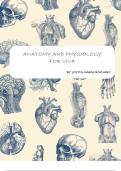
ANATOMY AND PHYSIOLOGY
FOR VIVA
BY JOYITA MARIA ROZARIO
, INTRODUCTION
• What is anatomy?
Anatomy may be defined as the study of the structure of body and relationship of its
constituent parts to each other.
or
The word anatomy comes from the Greek word ana means uo and tome means a cutting.
Anatomy is the study of structure of human body.which include size,shape and
composition of human body.
• What is phsiology?
Is the branch of science that deals with various function of living organism and the
processes which regulate them.
Or
Physiology is the study of how the human body works or function.
• What is homeostisis?
Homeostasis is the bodys way of keeping its internal environment stable balanced,like
maintaining the right temperature water levels and blood sugar.
EXAMPLES
1.Blood Glucose Regulation:
After eating, blood glucose levels rise. The pancreas releases insulin, which helps cells
absorb glucose, lowering blood sugar levels. Conversely, when blood sugar drops, the
pancreas releases glucagon, which stimulates the liver to release stored glucose.
2.Blood Pressure Regulation:
The body maintains blood pressure within a healthy range. If blood pressure drops, the body
may increase heart rate and constrict blood vessels to raise it.
• Characteristics of life
Homeostasis, Metabolism, Responsiveness, Movement, Growth, Differentiation,
Reproduction, Heredity.
Others include: respiration, digestion, absorption, circulation, excretion.
,
,
,
,
,
,
, MUSCULOSKELETAL SYSTEM
Function of the Muscular System:
1. Helps us move – Muscles work with bones to move our body.
2. Keeps posture – Muscles help us sit and stand straight.
3. Protects organs – Muscles cover and protect inner organs.
4. Pumps blood – The heart is a muscle that pumps blood.
5. Helps in breathing – Muscles help move the lungs to breathe.
6. Makes body heat – Muscles produce heat when they move.
FOR VIVA
BY JOYITA MARIA ROZARIO
, INTRODUCTION
• What is anatomy?
Anatomy may be defined as the study of the structure of body and relationship of its
constituent parts to each other.
or
The word anatomy comes from the Greek word ana means uo and tome means a cutting.
Anatomy is the study of structure of human body.which include size,shape and
composition of human body.
• What is phsiology?
Is the branch of science that deals with various function of living organism and the
processes which regulate them.
Or
Physiology is the study of how the human body works or function.
• What is homeostisis?
Homeostasis is the bodys way of keeping its internal environment stable balanced,like
maintaining the right temperature water levels and blood sugar.
EXAMPLES
1.Blood Glucose Regulation:
After eating, blood glucose levels rise. The pancreas releases insulin, which helps cells
absorb glucose, lowering blood sugar levels. Conversely, when blood sugar drops, the
pancreas releases glucagon, which stimulates the liver to release stored glucose.
2.Blood Pressure Regulation:
The body maintains blood pressure within a healthy range. If blood pressure drops, the body
may increase heart rate and constrict blood vessels to raise it.
• Characteristics of life
Homeostasis, Metabolism, Responsiveness, Movement, Growth, Differentiation,
Reproduction, Heredity.
Others include: respiration, digestion, absorption, circulation, excretion.
,
,
,
,
,
,
, MUSCULOSKELETAL SYSTEM
Function of the Muscular System:
1. Helps us move – Muscles work with bones to move our body.
2. Keeps posture – Muscles help us sit and stand straight.
3. Protects organs – Muscles cover and protect inner organs.
4. Pumps blood – The heart is a muscle that pumps blood.
5. Helps in breathing – Muscles help move the lungs to breathe.
6. Makes body heat – Muscles produce heat when they move.