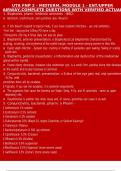
UTA FNP 2 - MIDTERM, MODULE 1 - ENT/UPPER
AIRWAY.COMPLETE QUESTIONS WITH VERIFIED ACTUAL
1. Blepharitis, pharm: Antibiotic ointments - (BEQ)
o Bacitracin, erythromycin, and quinolone (any -floxacin).
o If infx doesn't respond to topical meds, if you have resistant infections - use oral antibiotics.
·First line - doxycycline 100mg PO twice a day.
·Tetracycline 250 mg 4 times daily can also be given.
2. Blepharitis, anterior presentation: o Staphylococcal blepharitis characterized by
scaling, crusting, and erythema of the eyelid margin, more common among women in their 40s.
o Eyelid staph infection - Eyelash loss; crusting or matting of eyelashes upon waking; flaking or scaling
eyelid skin.
3. Blepharitis, posterior presentation: o Inflammation and dysfunction of the meibomian
gland within eyelid.
o Excess foamy discharge, chalazion (aka meibomian cyst, is a small, firm, painless bump that develops
on the eyelid), and ocular rosacea is common.
4. Conjunctivitis, bacterial, presentation: o Sclera of the eye gets red, and sometime
itchy, and
sometimes there will be exudates.
§ Typically, if you see the exudates, it is bacterial conjunctivitis.
o The organisms that cause the bacteria are Staph, Strep, H flu, and M catarrhalis - same as upper
respiratory infx.
o Pseudomonas is another less likely cause and, of course, gonorrhea can cause it as well.
5. Conjunctivitis, bacterial, pharm: o Pharm -
§ Azithromycin 1% solution
§ Erythromycin 0.5% ointment
§ Gentamicin 0.3% solution
§ Sulfacetamide 10% (Bleph-10, Isopto Cetamide, or Sodium Sulamyd)
§ Tobramycin (Tobrex)
§ Bacitracin/polymyxin B 500 u/g ointment
§ Ciprofloxacin 0.3% (Ciloxan)
§ Ofloxacin 0.3% (Ocuflox)
§ Besfloxacin 0.6% suspension
§ Moxifloxacin 0.5% (Vigamox) (more severe cases)
§ Gatifloxacin 0.3% (Zymar) (more severe cases)
, UTA FNP 2 - MIDTERM, MODULE 1 - ENT/UPPER
AIRWAY.COMPLETE QUESTIONS WITH VERIFIED ACTUAL
6. Conjunctivitis, viral, assessment: o Assessment findings are erythema, burning,
exudate, itching, sensation of foreign body, ocular exudate with matting, preauricular adenopathy,
tearing and dendrites are present in
, UTA FNP 2 - MIDTERM, MODULE 1 - ENT/UPPER
AIRWAY.COMPLETE QUESTIONS WITH VERIFIED ACTUAL
herpetic infections.
o Evaluate and treat for systemic herpes.
o You don't want them to get herpes in the eye, because it can cause blindness.
o If a fluorescein stain is done and you see dendrites, these patients need to be referred immediately
to an ophthal- mologist.
7. Conjunctivitis, viral, pharm: o Pharm -
§ Topical vidarabine or trifluridine 5 times daily for 10 days
8. Conjunctivitis, Red Flags: · Red flags - diminished visual acuity, photophobia, foreign body
sensation, corneal opacity, fixed pupil, severe headache, and proptosis.
9. Corneal Abrasion, pharm: · Pharm -
o Eye rx - Ciprofloxacin.
§ Want to use broad spectrum.
10. Cataracts, assessment: · Assessment -
o Opacification of the lens.
o Diminished red reflex and a white reflex.
o Blurred vision and see halo around lights.
o Diminished night vision, and diminished visual acuity.
11. Strabismus, different types/patterns: · Ditterent types -
o Esotropia - where the eye drifts inward.
o Exotropia - where it drifts outward.
o Hypertropia - where it drifts upward.
o Hypotropia - where it drifts downward.
12. Glaucoma, excessive IOP value: >25mmHg
13. Glaucoma, tonometer use: · You take an average of three readings. Normal
pressure is 10 to 23. Anything 25 or greater is considered close angled glaucoma.
14. Glaucoma, categories of meds: beta blockers (5), prostaglandin analogs (4),
carbonic anhydrase inhibitors (2), alpha adrenergic (2).
15. Glaucoma, open angle, beta blockers: o Five beta blockers - betaxolol,
carteolol, levobunolol, metipranolol, and timolol.
§ These medications decrease aqueous humor production. Can have systemic side ettects typical of beta
blockers if there is enough systemic absorption.
AIRWAY.COMPLETE QUESTIONS WITH VERIFIED ACTUAL
1. Blepharitis, pharm: Antibiotic ointments - (BEQ)
o Bacitracin, erythromycin, and quinolone (any -floxacin).
o If infx doesn't respond to topical meds, if you have resistant infections - use oral antibiotics.
·First line - doxycycline 100mg PO twice a day.
·Tetracycline 250 mg 4 times daily can also be given.
2. Blepharitis, anterior presentation: o Staphylococcal blepharitis characterized by
scaling, crusting, and erythema of the eyelid margin, more common among women in their 40s.
o Eyelid staph infection - Eyelash loss; crusting or matting of eyelashes upon waking; flaking or scaling
eyelid skin.
3. Blepharitis, posterior presentation: o Inflammation and dysfunction of the meibomian
gland within eyelid.
o Excess foamy discharge, chalazion (aka meibomian cyst, is a small, firm, painless bump that develops
on the eyelid), and ocular rosacea is common.
4. Conjunctivitis, bacterial, presentation: o Sclera of the eye gets red, and sometime
itchy, and
sometimes there will be exudates.
§ Typically, if you see the exudates, it is bacterial conjunctivitis.
o The organisms that cause the bacteria are Staph, Strep, H flu, and M catarrhalis - same as upper
respiratory infx.
o Pseudomonas is another less likely cause and, of course, gonorrhea can cause it as well.
5. Conjunctivitis, bacterial, pharm: o Pharm -
§ Azithromycin 1% solution
§ Erythromycin 0.5% ointment
§ Gentamicin 0.3% solution
§ Sulfacetamide 10% (Bleph-10, Isopto Cetamide, or Sodium Sulamyd)
§ Tobramycin (Tobrex)
§ Bacitracin/polymyxin B 500 u/g ointment
§ Ciprofloxacin 0.3% (Ciloxan)
§ Ofloxacin 0.3% (Ocuflox)
§ Besfloxacin 0.6% suspension
§ Moxifloxacin 0.5% (Vigamox) (more severe cases)
§ Gatifloxacin 0.3% (Zymar) (more severe cases)
, UTA FNP 2 - MIDTERM, MODULE 1 - ENT/UPPER
AIRWAY.COMPLETE QUESTIONS WITH VERIFIED ACTUAL
6. Conjunctivitis, viral, assessment: o Assessment findings are erythema, burning,
exudate, itching, sensation of foreign body, ocular exudate with matting, preauricular adenopathy,
tearing and dendrites are present in
, UTA FNP 2 - MIDTERM, MODULE 1 - ENT/UPPER
AIRWAY.COMPLETE QUESTIONS WITH VERIFIED ACTUAL
herpetic infections.
o Evaluate and treat for systemic herpes.
o You don't want them to get herpes in the eye, because it can cause blindness.
o If a fluorescein stain is done and you see dendrites, these patients need to be referred immediately
to an ophthal- mologist.
7. Conjunctivitis, viral, pharm: o Pharm -
§ Topical vidarabine or trifluridine 5 times daily for 10 days
8. Conjunctivitis, Red Flags: · Red flags - diminished visual acuity, photophobia, foreign body
sensation, corneal opacity, fixed pupil, severe headache, and proptosis.
9. Corneal Abrasion, pharm: · Pharm -
o Eye rx - Ciprofloxacin.
§ Want to use broad spectrum.
10. Cataracts, assessment: · Assessment -
o Opacification of the lens.
o Diminished red reflex and a white reflex.
o Blurred vision and see halo around lights.
o Diminished night vision, and diminished visual acuity.
11. Strabismus, different types/patterns: · Ditterent types -
o Esotropia - where the eye drifts inward.
o Exotropia - where it drifts outward.
o Hypertropia - where it drifts upward.
o Hypotropia - where it drifts downward.
12. Glaucoma, excessive IOP value: >25mmHg
13. Glaucoma, tonometer use: · You take an average of three readings. Normal
pressure is 10 to 23. Anything 25 or greater is considered close angled glaucoma.
14. Glaucoma, categories of meds: beta blockers (5), prostaglandin analogs (4),
carbonic anhydrase inhibitors (2), alpha adrenergic (2).
15. Glaucoma, open angle, beta blockers: o Five beta blockers - betaxolol,
carteolol, levobunolol, metipranolol, and timolol.
§ These medications decrease aqueous humor production. Can have systemic side ettects typical of beta
blockers if there is enough systemic absorption.