

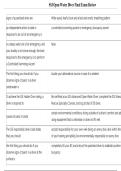
SSI Open Water Diver Final Exam Review
signs of a panicked diver are Wide-eyed, fearful look and a fast and erratic breathing pattern
an independent action to take in a controlled swimming ascent or emergency buoyancy ascent
response to an out of air emergency is
in a deep water out of air emergency, and false
your buddy is not close enough, the best
response to this emergency is to perform
a Controlled Swimming Ascent
The first thing you should do if you locate your alternate air source in case it is needed
observe signs of panic in a diver
underwater is
To achieve the SSI Master Diver rating, a Be certified as an SSI Advanced Open Water Diver, complete the SSI Stress
diver is required to Rescue Specialty Courses, and log a total of 50 dives.
certain environmental conditions, diving outside of a diver's comfort and ab
causes of panic include
using equipment that is unfamiliar or does not fit well
The SSI responsible diver code states accept responsibility for your own well-being on every dive, dive within the
that you should of your training and ability, be environmentally responsible on every dive
the first thing you should do if you completely fill your BC and instruct the panicked diver to establish positive
observe signs of panic in a diver at the buoyancy
surface is
, SSI Open Water Diver Final Exam Review
In an out of air emergency and your swim to your buddy, give the out-of-air signal, and share air
buddy is close enough, you should
the most important rule when assisting a never needlessly endanger yourself
panicked diver is
properly maintaining your Total Diving system, honestly evaluating your divi
panic can be prevented by
limitations, taking specialty training
a dependent action to take in response sharing air using the primary second stage and using the alternate air source
to an out of air emergency is yourself
to achieve the SSI Specialty Diver rating, Complete any 2 specialty courses and log a total of 12 dives
a diver is required to
to achieve the SSI Advanced Open water complete 4 specialty courses and log a total of 24 dives
diver rating, a diver is required to
makes diving more fun, is as familiar with their buddy's diving equipment as t
A good diving buddy
are with their own, is able to help in all phases of diving and dive planning
A dive computer keeps track of a diver's stay within the no-decompression limits on each dive
nitrogen absorption levels so that the
diver can
If you lose contact with your buddy, you Search for no more than a minute by turning 360 degrees and looking up an
should down and then perform a normal ascent to the surface
, SSI Open Water Diver Final Exam Review
When entering the water through the maintain physical contact and time entry to coincide with the lull between w
surf, dive buddy teams should sets
The most important reason for planning prevent accidents
your dives and executing the dive per
your plan is to
Which of the following steps should be Purpose of the dive, degree of difficulty presented by the site, honest evalu
taken in the selection of a dive site of your diving abilities and conditioning levels, as well as those of your budd
You should perform a safety stop at 15 ft true
for 3-5 mins on every dive
The term No-decompression Limit is the max allowed time at depth without having to perform a mandatory
defined as decompression stop during the ascent
the amount of time the diver stays out of the water or on the surface betwee
The term surface interval is defined as
dives
water breaks over sand bars and reefs near the beach and recedes through
rip currents are formed by
channels or cuts in the bars and reefs
it contains your medical history and provides important emergency informat
use of the SSI Total Dive Log is important
is an important information resource for future dives, it keeps an accurate re
because
of your personal information and dives
signs of a panicked diver are Wide-eyed, fearful look and a fast and erratic breathing pattern
an independent action to take in a controlled swimming ascent or emergency buoyancy ascent
response to an out of air emergency is
in a deep water out of air emergency, and false
your buddy is not close enough, the best
response to this emergency is to perform
a Controlled Swimming Ascent
The first thing you should do if you locate your alternate air source in case it is needed
observe signs of panic in a diver
underwater is
To achieve the SSI Master Diver rating, a Be certified as an SSI Advanced Open Water Diver, complete the SSI Stress
diver is required to Rescue Specialty Courses, and log a total of 50 dives.
certain environmental conditions, diving outside of a diver's comfort and ab
causes of panic include
using equipment that is unfamiliar or does not fit well
The SSI responsible diver code states accept responsibility for your own well-being on every dive, dive within the
that you should of your training and ability, be environmentally responsible on every dive
the first thing you should do if you completely fill your BC and instruct the panicked diver to establish positive
observe signs of panic in a diver at the buoyancy
surface is
, SSI Open Water Diver Final Exam Review
In an out of air emergency and your swim to your buddy, give the out-of-air signal, and share air
buddy is close enough, you should
the most important rule when assisting a never needlessly endanger yourself
panicked diver is
properly maintaining your Total Diving system, honestly evaluating your divi
panic can be prevented by
limitations, taking specialty training
a dependent action to take in response sharing air using the primary second stage and using the alternate air source
to an out of air emergency is yourself
to achieve the SSI Specialty Diver rating, Complete any 2 specialty courses and log a total of 12 dives
a diver is required to
to achieve the SSI Advanced Open water complete 4 specialty courses and log a total of 24 dives
diver rating, a diver is required to
makes diving more fun, is as familiar with their buddy's diving equipment as t
A good diving buddy
are with their own, is able to help in all phases of diving and dive planning
A dive computer keeps track of a diver's stay within the no-decompression limits on each dive
nitrogen absorption levels so that the
diver can
If you lose contact with your buddy, you Search for no more than a minute by turning 360 degrees and looking up an
should down and then perform a normal ascent to the surface
, SSI Open Water Diver Final Exam Review
When entering the water through the maintain physical contact and time entry to coincide with the lull between w
surf, dive buddy teams should sets
The most important reason for planning prevent accidents
your dives and executing the dive per
your plan is to
Which of the following steps should be Purpose of the dive, degree of difficulty presented by the site, honest evalu
taken in the selection of a dive site of your diving abilities and conditioning levels, as well as those of your budd
You should perform a safety stop at 15 ft true
for 3-5 mins on every dive
The term No-decompression Limit is the max allowed time at depth without having to perform a mandatory
defined as decompression stop during the ascent
the amount of time the diver stays out of the water or on the surface betwee
The term surface interval is defined as
dives
water breaks over sand bars and reefs near the beach and recedes through
rip currents are formed by
channels or cuts in the bars and reefs
it contains your medical history and provides important emergency informat
use of the SSI Total Dive Log is important
is an important information resource for future dives, it keeps an accurate re
because
of your personal information and dives


