NWCA Medical Assistant EXAM STUDY
GUIDE 2026 COMPLETE QUESTIONS WITH
CORRECT DETAILED ANSWERS ||
100% GUARANTEED PASS
<RECENT VERSION>
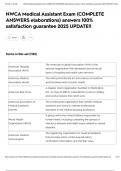
1. American Hospital Association (AHA) - ANSWER ✔ The American
Hospital Association (AHA) is the national organization that represents and
serves all types of hospitals and health care networks.
2. American Medical Association (AMA) - ANSWER ✔ The AMA promotes
the art and science of medicine and the betterment of public health.
3. American Red Cross - ANSWER ✔ A disaster relief organization founded
in Washington, D.C. on May 21, 1881 by Clara Barton to aid US military
and conduct peace time relief work.
4. American Association of Medical Assistants (AAMA) - ANSWER ✔ The
professional organization that certifies medical assistants and works to
maintain professional standards in the medical assisting profession.
5. World Health Organization (WHO) - ANSWER ✔ A group within the
United Nations responsible for human health, including combating the
spread of infectious diseases and health issues related to natural disasters.
,6. American Medical Technologists - ANSWER ✔ The registering
organization for medical assistants that provides online continuing
education, certification information, and member news.
7. American Academy of Professional Coders (AAPC) - ANSWER ✔ A
professional association established to provide a national certification and
credentialing process, to support the national and local membership by
providing educational products and opportunities to networks, and to
increase and promote national recognition and awareness of professional
coding.
8. American Health Information Management Association (AHIMA) -
ANSWER ✔ The professional membership organization for managers of
health record services and healthcare information systems as well as coding
services; provides accreditation, advocacy, certification, and educational
services
9. Association for healthcare Documentation Integrity - ANSWER ✔
Professional organization that in the field of medical transcription/editing
10.Marie Curie - ANSWER ✔ A Polish physicist who, with French husband
Pierre, discovered radium emits subatomic particles
11.Panic disorder - ANSWER ✔ Patients experience sudden and unexplained
panic and report feelings of impending doom and fear of dying. They
tremble, have difficulty breathing, have palpitations and chest pain, and
become dizzy. The panic attacks are frequent, regular, and disabling.
Treatment includes psychotherapy (Treatment of mental disorders with talk
therapy) and drug therapy.
,12.Phobic Disorder - ANSWER ✔ Patients experience unusual fear or anxiety
about a specific object, situation, or activity. The fear progresses to a point
where it controls a person's life since a great deal of time and energy is spent
on avoiding the object of the fear. Common targets of fear for phobic
disorders include darkness, heights, social situations, pain, spiders, bacteria,
closed spaces, dentists, insects, cats, blood, water, physicians, thunder and
lightning, bees, snakes, disease, flying, fire, death, strangers, and animals.
The phobia for each focus has a specific name.
13.Obsessive-Compulsive Disorder - ANSWER ✔ Unrelenting thoughts and
obsessions accompanied by compulsive, repeated action. Examples include
sexual fantasies or harming others. Actions include repeated excessive
handwashing, twitches, rolling up sleeves and rolling them down, etc. The
actions tend to reduce the stress level. Treatment usually involves drug
therapy and psychotherapy.
14.Post-Traumatic Stress Disorder - ANSWER ✔ A delayed response to a
traumatic event, such as a natural disaster, war, terrorist attack, fire, rape,
abuse, or any other event that caused serious compromise of personal safety.
The onset may be immediate or delayed and symptoms include anxiety,
denial of the event, fear of it reoccurring, nightmares, flashbacks, reduced
appetite and weight loss, and loss of interest in normal activities. Many
individuals simply isolate themselves. Treatment involves psychotherapy
and drug therapy to help regain normal sleeping patterns.
15.Common Phobias - ANSWER ✔ Acrophobia - fear of heights
Agoraphobia - fear of crowds or open places
Claustrophobia - fear of closed-in places
Hydrophobia - fear of water
Nyctophobia - fear of the dark
Thanatophobia - fear of death
, 16.Somatization disorder - ANSWER ✔ Pain or physical symptoms of illness
in more than four body regions or systems with no pathology to cause the
symptoms. Patients tend to have chronic, recurring, multiple complaints and
these often begin before age 30. Patients are treated using psychotherapy.
17.Conversion disorder - ANSWER ✔ Often called hysteria, Symptoms include
paralysis, tremors, mutism, shortness of breath, difficulty swallowing,
nausea, vomiting, temporary blindness, or seizures. These all tend to create
an escape from the situation. The symptoms typically go away after the
stressful situation has passed. Treatment involves psychotherapy.
18.Hypochondriasis - ANSWER ✔ Reporting pain and symptoms that have no
physiological basis. The individuals actually experience the symptoms and
are not convinced when the medical test results show no pathology. They
tend to have an abnormal preoccupation with their state of health, which can
be incapacitating. Treatment involves psychotherapy.
19.Factitious Disorders - ANSWER ✔ When the patient attempts to gain
attention by intentionally and fraudulently taking or exaggerating symptoms
of disease for personal or financial gain
20.Munchausen syndrome - ANSWER ✔ A condition in which individuals gain
an extensive knowledge of disease processes and injure themselves to show
others that they have the disease. Munchausen by proxy occurs when a child
under the care of the individual is intentionally hurt so that the child must
seek medical attention. The caregiver then receives a psychological reward
for saving the child or having a sick child. Treatment may include
psychotherapy
21.Gender Identity Disorder - ANSWER ✔ Patients feel as though they are the
opposite sex and feel unhappy and uncomfortable as the physical gender
GUIDE 2026 COMPLETE QUESTIONS WITH
CORRECT DETAILED ANSWERS ||
100% GUARANTEED PASS
<RECENT VERSION>
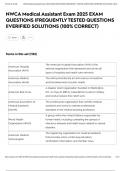
1. American Hospital Association (AHA) - ANSWER ✔ The American
Hospital Association (AHA) is the national organization that represents and
serves all types of hospitals and health care networks.
2. American Medical Association (AMA) - ANSWER ✔ The AMA promotes
the art and science of medicine and the betterment of public health.
3. American Red Cross - ANSWER ✔ A disaster relief organization founded
in Washington, D.C. on May 21, 1881 by Clara Barton to aid US military
and conduct peace time relief work.
4. American Association of Medical Assistants (AAMA) - ANSWER ✔ The
professional organization that certifies medical assistants and works to
maintain professional standards in the medical assisting profession.
5. World Health Organization (WHO) - ANSWER ✔ A group within the
United Nations responsible for human health, including combating the
spread of infectious diseases and health issues related to natural disasters.
,6. American Medical Technologists - ANSWER ✔ The registering
organization for medical assistants that provides online continuing
education, certification information, and member news.
7. American Academy of Professional Coders (AAPC) - ANSWER ✔ A
professional association established to provide a national certification and
credentialing process, to support the national and local membership by
providing educational products and opportunities to networks, and to
increase and promote national recognition and awareness of professional
coding.
8. American Health Information Management Association (AHIMA) -
ANSWER ✔ The professional membership organization for managers of
health record services and healthcare information systems as well as coding
services; provides accreditation, advocacy, certification, and educational
services
9. Association for healthcare Documentation Integrity - ANSWER ✔
Professional organization that in the field of medical transcription/editing
10.Marie Curie - ANSWER ✔ A Polish physicist who, with French husband
Pierre, discovered radium emits subatomic particles
11.Panic disorder - ANSWER ✔ Patients experience sudden and unexplained
panic and report feelings of impending doom and fear of dying. They
tremble, have difficulty breathing, have palpitations and chest pain, and
become dizzy. The panic attacks are frequent, regular, and disabling.
Treatment includes psychotherapy (Treatment of mental disorders with talk
therapy) and drug therapy.
,12.Phobic Disorder - ANSWER ✔ Patients experience unusual fear or anxiety
about a specific object, situation, or activity. The fear progresses to a point
where it controls a person's life since a great deal of time and energy is spent
on avoiding the object of the fear. Common targets of fear for phobic
disorders include darkness, heights, social situations, pain, spiders, bacteria,
closed spaces, dentists, insects, cats, blood, water, physicians, thunder and
lightning, bees, snakes, disease, flying, fire, death, strangers, and animals.
The phobia for each focus has a specific name.
13.Obsessive-Compulsive Disorder - ANSWER ✔ Unrelenting thoughts and
obsessions accompanied by compulsive, repeated action. Examples include
sexual fantasies or harming others. Actions include repeated excessive
handwashing, twitches, rolling up sleeves and rolling them down, etc. The
actions tend to reduce the stress level. Treatment usually involves drug
therapy and psychotherapy.
14.Post-Traumatic Stress Disorder - ANSWER ✔ A delayed response to a
traumatic event, such as a natural disaster, war, terrorist attack, fire, rape,
abuse, or any other event that caused serious compromise of personal safety.
The onset may be immediate or delayed and symptoms include anxiety,
denial of the event, fear of it reoccurring, nightmares, flashbacks, reduced
appetite and weight loss, and loss of interest in normal activities. Many
individuals simply isolate themselves. Treatment involves psychotherapy
and drug therapy to help regain normal sleeping patterns.
15.Common Phobias - ANSWER ✔ Acrophobia - fear of heights
Agoraphobia - fear of crowds or open places
Claustrophobia - fear of closed-in places
Hydrophobia - fear of water
Nyctophobia - fear of the dark
Thanatophobia - fear of death
, 16.Somatization disorder - ANSWER ✔ Pain or physical symptoms of illness
in more than four body regions or systems with no pathology to cause the
symptoms. Patients tend to have chronic, recurring, multiple complaints and
these often begin before age 30. Patients are treated using psychotherapy.
17.Conversion disorder - ANSWER ✔ Often called hysteria, Symptoms include
paralysis, tremors, mutism, shortness of breath, difficulty swallowing,
nausea, vomiting, temporary blindness, or seizures. These all tend to create
an escape from the situation. The symptoms typically go away after the
stressful situation has passed. Treatment involves psychotherapy.
18.Hypochondriasis - ANSWER ✔ Reporting pain and symptoms that have no
physiological basis. The individuals actually experience the symptoms and
are not convinced when the medical test results show no pathology. They
tend to have an abnormal preoccupation with their state of health, which can
be incapacitating. Treatment involves psychotherapy.
19.Factitious Disorders - ANSWER ✔ When the patient attempts to gain
attention by intentionally and fraudulently taking or exaggerating symptoms
of disease for personal or financial gain
20.Munchausen syndrome - ANSWER ✔ A condition in which individuals gain
an extensive knowledge of disease processes and injure themselves to show
others that they have the disease. Munchausen by proxy occurs when a child
under the care of the individual is intentionally hurt so that the child must
seek medical attention. The caregiver then receives a psychological reward
for saving the child or having a sick child. Treatment may include
psychotherapy
21.Gender Identity Disorder - ANSWER ✔ Patients feel as though they are the
opposite sex and feel unhappy and uncomfortable as the physical gender