
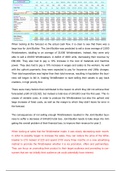
When looking at the forecast vs the actual cash flow, it is clear to see that there was a
large loss for Joint Builder. The Joint Builder was predicted to sell a close average of 2,800
Wristbreakers, totalling to an average of 33,600 Wristbreakers, instead, they were only
able to sell a 29,600 Wristbreakers. A deficit of 4000 units, decreasing their revenue by
£80,000. They also had to pay a 10% increase in the cost of materials and machine
power. They also had to pay a 10% increase in wages and salary to the workers. As well
with the upfront payments, they were expected to pay for Insurance and Utility charges.
Their total expenditure was higher than their total revenue, resulting in liquidation the busi-
ness will began to fall in, leading WristBreaker to start selling their assets to pay back
creditors, in high priority first.
There were many factors that contributed to the reason to which they did not achieve their
forecasted profit of £22,922, but instead a total loss of £43,603 over the first year. The in-
crease of variable costs, in order to produce the Wristbreakers but also the upfront and
large increase of fixed costs, as well as the margin to which they didn't leave for error in
the forecast.
The consequences of not selling enough Wristbreakers resulted in the Joint Builder busi-
ness to suffer a decrease of £44,603 total loss. Joint Builder needs to take steps into miti-
gating the overall problem of their financial loss, to improve their revenue for year 2.
When looking at sales that the Wristbreaker made, it was slowly decreasing each month.
In order to possibly began to increase the sales, they can reduce the price of the Wrist-
breaker to £19 instead of £20 and spend £100 every three months on a new advertising
method to promote the Wristbreaker whether it is via promotion, offers and partnerships.
They can focus on promoting their product to their target audience and promoting to con -
sumers that are not initially their audience yet could potentially have interest.
large loss for Joint Builder. The Joint Builder was predicted to sell a close average of 2,800
Wristbreakers, totalling to an average of 33,600 Wristbreakers, instead, they were only
able to sell a 29,600 Wristbreakers. A deficit of 4000 units, decreasing their revenue by
£80,000. They also had to pay a 10% increase in the cost of materials and machine
power. They also had to pay a 10% increase in wages and salary to the workers. As well
with the upfront payments, they were expected to pay for Insurance and Utility charges.
Their total expenditure was higher than their total revenue, resulting in liquidation the busi-
ness will began to fall in, leading WristBreaker to start selling their assets to pay back
creditors, in high priority first.
There were many factors that contributed to the reason to which they did not achieve their
forecasted profit of £22,922, but instead a total loss of £43,603 over the first year. The in-
crease of variable costs, in order to produce the Wristbreakers but also the upfront and
large increase of fixed costs, as well as the margin to which they didn't leave for error in
the forecast.
The consequences of not selling enough Wristbreakers resulted in the Joint Builder busi-
ness to suffer a decrease of £44,603 total loss. Joint Builder needs to take steps into miti-
gating the overall problem of their financial loss, to improve their revenue for year 2.
When looking at sales that the Wristbreaker made, it was slowly decreasing each month.
In order to possibly began to increase the sales, they can reduce the price of the Wrist-
breaker to £19 instead of £20 and spend £100 every three months on a new advertising
method to promote the Wristbreaker whether it is via promotion, offers and partnerships.
They can focus on promoting their product to their target audience and promoting to con -
sumers that are not initially their audience yet could potentially have interest.


