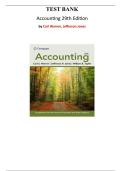
TEST BANK
Accounting 29th Edition
by Carl Warren, Jefferson Jones
AP
LU
S0
01
,Table of Content
Chapter 1. Introduction to Accounting and Business
Chapter 2. Analyzing Transactions
Chapter 3. The Adjusting Process
Chapter 4. The Accounting Cycle
Chapter 5. Accounting for Retail Businesses
Chapter 6. Inventories
AP
Chapter 7. Internal Control and Cash
Chapter 8. Receivables
LU
Chapter 9. Long-Term Assets: Fixed and Intangible
Chapter 10. Liabilities: Current, Installment Notes, and Contingencies
Chapter 11. Liabilities: Bonds Payable
S0
Chapter 12. Accounting for Partnerships and Limited Liability
Companies
01
Chapter 13. Corporations: Organization, Stock Transactions, and
Dividends
Chapter 14. Statement of Cash Flows
Chapter 15. Financial Statement Analysis
Chapter 16. Introduction to Managerial Accounting
Chapter 17. Job Order Costing
Chapter 18. Process Costing
,Chapter 19. Activity-Based Costing
Chapter 20. Cost-Volume-Profit Analysis
Chapter 21. Budgeting
Chapter 22. Evaluating Variances from Standard Costs
Chapter 23. Differential Analysis and Product Pricing
Chapter 24. Capital Investment Analysis
AP
LU
S0
01
, Test Bank for Accounting, 29th Edition by Carl Warren
Chap 01 29e
Answers Included ✅
Indicate whether the statement is true or false.
1. An account receivable is a claim against a customer resulting from a sale on account.
a. True
b. False
2. An example of an external user of accounting information is the federal government.
a. True
b. False
3. A corporation is a business that is legally separate and distinct from its owners.
a. True
AP
b. False
4. The role of accounting is to provide many different users with financial information to make economic decisions.
a. True
b. False
5. The main objective for all businesses is to maximize unrealized profits.
LU
a. True
b. False
6. Financial accounting provides information to all users, while the main focus for managerial accounting is to
provide information to management.
a. True
S0
b. False
7. Assets that are used up during the process of earning revenue are called expenses.
a. True
b. False
01
8. Withdrawals paid to owners decrease assets and increase equity.
a. True
b. False
9. An example of a general-purpose financial statement would be a report about projected price increases related
to transportation costs.
a. True
b. False
10. No significant differences exist between the accounting standards issued by the FASB and the IASB.
a. True
b. False
Page 1
Accounting 29th Edition
by Carl Warren, Jefferson Jones
AP
LU
S0
01
,Table of Content
Chapter 1. Introduction to Accounting and Business
Chapter 2. Analyzing Transactions
Chapter 3. The Adjusting Process
Chapter 4. The Accounting Cycle
Chapter 5. Accounting for Retail Businesses
Chapter 6. Inventories
AP
Chapter 7. Internal Control and Cash
Chapter 8. Receivables
LU
Chapter 9. Long-Term Assets: Fixed and Intangible
Chapter 10. Liabilities: Current, Installment Notes, and Contingencies
Chapter 11. Liabilities: Bonds Payable
S0
Chapter 12. Accounting for Partnerships and Limited Liability
Companies
01
Chapter 13. Corporations: Organization, Stock Transactions, and
Dividends
Chapter 14. Statement of Cash Flows
Chapter 15. Financial Statement Analysis
Chapter 16. Introduction to Managerial Accounting
Chapter 17. Job Order Costing
Chapter 18. Process Costing
,Chapter 19. Activity-Based Costing
Chapter 20. Cost-Volume-Profit Analysis
Chapter 21. Budgeting
Chapter 22. Evaluating Variances from Standard Costs
Chapter 23. Differential Analysis and Product Pricing
Chapter 24. Capital Investment Analysis
AP
LU
S0
01
, Test Bank for Accounting, 29th Edition by Carl Warren
Chap 01 29e
Answers Included ✅
Indicate whether the statement is true or false.
1. An account receivable is a claim against a customer resulting from a sale on account.
a. True
b. False
2. An example of an external user of accounting information is the federal government.
a. True
b. False
3. A corporation is a business that is legally separate and distinct from its owners.
a. True
AP
b. False
4. The role of accounting is to provide many different users with financial information to make economic decisions.
a. True
b. False
5. The main objective for all businesses is to maximize unrealized profits.
LU
a. True
b. False
6. Financial accounting provides information to all users, while the main focus for managerial accounting is to
provide information to management.
a. True
S0
b. False
7. Assets that are used up during the process of earning revenue are called expenses.
a. True
b. False
01
8. Withdrawals paid to owners decrease assets and increase equity.
a. True
b. False
9. An example of a general-purpose financial statement would be a report about projected price increases related
to transportation costs.
a. True
b. False
10. No significant differences exist between the accounting standards issued by the FASB and the IASB.
a. True
b. False
Page 1