Chemical Equilibrium
Dynamic Equilibrium
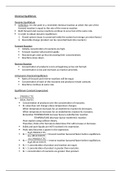
Definition: It is the point in a reversible chemical reaction at which the rate of the
forward reaction is equal to the rate of the reverse reaction.
Both forward and reverse reactions continue to occur but at the same rate.
In order to obtain dynamic equilibrium:
1. Closed system (mass is conserved inside the system but energy can enter/leave.)
2. Reversible change (product can be converted back into reactant.)
Forward Reaction
Initially concentration of reactants are high.
Forward reaction will proceed rapidly.
Reactants get used up thus decreasing their concentrations.
Reactions slows down.
Reverse Reaction
Concentration of products is zero at beginning as has not formed.
Concentration is low and increases as reaction proceeds.
At Dynamic Chemical Equilibrium
Rates of forward and reverse reactions will be equal.
Concentration of each of the reactants and products remain constant.
Reactions continue at same rate.
Equilibrium Constant (expression)
[ PRODUCTS ]
Kc =
[ REACTANTS ]
Concentration of products over the concentration of reactants.
Kc value does not change unless temperature changes.
When temperature increases for an exothermic reaction Kc decreases.
When temperature increases for an endothermic reaction Kc increases.
Remember TEMPERATURE increase favours endothermic reaction.
TEMPERATURE decrease favour exothermic reaction.
Must explain using collision theory.
Therefore, think of Kc formula to determine if Kc will increase or decrease.
Solids and pure liquids are NOT involved in Kc expression.
Mole ratio becomes a power in the expression.
high [ PRODUCTS ]
Kc = = forward reaction favoured/faster before equilibrium.
low [ REACTANTS ]
low [ PRODUCTS ]
Kc = = reverse reaction favoured/faster before equilibrium.
high [ REACTANTS ]
Kc = 1 concentration of product and reaction are equal.
Kc > 1 concentration of product is greater than reactants.
Kc < concentration of reactants are greater than product.
Dynamic Equilibrium
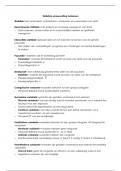
Definition: It is the point in a reversible chemical reaction at which the rate of the
forward reaction is equal to the rate of the reverse reaction.
Both forward and reverse reactions continue to occur but at the same rate.
In order to obtain dynamic equilibrium:
1. Closed system (mass is conserved inside the system but energy can enter/leave.)
2. Reversible change (product can be converted back into reactant.)
Forward Reaction
Initially concentration of reactants are high.
Forward reaction will proceed rapidly.
Reactants get used up thus decreasing their concentrations.
Reactions slows down.
Reverse Reaction
Concentration of products is zero at beginning as has not formed.
Concentration is low and increases as reaction proceeds.
At Dynamic Chemical Equilibrium
Rates of forward and reverse reactions will be equal.
Concentration of each of the reactants and products remain constant.
Reactions continue at same rate.
Equilibrium Constant (expression)
[ PRODUCTS ]
Kc =
[ REACTANTS ]
Concentration of products over the concentration of reactants.
Kc value does not change unless temperature changes.
When temperature increases for an exothermic reaction Kc decreases.
When temperature increases for an endothermic reaction Kc increases.
Remember TEMPERATURE increase favours endothermic reaction.
TEMPERATURE decrease favour exothermic reaction.
Must explain using collision theory.
Therefore, think of Kc formula to determine if Kc will increase or decrease.
Solids and pure liquids are NOT involved in Kc expression.
Mole ratio becomes a power in the expression.
high [ PRODUCTS ]
Kc = = forward reaction favoured/faster before equilibrium.
low [ REACTANTS ]
low [ PRODUCTS ]
Kc = = reverse reaction favoured/faster before equilibrium.
high [ REACTANTS ]
Kc = 1 concentration of product and reaction are equal.
Kc > 1 concentration of product is greater than reactants.
Kc < concentration of reactants are greater than product.