1. Geschiedenis
• Virschau: pathologie a/d cel kunnen linken, eerste handboek geschreven
• Parijs → evolutie v geneeskunde → P’en werden meer bestudeerd dan genezen
2. Inleiding
2.1 Inhoudelijk referentiekader
2.1.1 Holistische benadering P
• V cel tot organisme = systemisch denken
• Garagisme vs biopsychosociaal model
o Garagisme → alleen het probleem v/d P herstellen, de rest ligt buiten beschouwing
o BPS model → rekening houdend met ook nog sociale & psychologische aspecten
• Fysiologie als basis vs anatomie
o Fysiologie → werking v/h lichaam, “hoe” ➔ wat is er mis, wat
zal nodig zijn om het te herstellen
o Anatomie → alleen stuctuur, “wat”
• Kwaliteit over kwantiteit
• Nieuwste trend = somato-psycho-semiotic paradigm of health
o Somatisch = lichamelijk, semiotisch = cultuur/interpretatie
symbolen/tekens
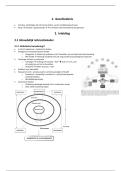
o Morbiditeitspiramide
• Systemisch denken
o Cellulaire pathologie bevindt zich in moleculair niveau
o Alles heeft invloed op elkaar
, o Je hebt een hiërarchische organisatie
▪ Onderste niveau = chemische
elementen
▪ Hierop baseren zich de cellen →
bewegen heel snel & reageren snel
▪ Organiseren zich in weefsels →
endotheel, epitheel
▪ Maken dan longen, hersenen,
spieren,… → reageren al trager ➔ bv
bij krachttraining, adaptatie duurt
langer
▪ Dan krijg je NM systeem,
cardiovasculair systeem
▪ Uiteindelijk heb je de mens
o Atomen → moleculen → cellen → weefsels →
organen → systemen → organisme (holistische
aanpak)
• Klinisch redeneren
o W te vaak aan artsen overgelaten
o Kennis omtrent fysiopathologische mechanismes & geassocieerde ziektebeelden nodig
2.2 Wat houdt fysiopathologie in?
2.2.1 Fysiologie
• Homeostase → vermogen v/e organisme om het interne milieu constant te houden
o = dynamisch, heeft constante flow
o = belangrijk → lichaam gaat moeten kunnen reageren op bepaalde zaken
• Leven vertoont organisatie & structuur
o Verband tss vorm (anatomie, histologie, morfologie) & functie (fysiologie, gedrag)
o Basale bouwstenen v/h leven = cellen → vormen weefsels → vormen organen → vormen
organisme
• Metabolisme/stofwisseling → opnemen v E v/h geheel v biochem processen in cellen & organismen
o Ten behoeve v activiteit, groei, voortplanting & instandhouding
o E w v/d ene vorm i/d andere getransformeerd ➔ chem E omzetten in mech E
• Groei → proces v toename in cel aantal, grootte & complexiteit
• Aanpassingen/adaptaties in structuren/gedrag → survival of the fittest (overleven/voor nageslacht zorgen
• Prikkelbaarheid → het kunnen reageren op stimuli, op veranderingen in inwendig of uitwendig milieu v/h
organisme (Bv honger = uitwendige stimulus)
• Voortplanting → organisme zorgt voor nakomelingen & voortbestaan v/d soort
o 2 individuen nodig, nakomelingen hebben kenmerken v beide ouders
• Fysiopathologie = wanneer deze kenmerken niet meer functioneren
2.2.2 Ontstekingsreactie
• = stress op cellulair niveau
• Reactie v gevasculariseerd weefsel → weefselbeschadiging
o Doel = beschadigende agens neutraliseren & schade herstellen
o Niet direct anti-inflammatoire medicatie geven in begin letsel → neemt pijn weg, maar de schade
kan niet hersteld w
• Hoe → rubor = roodheid, calor = warmte, dolor = pijn, tumor = zwelling, functio laesa = functieverlies
• Mechanisme
o Vaatveranderingen → vasodilatatie ➔ rubor
o Vroege, kortdurende fase v 15min in aansluiting op weefselbeschadiging oiv histamine (
o Langdurige fase v 6u na ernstigere beschadiging oiv bradykinine
o Indien aanhoudend → endotheelschade ➔ weefsel vormt prostaglandines, vasculaire reactie
• Oorzaken → fysische agentia (bv hand op heet vuur), chemicaliën, microbiologisch, immunologisch
,2.3 Verband tss cellulaire mechanismen v pathologie & holistische
bandering
2.3.1 Stress
• Stress = holistisch concept
• Complexe interactie met gezondheid/morbiditeit
o Stress = stimulatie, zonder stimulatie geen leven
o Stress als oorzaak v ziektepatronen
o Chronische ziekteverschijnselen veroorzaken stress + chronische stress heeft groot effect op
immuunsysteem
o Verband met ontstekingsreacties
• Stress = psychofysiologisch concept bij:
o Dualisme → lichaam & geest zijn 2 aparte entiteiten
o Materialisme → biologische basis v gedrag
o Neuroscience = nieuw dualisme, it’s all in the brain
▪ Hoe brein zich aanpast na bv lig scheur → we w vaak geblindeerd door de tirannie v/h
brein
• Dualisme
o W onbewust binnen gebracht
o Alle schema’s zijn fout, maar sommige zijn nuttig → risico dat ze ons denken beperken
o CZS & PZS w beschouwd als 2 aparte systemen → niet helemaal correct
o AZS ook
▪ Sympathisch = fight or flight + parasympatisch = rest & digest
▪ Je zit veel meer i/d parasympatische dan sympathische tak
▪ Brein = uitloper v zowel parasympatische als sympathische tak
• Structuur ten dienste v stress
o Stress geassocieerd met ontstekingsreacties
o 3 fases
▪ Fase 1 = alarm: paar sec/30min → geen kwade stressor want helpt ons overleven (na
initiële stressrespons zou de curve ook moeten verlagen)
▪ Fase 2 = resistance: adaptatie door continue stress → cortisol w gemaakt = 1 v/d sterkste
pijnonderdrukkers in ons lichaam
▪ Fase 3 = exhaustion: als je niet meer uit de stressrespons geraken
• Stress & ontsteking
o = allebei nuttige processen MAAR mensen willen de symptomen ervan onderdrukken
o Alles hangt af v duur → nuttig mechanisme op korte duur, maar heel schadelijk indien lang
3. Cellulaire reacties op schadelijke prikkels
3.1 Intro
3.1.1 Celpathologie
• Beschrijving mechanismes → verstoringen in intra- & extracellulair milieu → cel functieverlies/-
aanpassingen & uiteindelijk celdood
o Cel heeft mechanismes om zichzelf te beschermen, maar deze zijn niet eindig
o Cellen = perfecte samenleving
• Reactiepatronen v cellen op beschadiging → laagste schakel v fysiologische homeostase
o Zonder homeostase krijg je ongewenste activiteit i/d cellen
3.1.2 Celfysiologie
• Cel = kleinste levende eenheid in lichaam
• Cellen hebben, afh v functie weefsel, verschillende kenmerken
o Bv spiercellen → nadruk op productie v E
o Bv darmwandcellen → nadruk op transport doorheen membraan
, DNA
• In celkern heb je chromosomen (hoe ouder je w neemt lengte telomeren af)
• Chromosoom bestaat uit heterochromatine (dense, inactief) & euchromatine (actief)
• Chromatine = string v nucleosomen
o Met DNA ertussen → DNA ga je transcripteren → intronen eruit knippen
o mRNA ga je dan transleren tot een EW
celorganellen
• Lysosoom → neemt zaken op, breekt deze af
en brengt deze naar buiten
• Mitochondria → maken ATP (tot 1700 in 1 cel)
• Endosoom → transporter, soms een fagosoom
(voorloper om dingen af te breken)
• Cytoskelet → geeft cel structuur
• Peroxisoom → vergelijkbaar met lysosoom
• Plasmamembraan → bescherming & transport
Transportmechanismes
• Virschau: pathologie a/d cel kunnen linken, eerste handboek geschreven
• Parijs → evolutie v geneeskunde → P’en werden meer bestudeerd dan genezen
2. Inleiding
2.1 Inhoudelijk referentiekader
2.1.1 Holistische benadering P
• V cel tot organisme = systemisch denken
• Garagisme vs biopsychosociaal model
o Garagisme → alleen het probleem v/d P herstellen, de rest ligt buiten beschouwing
o BPS model → rekening houdend met ook nog sociale & psychologische aspecten
• Fysiologie als basis vs anatomie
o Fysiologie → werking v/h lichaam, “hoe” ➔ wat is er mis, wat
zal nodig zijn om het te herstellen
o Anatomie → alleen stuctuur, “wat”
• Kwaliteit over kwantiteit
• Nieuwste trend = somato-psycho-semiotic paradigm of health
o Somatisch = lichamelijk, semiotisch = cultuur/interpretatie
symbolen/tekens
o Morbiditeitspiramide
• Systemisch denken
o Cellulaire pathologie bevindt zich in moleculair niveau
o Alles heeft invloed op elkaar
, o Je hebt een hiërarchische organisatie
▪ Onderste niveau = chemische
elementen
▪ Hierop baseren zich de cellen →
bewegen heel snel & reageren snel
▪ Organiseren zich in weefsels →
endotheel, epitheel
▪ Maken dan longen, hersenen,
spieren,… → reageren al trager ➔ bv
bij krachttraining, adaptatie duurt
langer
▪ Dan krijg je NM systeem,
cardiovasculair systeem
▪ Uiteindelijk heb je de mens
o Atomen → moleculen → cellen → weefsels →
organen → systemen → organisme (holistische
aanpak)
• Klinisch redeneren
o W te vaak aan artsen overgelaten
o Kennis omtrent fysiopathologische mechanismes & geassocieerde ziektebeelden nodig
2.2 Wat houdt fysiopathologie in?
2.2.1 Fysiologie
• Homeostase → vermogen v/e organisme om het interne milieu constant te houden
o = dynamisch, heeft constante flow
o = belangrijk → lichaam gaat moeten kunnen reageren op bepaalde zaken
• Leven vertoont organisatie & structuur
o Verband tss vorm (anatomie, histologie, morfologie) & functie (fysiologie, gedrag)
o Basale bouwstenen v/h leven = cellen → vormen weefsels → vormen organen → vormen
organisme
• Metabolisme/stofwisseling → opnemen v E v/h geheel v biochem processen in cellen & organismen
o Ten behoeve v activiteit, groei, voortplanting & instandhouding
o E w v/d ene vorm i/d andere getransformeerd ➔ chem E omzetten in mech E
• Groei → proces v toename in cel aantal, grootte & complexiteit
• Aanpassingen/adaptaties in structuren/gedrag → survival of the fittest (overleven/voor nageslacht zorgen
• Prikkelbaarheid → het kunnen reageren op stimuli, op veranderingen in inwendig of uitwendig milieu v/h
organisme (Bv honger = uitwendige stimulus)
• Voortplanting → organisme zorgt voor nakomelingen & voortbestaan v/d soort
o 2 individuen nodig, nakomelingen hebben kenmerken v beide ouders
• Fysiopathologie = wanneer deze kenmerken niet meer functioneren
2.2.2 Ontstekingsreactie
• = stress op cellulair niveau
• Reactie v gevasculariseerd weefsel → weefselbeschadiging
o Doel = beschadigende agens neutraliseren & schade herstellen
o Niet direct anti-inflammatoire medicatie geven in begin letsel → neemt pijn weg, maar de schade
kan niet hersteld w
• Hoe → rubor = roodheid, calor = warmte, dolor = pijn, tumor = zwelling, functio laesa = functieverlies
• Mechanisme
o Vaatveranderingen → vasodilatatie ➔ rubor
o Vroege, kortdurende fase v 15min in aansluiting op weefselbeschadiging oiv histamine (
o Langdurige fase v 6u na ernstigere beschadiging oiv bradykinine
o Indien aanhoudend → endotheelschade ➔ weefsel vormt prostaglandines, vasculaire reactie
• Oorzaken → fysische agentia (bv hand op heet vuur), chemicaliën, microbiologisch, immunologisch
,2.3 Verband tss cellulaire mechanismen v pathologie & holistische
bandering
2.3.1 Stress
• Stress = holistisch concept
• Complexe interactie met gezondheid/morbiditeit
o Stress = stimulatie, zonder stimulatie geen leven
o Stress als oorzaak v ziektepatronen
o Chronische ziekteverschijnselen veroorzaken stress + chronische stress heeft groot effect op
immuunsysteem
o Verband met ontstekingsreacties
• Stress = psychofysiologisch concept bij:
o Dualisme → lichaam & geest zijn 2 aparte entiteiten
o Materialisme → biologische basis v gedrag
o Neuroscience = nieuw dualisme, it’s all in the brain
▪ Hoe brein zich aanpast na bv lig scheur → we w vaak geblindeerd door de tirannie v/h
brein
• Dualisme
o W onbewust binnen gebracht
o Alle schema’s zijn fout, maar sommige zijn nuttig → risico dat ze ons denken beperken
o CZS & PZS w beschouwd als 2 aparte systemen → niet helemaal correct
o AZS ook
▪ Sympathisch = fight or flight + parasympatisch = rest & digest
▪ Je zit veel meer i/d parasympatische dan sympathische tak
▪ Brein = uitloper v zowel parasympatische als sympathische tak
• Structuur ten dienste v stress
o Stress geassocieerd met ontstekingsreacties
o 3 fases
▪ Fase 1 = alarm: paar sec/30min → geen kwade stressor want helpt ons overleven (na
initiële stressrespons zou de curve ook moeten verlagen)
▪ Fase 2 = resistance: adaptatie door continue stress → cortisol w gemaakt = 1 v/d sterkste
pijnonderdrukkers in ons lichaam
▪ Fase 3 = exhaustion: als je niet meer uit de stressrespons geraken
• Stress & ontsteking
o = allebei nuttige processen MAAR mensen willen de symptomen ervan onderdrukken
o Alles hangt af v duur → nuttig mechanisme op korte duur, maar heel schadelijk indien lang
3. Cellulaire reacties op schadelijke prikkels
3.1 Intro
3.1.1 Celpathologie
• Beschrijving mechanismes → verstoringen in intra- & extracellulair milieu → cel functieverlies/-
aanpassingen & uiteindelijk celdood
o Cel heeft mechanismes om zichzelf te beschermen, maar deze zijn niet eindig
o Cellen = perfecte samenleving
• Reactiepatronen v cellen op beschadiging → laagste schakel v fysiologische homeostase
o Zonder homeostase krijg je ongewenste activiteit i/d cellen
3.1.2 Celfysiologie
• Cel = kleinste levende eenheid in lichaam
• Cellen hebben, afh v functie weefsel, verschillende kenmerken
o Bv spiercellen → nadruk op productie v E
o Bv darmwandcellen → nadruk op transport doorheen membraan
, DNA
• In celkern heb je chromosomen (hoe ouder je w neemt lengte telomeren af)
• Chromosoom bestaat uit heterochromatine (dense, inactief) & euchromatine (actief)
• Chromatine = string v nucleosomen
o Met DNA ertussen → DNA ga je transcripteren → intronen eruit knippen
o mRNA ga je dan transleren tot een EW
celorganellen
• Lysosoom → neemt zaken op, breekt deze af
en brengt deze naar buiten
• Mitochondria → maken ATP (tot 1700 in 1 cel)
• Endosoom → transporter, soms een fagosoom
(voorloper om dingen af te breken)
• Cytoskelet → geeft cel structuur
• Peroxisoom → vergelijkbaar met lysosoom
• Plasmamembraan → bescherming & transport
Transportmechanismes