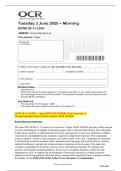
GCSE (9–1) LATIN — June 2025 PAST PAPER: Verse Literature A
Merged Question Paper & Mark Scheme [OCR J282/04]
Exam Resource Summary
The June 2025 GCSE (9–1) Latin Verse Literature A Paper (OCR J282/04) provides a fully merged
resource combining the complete examination paper with its official mark scheme. This integrated
format allows learners to understand precisely how each question is assessed, clarifying examiner
expectations and highlighting the standards required for high-band responses. This component
assesses students’ ability to read, translate, and analyse Latin verse texts. Candidates are expected
to demonstrate accurate translation skills, interpret poetic language and stylistic devices, analyse
authorial techniques, and provide evidence-based evaluations of the passages. The paper also
evaluates comprehension of literary context, metre, and thematic elements. By pairing each
question with detailed marking guidance, the resource strengthens linguistic, analytical, and
interpretative skills. It supports the development of structured and precise written responses,
enhances critical engagement with Latin poetry, and provides targeted revision to prepare students
thoroughly for the 2026 OCR GCSE Latin (Verse Literature A) examination.
OCR is an exempt Charity
Turn over
, 2
1 Read the passage and answer the questions.
cenabis bene, mi Fabulle, apud me
paucis, si tibi di favent, diebus,
si tecum attuleris bonam atque magnam
cenam, non sine candida puella
et vino et sale et omnibus cachinnis. 5
Catullus, Catullus invites a friend to dinner, lines 1–5
(a) cenabis … diebus (lines 1–2): when is the dinner supposed to take place?
. ................................................................................................................................................. [1]
(b) si tecum … cachinnis (lines 3–5): state three things that Fabullus has to bring with him.
1 .......................................................................................................................................................
2 .......................................................................................................................................................
3 .......................................................................................................................................................
[3]
© OCR 2025
, 3
2 Read the passage and answer the questions.
sed contra accipies meros amores,
seu quid suavius elegantiusve est:
nam unguentum dabo, quod meae puellae
donarunt Veneres Cupidinesque,
quod tu cum olfacies, deos rogabis, 5
totum ut te faciant, Fabulle, nasum.
Catullus, Catullus invites a friend to dinner, lines 9–14
(a) nam unguentum dabo (line 3): what does Catullus say that he will give to Fabullus?
. ................................................................................................................................................. [1]
(b) sed contra … nasum (lines 1–6): how does Catullus try to convince Fabullus that he is giving him
something worth having?
Make two points, each referring to the Latin.
1 .......................................................................................................................................................
..........................................................................................................................................................
..........................................................................................................................................................
..........................................................................................................................................................
..........................................................................................................................................................
..........................................................................................................................................................
..........................................................................................................................................................
2 .......................................................................................................................................................
..........................................................................................................................................................
..........................................................................................................................................................
..........................................................................................................................................................
..........................................................................................................................................................
..........................................................................................................................................................
..........................................................................................................................................................
[4]
Turn over for the next question.
© OCR 2025 Turn over
, 4
3 Read the passage and answer the question.
hesterno, Licini, die otiosi
multum lusimus in meis tabellis,
ut convenerat esse delicatos;
scribens versiculos uterque nostrum
ludebat numero modo hoc modo illoc, 5
reddens mutua per iocum atque vinum.
Catullus, Poetry and friendship, lines 1–6
Translate this passage into English.
..........................................................................................................................................................
..........................................................................................................................................................
..........................................................................................................................................................
..........................................................................................................................................................
..........................................................................................................................................................
..........................................................................................................................................................
..........................................................................................................................................................
..........................................................................................................................................................
..........................................................................................................................................................
..........................................................................................................................................................
..........................................................................................................................................................
..........................................................................................................................................................
. ................................................................................................................................................. [5]
© OCR 2025
Merged Question Paper & Mark Scheme [OCR J282/04]
Exam Resource Summary
The June 2025 GCSE (9–1) Latin Verse Literature A Paper (OCR J282/04) provides a fully merged
resource combining the complete examination paper with its official mark scheme. This integrated
format allows learners to understand precisely how each question is assessed, clarifying examiner
expectations and highlighting the standards required for high-band responses. This component
assesses students’ ability to read, translate, and analyse Latin verse texts. Candidates are expected
to demonstrate accurate translation skills, interpret poetic language and stylistic devices, analyse
authorial techniques, and provide evidence-based evaluations of the passages. The paper also
evaluates comprehension of literary context, metre, and thematic elements. By pairing each
question with detailed marking guidance, the resource strengthens linguistic, analytical, and
interpretative skills. It supports the development of structured and precise written responses,
enhances critical engagement with Latin poetry, and provides targeted revision to prepare students
thoroughly for the 2026 OCR GCSE Latin (Verse Literature A) examination.
OCR is an exempt Charity
Turn over
, 2
1 Read the passage and answer the questions.
cenabis bene, mi Fabulle, apud me
paucis, si tibi di favent, diebus,
si tecum attuleris bonam atque magnam
cenam, non sine candida puella
et vino et sale et omnibus cachinnis. 5
Catullus, Catullus invites a friend to dinner, lines 1–5
(a) cenabis … diebus (lines 1–2): when is the dinner supposed to take place?
. ................................................................................................................................................. [1]
(b) si tecum … cachinnis (lines 3–5): state three things that Fabullus has to bring with him.
1 .......................................................................................................................................................
2 .......................................................................................................................................................
3 .......................................................................................................................................................
[3]
© OCR 2025
, 3
2 Read the passage and answer the questions.
sed contra accipies meros amores,
seu quid suavius elegantiusve est:
nam unguentum dabo, quod meae puellae
donarunt Veneres Cupidinesque,
quod tu cum olfacies, deos rogabis, 5
totum ut te faciant, Fabulle, nasum.
Catullus, Catullus invites a friend to dinner, lines 9–14
(a) nam unguentum dabo (line 3): what does Catullus say that he will give to Fabullus?
. ................................................................................................................................................. [1]
(b) sed contra … nasum (lines 1–6): how does Catullus try to convince Fabullus that he is giving him
something worth having?
Make two points, each referring to the Latin.
1 .......................................................................................................................................................
..........................................................................................................................................................
..........................................................................................................................................................
..........................................................................................................................................................
..........................................................................................................................................................
..........................................................................................................................................................
..........................................................................................................................................................
2 .......................................................................................................................................................
..........................................................................................................................................................
..........................................................................................................................................................
..........................................................................................................................................................
..........................................................................................................................................................
..........................................................................................................................................................
..........................................................................................................................................................
[4]
Turn over for the next question.
© OCR 2025 Turn over
, 4
3 Read the passage and answer the question.
hesterno, Licini, die otiosi
multum lusimus in meis tabellis,
ut convenerat esse delicatos;
scribens versiculos uterque nostrum
ludebat numero modo hoc modo illoc, 5
reddens mutua per iocum atque vinum.
Catullus, Poetry and friendship, lines 1–6
Translate this passage into English.
..........................................................................................................................................................
..........................................................................................................................................................
..........................................................................................................................................................
..........................................................................................................................................................
..........................................................................................................................................................
..........................................................................................................................................................
..........................................................................................................................................................
..........................................................................................................................................................
..........................................................................................................................................................
..........................................................................................................................................................
..........................................................................................................................................................
..........................................................................................................................................................
. ................................................................................................................................................. [5]
© OCR 2025