
Ar
hc
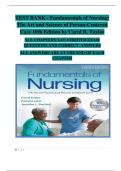
TEST BANK - Fundamentals of Nursing:
Do
The Art and Science of Person-Centered
c
Care 10th Edition by Carol R. Taylor
ALL CHAPTERS 1-47| VERIFIED EXAM
QUESTIONS AND CORRECT ANSWERS
ALL ANSWERS ARE AT THE END OF EACH
CHAPTER
1|Page
,Ar
c
TABLE OF CONTENTS
h
Do
Unit I Foundations of Nursing Practice
Chapter 1 Introduction to Nursing and Professional Formation
c
Chapter 2 Theory, Research, and Evidence-Based Practice
Chapter 3 Health, Wellness, and Health Disparities
Chapter 4 Health of the Individual, Family, Community, and Environment
Chapter 5 Culturally Respectful Care
Chapter 6 Values, Ethics, and Advocacy
Chapter 7 Legal Dimensions of Nursing Practice
Chapter 8 Communication
Chapter 9 Teaching and Counseling
Chapter 10 Leadership, Managing, and Delegating
Unit II Health Care Delivery
Chapter 11 Health Care Delivery System
Chapter 12 Interprofessional Collaborative Practice and Care Coordination Across Settings
Unit III Processes of Person-Centered Care
Chapter 13 Blended Competencies, Clinical Reasoning, and Processes of Person- Centered Care
Chapter 14 Clinical Judgment
Chapter 15 Assessing
Chapter 16 Diagnosing
Chapter 17 Outcome Identification and Planning
Chapter 18 Implementing
Chapter 19 Evaluating
Chapter 20 Documenting and Reporting
Chapter 21 Informatics and Health Care Technologies
2|Page
,Ar
c
Unit IV Developmentally Appropriate Care
h
Chapter 22 Developmental Concepts
Do
Chapter 23 Conception Through Young Adulthood
c
Chapter 24 Middle and Older Adulthood
Unit V Actions Basic to Nursing Care
Chapter 25 Asepsis and Infection Control
Chapter 26 Vital Signs
Chapter 27 Health Assessment
Chapter 28 Safety, Security, and Emergency Preparedness
Chapter 29 Complementary and Alternative Therapies
Chapter 30 Medications
Chapter 31 Perioperative Nursing
Unit VI Promoting Healthy Physiologic Responses
Chapter 32 Hygiene
Chapter 33 Skin Integrity and Wound Care
Chapter 34 Activity
Chapter 35 Rest and Sleep
Chapter 36 Comfort
Chapter 37 Nutrition
Chapter 38 Urinary Elimination
Chapter 39 Bowel Elimination
Chapter 40 Oxygenation and Perfusion
Chapter 41 Fluid, Electrolyte, and Acid–Base Balance
Unit VII Promoting Healthy Psychosocial Responses
Chapter 42 Self-Concept
3|Page
, Ar
c
Chapter 43 Stress and Adaptation
h
Chapter 44 Loss, Grief, and Dying
Do
Chapter 45 Sensory Functioning
c
Chapter 46 Sexuality
Chapter 47 Spirituality
CHAPTER 01: INTRODUCTION TO NURSING AND PROFESSIONAL FORMATION
1. Which of the following statements accurately describe an element of nursing? Select all that apply.
A) The skills involved in nursing are primarily technical in nature.
B) The primary focus of nursing is to assist individuals to recover from illness.
C) The science of nursing is the knowledge base for the care that is given.
D) The art of nursing is the collection of knowledge through research.
E) Nursing is considered to be both an art and a science.
F) Nursing is a profession that used specialized knowledge and skills.
2. Which of the following set of terms best describes nursing at the end of the Middle Ages?
A) continuity, caring, critical thinking
B) purpose, direction, leadership
C) assessment, interventions, outcomes
D) advocacy, research, education
3. Which of the following is a characteristic of nursing practiced from early civilization to the 16th century?
A) Most early civilizations believed that illness had supernatural causes.
B) The physician was the priest who treated disease with prayer.
C) The nurse was a nun committed to caring for the needy and homeless.
D) Nursing changed from a spiritual focus to an emphasis on knowledge expansion.
4|Page
hc
TEST BANK - Fundamentals of Nursing:
Do
The Art and Science of Person-Centered
c
Care 10th Edition by Carol R. Taylor
ALL CHAPTERS 1-47| VERIFIED EXAM
QUESTIONS AND CORRECT ANSWERS
ALL ANSWERS ARE AT THE END OF EACH
CHAPTER
1|Page
,Ar
c
TABLE OF CONTENTS
h
Do
Unit I Foundations of Nursing Practice
Chapter 1 Introduction to Nursing and Professional Formation
c
Chapter 2 Theory, Research, and Evidence-Based Practice
Chapter 3 Health, Wellness, and Health Disparities
Chapter 4 Health of the Individual, Family, Community, and Environment
Chapter 5 Culturally Respectful Care
Chapter 6 Values, Ethics, and Advocacy
Chapter 7 Legal Dimensions of Nursing Practice
Chapter 8 Communication
Chapter 9 Teaching and Counseling
Chapter 10 Leadership, Managing, and Delegating
Unit II Health Care Delivery
Chapter 11 Health Care Delivery System
Chapter 12 Interprofessional Collaborative Practice and Care Coordination Across Settings
Unit III Processes of Person-Centered Care
Chapter 13 Blended Competencies, Clinical Reasoning, and Processes of Person- Centered Care
Chapter 14 Clinical Judgment
Chapter 15 Assessing
Chapter 16 Diagnosing
Chapter 17 Outcome Identification and Planning
Chapter 18 Implementing
Chapter 19 Evaluating
Chapter 20 Documenting and Reporting
Chapter 21 Informatics and Health Care Technologies
2|Page
,Ar
c
Unit IV Developmentally Appropriate Care
h
Chapter 22 Developmental Concepts
Do
Chapter 23 Conception Through Young Adulthood
c
Chapter 24 Middle and Older Adulthood
Unit V Actions Basic to Nursing Care
Chapter 25 Asepsis and Infection Control
Chapter 26 Vital Signs
Chapter 27 Health Assessment
Chapter 28 Safety, Security, and Emergency Preparedness
Chapter 29 Complementary and Alternative Therapies
Chapter 30 Medications
Chapter 31 Perioperative Nursing
Unit VI Promoting Healthy Physiologic Responses
Chapter 32 Hygiene
Chapter 33 Skin Integrity and Wound Care
Chapter 34 Activity
Chapter 35 Rest and Sleep
Chapter 36 Comfort
Chapter 37 Nutrition
Chapter 38 Urinary Elimination
Chapter 39 Bowel Elimination
Chapter 40 Oxygenation and Perfusion
Chapter 41 Fluid, Electrolyte, and Acid–Base Balance
Unit VII Promoting Healthy Psychosocial Responses
Chapter 42 Self-Concept
3|Page
, Ar
c
Chapter 43 Stress and Adaptation
h
Chapter 44 Loss, Grief, and Dying
Do
Chapter 45 Sensory Functioning
c
Chapter 46 Sexuality
Chapter 47 Spirituality
CHAPTER 01: INTRODUCTION TO NURSING AND PROFESSIONAL FORMATION
1. Which of the following statements accurately describe an element of nursing? Select all that apply.
A) The skills involved in nursing are primarily technical in nature.
B) The primary focus of nursing is to assist individuals to recover from illness.
C) The science of nursing is the knowledge base for the care that is given.
D) The art of nursing is the collection of knowledge through research.
E) Nursing is considered to be both an art and a science.
F) Nursing is a profession that used specialized knowledge and skills.
2. Which of the following set of terms best describes nursing at the end of the Middle Ages?
A) continuity, caring, critical thinking
B) purpose, direction, leadership
C) assessment, interventions, outcomes
D) advocacy, research, education
3. Which of the following is a characteristic of nursing practiced from early civilization to the 16th century?
A) Most early civilizations believed that illness had supernatural causes.
B) The physician was the priest who treated disease with prayer.
C) The nurse was a nun committed to caring for the needy and homeless.
D) Nursing changed from a spiritual focus to an emphasis on knowledge expansion.
4|Page


