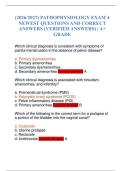
(2026/2027) PATHOPHYSIOLOGY EXAM 3
NEWEST QUESTIONS AND CORRECT
ANSWERS (VERIFIED ANSWERS) | A+
GRADE
A 16-year-old female presents with abdominal pain in the
right lower quadrant. Physical examination reveals
rebound tenderness and a low-grade fever. A possible
diagnosis would be:
A. Colon cancer
B. Pancreatitis
C. Appendicitis
D. Hepatitis Correct Answer C
Appendicitis is manifested by RLQ pain with rebound
tenderness.
A 54-year-old male complains that he has been vomiting
blood. Tests reveal portal hypertension. Which of the
following is the most likely cause of his condition?
A. Thrombosis in the spleen
B. Cirrhosis of the liver
C. Left ventricular failure
D. Renal stenosis Correct Answer B
Portal hypertension occurs secondarily to cirrhosis of the
liver.
,Manifestations associated with hepatic encephalopathy
from chronic liver disease are the result of:
A. Hyperbilirubinemia and jaundice
B. Fluid and electrolyte imbalances
C. Impaired ammonia metabolism
D. Decreased cerebral blood flow Correct Answer C
Impaired ammonia metabolism leads to the symptoms of
hepatic encephalopathy.
The icteric phase of hepatitis is characterized by which of
the following clinical manifestations?
A. Fatigue, malaise, vomiting
B. Jaundice, dark urine, enlarged liver
C. Resolution of jaundice, liver function returns to normal
D. Fulminant liver failure, hepatorenal syndrome Correct
Answer B
The icteric phase is manifested by jaundice, dark urine,
and clay-colored stools
The liver is enlarged, smooth, and tender, and percussion
causes pain; this is the actual phase of illness.
A 55-year-old male died in a motor vehicle accident.
Autopsy revealed an enlarged liver caused by fatty
infiltration, testicular atrophy, and mild jaundice secondary
to cirrhosis. The most likely cause of his condition is:
A. Bacterial infection
B. Viral infection
C. Alcoholism
D. Drug overdose Correct Answer C
,The most common cause of cirrhosis is alcoholism.
While caring for a patient on a med-surg floor, the nurse
notes the presence of bright red stools. How does the
nurse document this finding?
A. Melena
B. Hematochezia
C. Hematemesis
D. Occult bleeding Correct Answer B
Melena is black tarry stools
Occult bleeding is where there are broken down products
of blood are present in the stool
While reading a patient's diagnostic evaluation, the nurse
notes that the patient's GI tract has a cobblestone
appearance. This is present in which disorder?
A. Ulcerative colitis
B. Irritable bowel disease
C. Crohn disease
D. Infective enterocolitis Correct Answer C
Note also that ulcerative colitis is confined to the colon or
rectum
Crohn's disease may occur in various sites of GI tract
While reading the patient's diagnostic evaluation, the
nurse reads that the patient has experienced a twisting of
the bowel. This type of obstruction is known as:
A. Volvulus
, B. Intussusception
C. Hernia
D. Adhesion Correct Answer A
In caring for a patient experiencing liver failure, which of
the following lab values does the nurse expect to be
elevated? (Select all that apply.)
A. Aspartate Aminotransferase (AST)
B. Alanine Aminotransferase (ALT)
C. Albumin
D. Ammonia
E. Bilirubin Correct Answer A, B, D, E
Albumin would be decreased
A teenage boy sustains a severe closed head injury
following an all-terrain vehicle (ATV) accident. He is in a
state of deep sleep that requires vigorous stimulation to
elicit eye opening. How should the nurse document this in
the chart?
A. Confusion
B. Coma
C. Obtundation
D. Stupor Correct Answer D
Stupor is a condition of deep sleep or unresponsiveness
from which the person may be aroused or caused to open
eyes only by vigorous and repeated stimulation.
When thought content and arousal level are intact but a
patient cannot communicate, the patient has:
NEWEST QUESTIONS AND CORRECT
ANSWERS (VERIFIED ANSWERS) | A+
GRADE
A 16-year-old female presents with abdominal pain in the
right lower quadrant. Physical examination reveals
rebound tenderness and a low-grade fever. A possible
diagnosis would be:
A. Colon cancer
B. Pancreatitis
C. Appendicitis
D. Hepatitis Correct Answer C
Appendicitis is manifested by RLQ pain with rebound
tenderness.
A 54-year-old male complains that he has been vomiting
blood. Tests reveal portal hypertension. Which of the
following is the most likely cause of his condition?
A. Thrombosis in the spleen
B. Cirrhosis of the liver
C. Left ventricular failure
D. Renal stenosis Correct Answer B
Portal hypertension occurs secondarily to cirrhosis of the
liver.
,Manifestations associated with hepatic encephalopathy
from chronic liver disease are the result of:
A. Hyperbilirubinemia and jaundice
B. Fluid and electrolyte imbalances
C. Impaired ammonia metabolism
D. Decreased cerebral blood flow Correct Answer C
Impaired ammonia metabolism leads to the symptoms of
hepatic encephalopathy.
The icteric phase of hepatitis is characterized by which of
the following clinical manifestations?
A. Fatigue, malaise, vomiting
B. Jaundice, dark urine, enlarged liver
C. Resolution of jaundice, liver function returns to normal
D. Fulminant liver failure, hepatorenal syndrome Correct
Answer B
The icteric phase is manifested by jaundice, dark urine,
and clay-colored stools
The liver is enlarged, smooth, and tender, and percussion
causes pain; this is the actual phase of illness.
A 55-year-old male died in a motor vehicle accident.
Autopsy revealed an enlarged liver caused by fatty
infiltration, testicular atrophy, and mild jaundice secondary
to cirrhosis. The most likely cause of his condition is:
A. Bacterial infection
B. Viral infection
C. Alcoholism
D. Drug overdose Correct Answer C
,The most common cause of cirrhosis is alcoholism.
While caring for a patient on a med-surg floor, the nurse
notes the presence of bright red stools. How does the
nurse document this finding?
A. Melena
B. Hematochezia
C. Hematemesis
D. Occult bleeding Correct Answer B
Melena is black tarry stools
Occult bleeding is where there are broken down products
of blood are present in the stool
While reading a patient's diagnostic evaluation, the nurse
notes that the patient's GI tract has a cobblestone
appearance. This is present in which disorder?
A. Ulcerative colitis
B. Irritable bowel disease
C. Crohn disease
D. Infective enterocolitis Correct Answer C
Note also that ulcerative colitis is confined to the colon or
rectum
Crohn's disease may occur in various sites of GI tract
While reading the patient's diagnostic evaluation, the
nurse reads that the patient has experienced a twisting of
the bowel. This type of obstruction is known as:
A. Volvulus
, B. Intussusception
C. Hernia
D. Adhesion Correct Answer A
In caring for a patient experiencing liver failure, which of
the following lab values does the nurse expect to be
elevated? (Select all that apply.)
A. Aspartate Aminotransferase (AST)
B. Alanine Aminotransferase (ALT)
C. Albumin
D. Ammonia
E. Bilirubin Correct Answer A, B, D, E
Albumin would be decreased
A teenage boy sustains a severe closed head injury
following an all-terrain vehicle (ATV) accident. He is in a
state of deep sleep that requires vigorous stimulation to
elicit eye opening. How should the nurse document this in
the chart?
A. Confusion
B. Coma
C. Obtundation
D. Stupor Correct Answer D
Stupor is a condition of deep sleep or unresponsiveness
from which the person may be aroused or caused to open
eyes only by vigorous and repeated stimulation.
When thought content and arousal level are intact but a
patient cannot communicate, the patient has: