Nur 425 Exam 1 ACTUAL UPDATED Questions and CORRECT Answers
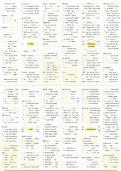
Define the Problem
Ensure Client Safety
Provide Comfort/Help Identify support systems
(Action steps)
Steps in Crisis Intervention Model
Examine Alternatives
Make Plans
Get Commitment
(Crisis intervention =6 weeks)
Skin
• Proper skin preparation for ECG electrodes
• Wash skin with soap and water
• Wipe electrode area with rough washcloth
• No use of alcohol for skin preparation
Reduce alarm fatigue
Change
• Remove and replace ECG electrodes daily
Customize
• Customize alarm parameters and levels on ECG
monitors.
acute onset of neuromuscular/functional
impairment without plausible etiology
ICU-acquired weakness: Impairs ventilator weaning and functional mobility
require additional ventilator days
Increased mortality
Effects persist well after discharge
, ◦ Progress from passive to active range of motion
◦ Early PT
◦ Sitting position in bed
◦ Dangle
◦ Stand & transfer
safe advancement of critically ill client's ◦ Ambulation
mobility
Screen for participation
Two-step process
◦ Safety screen
◦ Mobility protocol
Safety Screening (Patient must meet all criteria)
M – Myocardial stability
No evidence of active myocardial ischemia x 24
hrs.
No dysrhythmia requiring new antidysrhythmic
agent x 24 hrs.
O – Oxygenation adequate on:
FiO2 < 0.6
PEEP < 10 cm H2O
Safety Screening for Early Mobility in IUC
V - Vasopressor(s) minimal
No increase of any vasopressor x 2 hrs.
E – Engages to voice
Patient responds to verbal stimulation
If the patient is unable to pass the safety screen,
the patient remains on bedrest with regular
repositioning and passive range of motion as
tolerated.
Sensory Perceptual Delirium
Pain
Common Problems of Critical Care Clients Family Care
Nutrition
Sleep Alterations
*Medical conditions that include ischemia, infection, or inflammatory processes
*Immobilized
*Have invasive monitoring devices
Causes for increased pain in ICU patients
Increased pain linked with agitation and anxiety.
, Self-report of pain using validated pain
assessment tools-gold standard for pain
assessment
Visual Analog Scale or Numeric Rating Scale
Unable to self-report:
Pain evaluation for ICU patients Behavioral pain scales (BPS) are useful in detecting
the presence of pain, but not the intensity. Scale
of 3-12. Cutoff scores for the presence of pain is >5
Tool assess facial expression, body movement, and
compliance with the ventilator for intubated
patient or vocalizations
Another valid tool is the Critical Care Pain
Observation tool
Massage
Relaxing sounds
Music therapy
Promote sleep in ICU clients
Open visitation policies
May need to limit visitors to support sleep
Controlling noise and light
Acute change in consciousness accompanied by
inattention and either a change in cognition or
perceptual disturbance
Three subtypes:
◦ Hyperactive: Agitation, restlessness, attempts to
remove catheters, emotionally labile
restlessness, agitation and emotional lability.
• Hypoactive delirium is found in 34 percent of
Types of Delirium
patients experiencing any delirium. It is associated
with the worst prognosis and is characterized by
psychomotor slowing demonstrated by a calm
appearance, inattention and decreased mobility.
Flat affect, withdrawal, apathy, lethargy, decreased
responsiveness
• Mixed delirium is characterized by periods of
hypoactivity fluctuating with periods of
hyperactivity.
-Pre-existing dementia
Baseline Risk factors for developing -History of baseline hypertension
delirium -Alcoholism
-Admission severity of illness
Confusion Assessment Method for the ICU (CAM-
ICU)
Assessment tools for Delirium
Intensive Care Delirium Screening Checklist
(ICDSC)
Define the Problem
Ensure Client Safety
Provide Comfort/Help Identify support systems
(Action steps)
Steps in Crisis Intervention Model
Examine Alternatives
Make Plans
Get Commitment
(Crisis intervention =6 weeks)
Skin
• Proper skin preparation for ECG electrodes
• Wash skin with soap and water
• Wipe electrode area with rough washcloth
• No use of alcohol for skin preparation
Reduce alarm fatigue
Change
• Remove and replace ECG electrodes daily
Customize
• Customize alarm parameters and levels on ECG
monitors.
acute onset of neuromuscular/functional
impairment without plausible etiology
ICU-acquired weakness: Impairs ventilator weaning and functional mobility
require additional ventilator days
Increased mortality
Effects persist well after discharge
, ◦ Progress from passive to active range of motion
◦ Early PT
◦ Sitting position in bed
◦ Dangle
◦ Stand & transfer
safe advancement of critically ill client's ◦ Ambulation
mobility
Screen for participation
Two-step process
◦ Safety screen
◦ Mobility protocol
Safety Screening (Patient must meet all criteria)
M – Myocardial stability
No evidence of active myocardial ischemia x 24
hrs.
No dysrhythmia requiring new antidysrhythmic
agent x 24 hrs.
O – Oxygenation adequate on:
FiO2 < 0.6
PEEP < 10 cm H2O
Safety Screening for Early Mobility in IUC
V - Vasopressor(s) minimal
No increase of any vasopressor x 2 hrs.
E – Engages to voice
Patient responds to verbal stimulation
If the patient is unable to pass the safety screen,
the patient remains on bedrest with regular
repositioning and passive range of motion as
tolerated.
Sensory Perceptual Delirium
Pain
Common Problems of Critical Care Clients Family Care
Nutrition
Sleep Alterations
*Medical conditions that include ischemia, infection, or inflammatory processes
*Immobilized
*Have invasive monitoring devices
Causes for increased pain in ICU patients
Increased pain linked with agitation and anxiety.
, Self-report of pain using validated pain
assessment tools-gold standard for pain
assessment
Visual Analog Scale or Numeric Rating Scale
Unable to self-report:
Pain evaluation for ICU patients Behavioral pain scales (BPS) are useful in detecting
the presence of pain, but not the intensity. Scale
of 3-12. Cutoff scores for the presence of pain is >5
Tool assess facial expression, body movement, and
compliance with the ventilator for intubated
patient or vocalizations
Another valid tool is the Critical Care Pain
Observation tool
Massage
Relaxing sounds
Music therapy
Promote sleep in ICU clients
Open visitation policies
May need to limit visitors to support sleep
Controlling noise and light
Acute change in consciousness accompanied by
inattention and either a change in cognition or
perceptual disturbance
Three subtypes:
◦ Hyperactive: Agitation, restlessness, attempts to
remove catheters, emotionally labile
restlessness, agitation and emotional lability.
• Hypoactive delirium is found in 34 percent of
Types of Delirium
patients experiencing any delirium. It is associated
with the worst prognosis and is characterized by
psychomotor slowing demonstrated by a calm
appearance, inattention and decreased mobility.
Flat affect, withdrawal, apathy, lethargy, decreased
responsiveness
• Mixed delirium is characterized by periods of
hypoactivity fluctuating with periods of
hyperactivity.
-Pre-existing dementia
Baseline Risk factors for developing -History of baseline hypertension
delirium -Alcoholism
-Admission severity of illness
Confusion Assessment Method for the ICU (CAM-
ICU)
Assessment tools for Delirium
Intensive Care Delirium Screening Checklist
(ICDSC)