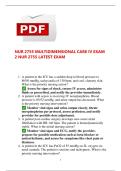
NUR 2755 MULTIDIMENSIONAL CARE IV EXAM
2 NUR 2755 LATEST EXAM
1. A patient in the ICU has a sudden drop in blood pressure to
80/50 mmHg, tachycardia of 130 bpm, and cool, clammy skin.
What is the priority nursing action?
Assess for signs of shock, ensure IV access, administer
fluids as prescribed, and notify the provider immediately.
2. A patient with sepsis is receiving IV norepinephrine. Blood
pressure is 85/52 mmHg, and urine output has decreased. What
is the priority nursing intervention?
Monitor vital signs and urine output closely, titrate
norepinephrine per protocol, assess perfusion, and notify
provider for possible dose adjustment.
3. A patient post-cardiac surgery develops new-onset atrial
fibrillation with HR 140 bpm. The patient is hemodynamically
stable. What is the initial nursing action?
Monitor vital signs and ECG, notify the provider,
prepare for possible medication such as beta-blocker or
antiarrhythmic, and assess for symptoms like chest pain or
dizziness.
4. A patient in the ICU has PaO2 of 55 mmHg on 2L oxygen via
nasal cannula. The patient is anxious and tachypneic. What is the
priority nursing intervention?
1
, Apply higher-flow oxygen as prescribed, assess
respiratory effort and lung sounds, monitor ABGs, and
notify provider for possible ventilatory support.
5. A patient with DKA presents with blood glucose of 520 mg/dL,
serum potassium 5.2 mEq/L, and Kussmaul respirations. What is
the first nursing action?
Initiate IV fluids, start insulin infusion per protocol,
monitor electrolytes and cardiac rhythm closely, and assess
vital signs.
6. A patient with acute respiratory distress syndrome (ARDS) is on
mechanical ventilation and shows decreased oxygen saturation.
What is the priority nursing action?
Assess ventilator settings, ensure proper positioning (e.g.,
prone if ordered), monitor ABGs, and notify the provider
immediately.
7. A patient with septic shock has a fever of 102°F, BP 82/50
mmHg, HR 130 bpm, and cool extremities. What intervention
should the nurse implement first?
Administer prescribed IV fluids, monitor hemodynamics,
apply oxygen as needed, and notify provider for additional
interventions such as vasopressors.
8. A patient with intracranial hemorrhage develops sudden
confusion, headache, and BP 180/100 mmHg. What is the
priority nursing action?
Monitor neurological status, maintain airway, notify
provider immediately, and prepare for antihypertensive
therapy as prescribed.
9. A patient post-thyroidectomy develops tingling in the fingers
and around the mouth, and has a positive Trousseau sign. What
is the first nursing action?
Assess for hypocalcemia, notify the provider, and
prepare to administer calcium supplements as prescribed.
10. A patient in the ICU is receiving multiple vasoactive
medications and develops chest pain and shortness of breath.
What is the priority nursing intervention?
Assess vital signs and cardiac rhythm, administer
2
, supplemental oxygen, notify the provider immediately, and
prepare for possible interventions such as ECG and lab tests.
11. A patient with chronic kidney disease is experiencing
hyperkalemia with a potassium level of 6.8 mEq/L. ECG shows
peaked T waves. What is the first nursing action?
Monitor cardiac rhythm continuously, notify provider
immediately, and prepare interventions to lower potassium
such as dialysis or medications.
12. A patient with ARDS has increased peak airway pressures
on the ventilator and decreased oxygen saturation. What is the
priority nursing action?
Assess ventilator settings, suction airway if needed,
reposition patient, monitor ABGs, and notify provider
immediately.
13. A patient with acute pancreatitis presents with severe
abdominal pain radiating to the back, nausea, and vomiting.
What is the priority nursing intervention?
Maintain NPO status, administer IV fluids and pain
medication as prescribed, and monitor for signs of
complications like hypovolemia or shock.
14. A patient with septic shock is receiving IV antibiotics and
fluids but shows increasing lactate levels. What should the nurse
do first?
Notify provider immediately, continue fluid resuscitation
as prescribed, monitor vital signs and urine output, and
assess for organ dysfunction.
15. A patient post-cardiac catheterization develops sudden
hypotension and swelling at the catheter site. What is the priority
nursing action?
Apply direct pressure to the site, monitor vital signs,
notify provider, and prepare for interventions to manage
potential bleeding or hematoma.
16. A patient with acute asthma exacerbation is experiencing
severe wheezing, accessory muscle use, and oxygen saturation of
88%. Which intervention is priority?
Administer a short-acting bronchodilator immediately,
3
, provide supplemental oxygen, and monitor respiratory
status closely.
17. A patient with DKA has low potassium levels and is
receiving insulin infusion. What is the priority nursing action?
Administer potassium replacement as prescribed,
monitor cardiac rhythm closely, and adjust insulin therapy
per protocol.
18. A patient with acute stroke presents with slurred speech,
facial droop, and right-sided weakness. Onset was 1 hour ago.
What is the priority nursing action?
Activate the stroke protocol, assess neurological status,
maintain airway, and prepare for possible thrombolytic
therapy if no contraindications.
19. A patient with acute myocardial infarction develops
pulmonary edema. What is the first nursing intervention?
Place patient upright, administer supplemental oxygen,
monitor lung sounds and vital signs, and notify provider for
diuretic or other interventions.
20. A patient with septic shock has decreased urine output and
hypotension despite fluid resuscitation. What is the priority
nursing intervention?
Notify the provider for possible initiation or titration of
vasopressors, monitor hemodynamics closely, and assess for
organ perfusion.
21. A patient with traumatic brain injury develops increased
intracranial pressure with vomiting, headache, and altered
mental status. What is the priority nursing action?
Elevate the head of the bed, monitor neurological status
closely, maintain airway, and notify the provider for possible
ICP management interventions.
22. A patient with adrenal crisis presents with hypotension,
hyperkalemia, and fatigue. What is the first nursing intervention?
Administer IV corticosteroids as prescribed, provide
fluid resuscitation, monitor vital signs, and assess
electrolytes.
23. A patient in the ICU has a central line and develops sudden
redness, swelling, and drainage at the insertion site. What is the
4
2 NUR 2755 LATEST EXAM
1. A patient in the ICU has a sudden drop in blood pressure to
80/50 mmHg, tachycardia of 130 bpm, and cool, clammy skin.
What is the priority nursing action?
Assess for signs of shock, ensure IV access, administer
fluids as prescribed, and notify the provider immediately.
2. A patient with sepsis is receiving IV norepinephrine. Blood
pressure is 85/52 mmHg, and urine output has decreased. What
is the priority nursing intervention?
Monitor vital signs and urine output closely, titrate
norepinephrine per protocol, assess perfusion, and notify
provider for possible dose adjustment.
3. A patient post-cardiac surgery develops new-onset atrial
fibrillation with HR 140 bpm. The patient is hemodynamically
stable. What is the initial nursing action?
Monitor vital signs and ECG, notify the provider,
prepare for possible medication such as beta-blocker or
antiarrhythmic, and assess for symptoms like chest pain or
dizziness.
4. A patient in the ICU has PaO2 of 55 mmHg on 2L oxygen via
nasal cannula. The patient is anxious and tachypneic. What is the
priority nursing intervention?
1
, Apply higher-flow oxygen as prescribed, assess
respiratory effort and lung sounds, monitor ABGs, and
notify provider for possible ventilatory support.
5. A patient with DKA presents with blood glucose of 520 mg/dL,
serum potassium 5.2 mEq/L, and Kussmaul respirations. What is
the first nursing action?
Initiate IV fluids, start insulin infusion per protocol,
monitor electrolytes and cardiac rhythm closely, and assess
vital signs.
6. A patient with acute respiratory distress syndrome (ARDS) is on
mechanical ventilation and shows decreased oxygen saturation.
What is the priority nursing action?
Assess ventilator settings, ensure proper positioning (e.g.,
prone if ordered), monitor ABGs, and notify the provider
immediately.
7. A patient with septic shock has a fever of 102°F, BP 82/50
mmHg, HR 130 bpm, and cool extremities. What intervention
should the nurse implement first?
Administer prescribed IV fluids, monitor hemodynamics,
apply oxygen as needed, and notify provider for additional
interventions such as vasopressors.
8. A patient with intracranial hemorrhage develops sudden
confusion, headache, and BP 180/100 mmHg. What is the
priority nursing action?
Monitor neurological status, maintain airway, notify
provider immediately, and prepare for antihypertensive
therapy as prescribed.
9. A patient post-thyroidectomy develops tingling in the fingers
and around the mouth, and has a positive Trousseau sign. What
is the first nursing action?
Assess for hypocalcemia, notify the provider, and
prepare to administer calcium supplements as prescribed.
10. A patient in the ICU is receiving multiple vasoactive
medications and develops chest pain and shortness of breath.
What is the priority nursing intervention?
Assess vital signs and cardiac rhythm, administer
2
, supplemental oxygen, notify the provider immediately, and
prepare for possible interventions such as ECG and lab tests.
11. A patient with chronic kidney disease is experiencing
hyperkalemia with a potassium level of 6.8 mEq/L. ECG shows
peaked T waves. What is the first nursing action?
Monitor cardiac rhythm continuously, notify provider
immediately, and prepare interventions to lower potassium
such as dialysis or medications.
12. A patient with ARDS has increased peak airway pressures
on the ventilator and decreased oxygen saturation. What is the
priority nursing action?
Assess ventilator settings, suction airway if needed,
reposition patient, monitor ABGs, and notify provider
immediately.
13. A patient with acute pancreatitis presents with severe
abdominal pain radiating to the back, nausea, and vomiting.
What is the priority nursing intervention?
Maintain NPO status, administer IV fluids and pain
medication as prescribed, and monitor for signs of
complications like hypovolemia or shock.
14. A patient with septic shock is receiving IV antibiotics and
fluids but shows increasing lactate levels. What should the nurse
do first?
Notify provider immediately, continue fluid resuscitation
as prescribed, monitor vital signs and urine output, and
assess for organ dysfunction.
15. A patient post-cardiac catheterization develops sudden
hypotension and swelling at the catheter site. What is the priority
nursing action?
Apply direct pressure to the site, monitor vital signs,
notify provider, and prepare for interventions to manage
potential bleeding or hematoma.
16. A patient with acute asthma exacerbation is experiencing
severe wheezing, accessory muscle use, and oxygen saturation of
88%. Which intervention is priority?
Administer a short-acting bronchodilator immediately,
3
, provide supplemental oxygen, and monitor respiratory
status closely.
17. A patient with DKA has low potassium levels and is
receiving insulin infusion. What is the priority nursing action?
Administer potassium replacement as prescribed,
monitor cardiac rhythm closely, and adjust insulin therapy
per protocol.
18. A patient with acute stroke presents with slurred speech,
facial droop, and right-sided weakness. Onset was 1 hour ago.
What is the priority nursing action?
Activate the stroke protocol, assess neurological status,
maintain airway, and prepare for possible thrombolytic
therapy if no contraindications.
19. A patient with acute myocardial infarction develops
pulmonary edema. What is the first nursing intervention?
Place patient upright, administer supplemental oxygen,
monitor lung sounds and vital signs, and notify provider for
diuretic or other interventions.
20. A patient with septic shock has decreased urine output and
hypotension despite fluid resuscitation. What is the priority
nursing intervention?
Notify the provider for possible initiation or titration of
vasopressors, monitor hemodynamics closely, and assess for
organ perfusion.
21. A patient with traumatic brain injury develops increased
intracranial pressure with vomiting, headache, and altered
mental status. What is the priority nursing action?
Elevate the head of the bed, monitor neurological status
closely, maintain airway, and notify the provider for possible
ICP management interventions.
22. A patient with adrenal crisis presents with hypotension,
hyperkalemia, and fatigue. What is the first nursing intervention?
Administer IV corticosteroids as prescribed, provide
fluid resuscitation, monitor vital signs, and assess
electrolytes.
23. A patient in the ICU has a central line and develops sudden
redness, swelling, and drainage at the insertion site. What is the
4