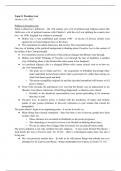
Land Law – Notes
Terminology
mortgagee the person or institution
that lends money under a
mortgage
express trust – a trust was
created deliberately.
implied trust because of the circumstances
of the case the court decides
that a trust arises.
conveyance the transfer of a legal estate
(including a mortgage or
lease).
tenants in common A form of joint ownership
where each owner has a
distinct, divisible share of the
property, which can be passed
on in their will rather than to
the other owners.
estoppel A legal principle preventing
someone from denying or
going back on a promise if
another party has relied on it
to their detriment.
equity A brand of law focused on
fairness and justice,
supplementing the common
law by addressing situations
where strict legal rules would
lead to unfair outcomes.
equitable principles Rules developed in equity to
ensure fairness, such as acting
in good faith, preventing
unjust enrichment, and
balancing the interests of all
parties.
Dominant tenement The one who holds the right.
Servient tenement The one who grants the right.
Grant Conferring something EXTRA
to another landowner.
Reservation Holding something back from
another landowner.
Proprietary
Land Law – Introduction
, Land Law – Notes
What is land?
In UK law, "land" refers to the physical ground, everything above (airspace) and
below it (subsoil), including buildings and structures, as well as any fixtures
attached to the land.
What makes land special?
Permanence
Limited supply
Connectivity
Uniqueness
Social and economic importance
Capacity to support multiple interests
What is included in land?
Airspace – Bernstein v Skyviews Ltd [1978]
Subsoil – Grigsby v Melville (1974)
Mines and minerals – s205(1)(ix) LPA 1925
Water – ss 24, 27 Water Resources Act 1991
Flora and fauna – Stukley v Butler (1615); Blades v Higgs (1865)
Items found on the land – Parker v British Airways Board [1892] QB 1004
Buildings.
Fixtures – Elitestone v Morris [1997] 1 WLR
Lecture 2 – Tenures, interests and estates
Recap
Land is permanent and valuable
Land supports multiple interests (tenancies, mortgages etc)
Land includes airspace, subsoil and mines and minerals (subject to some
important limitations)
Fixtures are part of the land and whether an item is a fixture depends on
how fixed it is and why it was fixed
The personal / property divide
Personal = Only binding for the parties who created the rights.
Propriety = Binding, enforceable against third parties.
Building blocks in law
- Tenure
- Interests in land
- Estates in land
Tenure
The conditions under which land or buildings are held or occupied.
Estates
, Land Law – Notes
This is used to describe how long a person is entitled to enjoy rights of use and
possession of the land.
Interests in land
This describes a right that someone enjoys over another’s land. An interest in
land is a right in respect of someone else’s land. For example:
• A mortgage – a debt secured against the debtor’s land
• An easement – a limited right over someone else’s land (for
example, a right of way)
• A restrictive covenant – a restriction on the use of land which
benefits a neighbour (for example a restriction that allows only one
house to be built on the land)
• An option – a contract that
gives a person the right to
buy someone else’s land
during a particular period.
Freehold = Entitled to the use of the
land for their life and transfer land to others during their life or death.
Leasehold = Owns the land for a specific period of time.
Deed = a written contract that states on the face of it that it is a deed and is
executed as a deed (see s 1(2) of the Law of Property (Miscellaneous Provisions)
Act 1989), which usually means the signature is witnessed (s1(3)(a) but for a
company you can also have two signatures (either 2 x directors of 1 director and
the company secretary without the need for witnessing).
A brief introduction to trusts
Allows ownership to be split between ownership in law and ownership in
equity.
The legal owner (the ‘trustee’) holds the land for the benefit of the
equitable owner (the ‘beneficiary’).
Trusts can be express trusts – where a trust was created deliberately.
Trusts can be implied trusts – when because of the circumstances of the
case the court decides that a trust arises.
The doctrine of notice – plays a very limited role in modern
conveyancing
Before 1926 (when the 1925 legislation came into force):
• legal rights were binding against the world. So if you bought (or
were given) a piece of land subject to a legal right, for example, an
easement, you were bound by this easement.
• equitable rights were binding against everyone except the bona fide
purchaser of a legal estate for value without notice (‘equity’s
darling’).
, Land Law – Notes
• Bona fide – acting in good faith
• Purchaser – not a squatter or someone gifted land
• For value – money or money’s worth (not necessarily market
value)
• Of a legal estate – freehold or leasehold
• Without notice – without knowing about the equitable right
Lecture 3 – formalities
Summary
Legal estates must be created by deed (except for short leases, in
possession for a market rent)
Legal interests, e.g. easements and profits and mortgages must be
created by deed.
Equitable interests such as restrictive covenants and estate contracts and
options must be in writing.
Land in England and Wales is either registered land or unregistered land.
Most land is now registered.
Registered land is governed by the LRA 2002. Freeholds and long leases
(over 7 years) have their own title, some legal interests such as express
legal easements must be registered and some interests including
restrictive covenants and estate contracts and options need to be noted
on the title if they are to be binding. Some unregistered interests are
binding (overriding interests)
Unregistered land is governed by title deeds and the Land Charges Act
1972. Legal estates bind the whole world regardless of registrations. Some
interests, such as covenants created after 1925 must be registered on the
Land Charges Register to be binding. Pre-1926 restrictive covenants are
governed by the doctrine of notice.
Lecture 4 – Land registration 1
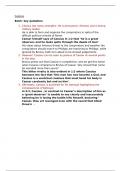
1. The aims of a system if registered land
To provide an accurate reflection of land so that the title can be
investigated with minimal additional enquiries.
To remove the time and financial cost of investigating the root of title.
To reduce the risk of fraud.
To alert purchasers to property rights that burden land.
To standardise and improve the conveyancing process.
To support the market and benefit the economy.
The principles of land registration
Terminology
mortgagee the person or institution
that lends money under a
mortgage
express trust – a trust was
created deliberately.
implied trust because of the circumstances
of the case the court decides
that a trust arises.
conveyance the transfer of a legal estate
(including a mortgage or
lease).
tenants in common A form of joint ownership
where each owner has a
distinct, divisible share of the
property, which can be passed
on in their will rather than to
the other owners.
estoppel A legal principle preventing
someone from denying or
going back on a promise if
another party has relied on it
to their detriment.
equity A brand of law focused on
fairness and justice,
supplementing the common
law by addressing situations
where strict legal rules would
lead to unfair outcomes.
equitable principles Rules developed in equity to
ensure fairness, such as acting
in good faith, preventing
unjust enrichment, and
balancing the interests of all
parties.
Dominant tenement The one who holds the right.
Servient tenement The one who grants the right.
Grant Conferring something EXTRA
to another landowner.
Reservation Holding something back from
another landowner.
Proprietary
Land Law – Introduction
, Land Law – Notes
What is land?
In UK law, "land" refers to the physical ground, everything above (airspace) and
below it (subsoil), including buildings and structures, as well as any fixtures
attached to the land.
What makes land special?
Permanence
Limited supply
Connectivity
Uniqueness
Social and economic importance
Capacity to support multiple interests
What is included in land?
Airspace – Bernstein v Skyviews Ltd [1978]
Subsoil – Grigsby v Melville (1974)
Mines and minerals – s205(1)(ix) LPA 1925
Water – ss 24, 27 Water Resources Act 1991
Flora and fauna – Stukley v Butler (1615); Blades v Higgs (1865)
Items found on the land – Parker v British Airways Board [1892] QB 1004
Buildings.
Fixtures – Elitestone v Morris [1997] 1 WLR
Lecture 2 – Tenures, interests and estates
Recap
Land is permanent and valuable
Land supports multiple interests (tenancies, mortgages etc)
Land includes airspace, subsoil and mines and minerals (subject to some
important limitations)
Fixtures are part of the land and whether an item is a fixture depends on
how fixed it is and why it was fixed
The personal / property divide
Personal = Only binding for the parties who created the rights.
Propriety = Binding, enforceable against third parties.
Building blocks in law
- Tenure
- Interests in land
- Estates in land
Tenure
The conditions under which land or buildings are held or occupied.
Estates
, Land Law – Notes
This is used to describe how long a person is entitled to enjoy rights of use and
possession of the land.
Interests in land
This describes a right that someone enjoys over another’s land. An interest in
land is a right in respect of someone else’s land. For example:
• A mortgage – a debt secured against the debtor’s land
• An easement – a limited right over someone else’s land (for
example, a right of way)
• A restrictive covenant – a restriction on the use of land which
benefits a neighbour (for example a restriction that allows only one
house to be built on the land)
• An option – a contract that
gives a person the right to
buy someone else’s land
during a particular period.
Freehold = Entitled to the use of the
land for their life and transfer land to others during their life or death.
Leasehold = Owns the land for a specific period of time.
Deed = a written contract that states on the face of it that it is a deed and is
executed as a deed (see s 1(2) of the Law of Property (Miscellaneous Provisions)
Act 1989), which usually means the signature is witnessed (s1(3)(a) but for a
company you can also have two signatures (either 2 x directors of 1 director and
the company secretary without the need for witnessing).
A brief introduction to trusts
Allows ownership to be split between ownership in law and ownership in
equity.
The legal owner (the ‘trustee’) holds the land for the benefit of the
equitable owner (the ‘beneficiary’).
Trusts can be express trusts – where a trust was created deliberately.
Trusts can be implied trusts – when because of the circumstances of the
case the court decides that a trust arises.
The doctrine of notice – plays a very limited role in modern
conveyancing
Before 1926 (when the 1925 legislation came into force):
• legal rights were binding against the world. So if you bought (or
were given) a piece of land subject to a legal right, for example, an
easement, you were bound by this easement.
• equitable rights were binding against everyone except the bona fide
purchaser of a legal estate for value without notice (‘equity’s
darling’).
, Land Law – Notes
• Bona fide – acting in good faith
• Purchaser – not a squatter or someone gifted land
• For value – money or money’s worth (not necessarily market
value)
• Of a legal estate – freehold or leasehold
• Without notice – without knowing about the equitable right
Lecture 3 – formalities
Summary
Legal estates must be created by deed (except for short leases, in
possession for a market rent)
Legal interests, e.g. easements and profits and mortgages must be
created by deed.
Equitable interests such as restrictive covenants and estate contracts and
options must be in writing.
Land in England and Wales is either registered land or unregistered land.
Most land is now registered.
Registered land is governed by the LRA 2002. Freeholds and long leases
(over 7 years) have their own title, some legal interests such as express
legal easements must be registered and some interests including
restrictive covenants and estate contracts and options need to be noted
on the title if they are to be binding. Some unregistered interests are
binding (overriding interests)
Unregistered land is governed by title deeds and the Land Charges Act
1972. Legal estates bind the whole world regardless of registrations. Some
interests, such as covenants created after 1925 must be registered on the
Land Charges Register to be binding. Pre-1926 restrictive covenants are
governed by the doctrine of notice.
Lecture 4 – Land registration 1
1. The aims of a system if registered land
To provide an accurate reflection of land so that the title can be
investigated with minimal additional enquiries.
To remove the time and financial cost of investigating the root of title.
To reduce the risk of fraud.
To alert purchasers to property rights that burden land.
To standardise and improve the conveyancing process.
To support the market and benefit the economy.
The principles of land registration