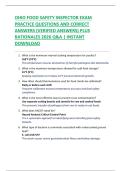
OHIO FOOD SAFETY INSPECTOR EXAM
PRACTICE QUESTIONS AND CORRECT
ANSWERS (VERIFIED ANSWERS) PLUS
RATIONALES 2026 Q&A | INSTANT
DOWNLOAD
1. What is the minimum internal cooking temperature for poultry?
165°F (74°C)
This temperature ensures destruction of harmful pathogens like Salmonella.
2. What is the maximum temperature allowed for cold food storage?
41°F (5°C)
Keeping cold foods at or below 41°F prevents bacterial growth.
3. How often should thermometers used for food checks be calibrated?
Daily or before each shift
Frequent calibration ensures temperature accuracy and food safety
compliance.
4. What is the most effective way to prevent cross-contamination?
Use separate cutting boards and utensils for raw and cooked foods
This prevents transfer of pathogens from raw to ready-to-eat foods.
5. What does HACCP stand for?
Hazard Analysis Critical Control Point
It is a systematic approach to identifying and controlling food safety
hazards.
6. What type of bacteria is commonly associated with undercooked ground
beef?
E. coli O157:H7
This strain causes severe gastrointestinal illness and kidney damage.
, 7. What is the correct handwashing duration?
At least 20 seconds
Proper handwashing time ensures effective removal of pathogens.
8. What is the first step in cleaning and sanitizing food contact surfaces?
Remove food debris
Physical debris must be removed before washing and sanitizing are
effective.
9. Which metal is most resistant to corrosion in food preparation areas?
Stainless steel
Stainless steel resists rust, is durable, and easy to sanitize.
10.When must a food worker change gloves?
After handling raw meat and before touching ready-to-eat food
Prevents cross-contamination from raw to cooked or ready-to-eat items.
11.What is the danger zone for bacterial growth?
41°F to 135°F (5°C to 57°C)
Within this range, bacteria multiply rapidly.
12.What is the best method to thaw frozen food safely?
In a refrigerator at 41°F or below
Maintains safe temperatures and prevents bacterial growth.
13.Which illness is most associated with shellfish consumption?
Hepatitis A
The virus is often transmitted through contaminated seafood.
14.What is the primary purpose of food labeling?
To inform consumers about ingredients and allergens
Labels protect consumers from allergens and deceptive practices.
15.When inspecting a food establishment, what should be checked first?
Food storage and temperature control
These are critical factors in preventing foodborne illness.
16.What should an inspector do if rodent droppings are found?
Document evidence and issue a violation notice
This signals a sanitation breach and potential health hazard.
PRACTICE QUESTIONS AND CORRECT
ANSWERS (VERIFIED ANSWERS) PLUS
RATIONALES 2026 Q&A | INSTANT
DOWNLOAD
1. What is the minimum internal cooking temperature for poultry?
165°F (74°C)
This temperature ensures destruction of harmful pathogens like Salmonella.
2. What is the maximum temperature allowed for cold food storage?
41°F (5°C)
Keeping cold foods at or below 41°F prevents bacterial growth.
3. How often should thermometers used for food checks be calibrated?
Daily or before each shift
Frequent calibration ensures temperature accuracy and food safety
compliance.
4. What is the most effective way to prevent cross-contamination?
Use separate cutting boards and utensils for raw and cooked foods
This prevents transfer of pathogens from raw to ready-to-eat foods.
5. What does HACCP stand for?
Hazard Analysis Critical Control Point
It is a systematic approach to identifying and controlling food safety
hazards.
6. What type of bacteria is commonly associated with undercooked ground
beef?
E. coli O157:H7
This strain causes severe gastrointestinal illness and kidney damage.
, 7. What is the correct handwashing duration?
At least 20 seconds
Proper handwashing time ensures effective removal of pathogens.
8. What is the first step in cleaning and sanitizing food contact surfaces?
Remove food debris
Physical debris must be removed before washing and sanitizing are
effective.
9. Which metal is most resistant to corrosion in food preparation areas?
Stainless steel
Stainless steel resists rust, is durable, and easy to sanitize.
10.When must a food worker change gloves?
After handling raw meat and before touching ready-to-eat food
Prevents cross-contamination from raw to cooked or ready-to-eat items.
11.What is the danger zone for bacterial growth?
41°F to 135°F (5°C to 57°C)
Within this range, bacteria multiply rapidly.
12.What is the best method to thaw frozen food safely?
In a refrigerator at 41°F or below
Maintains safe temperatures and prevents bacterial growth.
13.Which illness is most associated with shellfish consumption?
Hepatitis A
The virus is often transmitted through contaminated seafood.
14.What is the primary purpose of food labeling?
To inform consumers about ingredients and allergens
Labels protect consumers from allergens and deceptive practices.
15.When inspecting a food establishment, what should be checked first?
Food storage and temperature control
These are critical factors in preventing foodborne illness.
16.What should an inspector do if rodent droppings are found?
Document evidence and issue a violation notice
This signals a sanitation breach and potential health hazard.