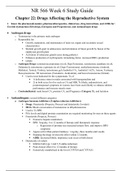
NR 566 Week 6 Study Guide
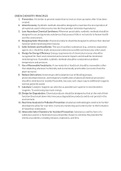
NR 566 Week 6 Study Guide Chapter 22: Drugs Affecting the Reproductive System • Know the pharmacodynamics, pharmacotherapeutics, clinical use, drug interactions, and ADRs for: Erectile dysfunction (ED) drugs, Estrogens and Progesterone, and Antiandrogen drugs • Androgen drugs o Testosterone is the primary male androgen o Responsible for: Growth, maturation, and maintenance of male sex organs and secondary sexual characteristics Skeletal growth spurt in adolescence and termination of linear growth by fusion of the epiphyseal growth plate Activation of sebaceous glands (acne during puberty) Enhances production of erythropoietic stimulating factor, increased RBCs production Libido o Androgen Drugs: testosterone propionate (in oil, DepoTesterone), testosterone enanthate (in oil, Delatestryl), testosterone cypionate (in oil, Depo-Testosterone), methyltestosterone (Android, Methitest, Testred, Virilon), testosterone gel (AndroGel 1%, AndroGel 1.62%, Axiron, Testium), fluoxymesterone, TD testosterone (Testoderm, Androderm), and buccal testosterone (Striant) Used to treat Indicated for the symptomatic Tx of • 1) deficiency states in males associated with hypogonadism and • 2) in both sexes for d/os such as CA and HIB, Tx libido, endometriosis, and postmenopausal symptoms in women, have been used illicitly to enhance athletic performance and increase muscle mass o Contraindicated: male breast CA, prostate CA, and Pregnancy (Category X), and lactation • Antiandrogens: several different categories o Androgen hormone inhibitors (5-alpha-reductase inhibitors) Drugs: Finasteride (Propecia, Proscar) and dutasteride (Avodart) MOA: Block conversation of testosterone to dihydrotesterone Used to Tx BPH PSA levels and digital prostate examination are required monitoring for men on these agents Finasteride (Propecia, Proscar): • Extensive hepatic metabolism • BPH: 5mg/day, 6 to 12 months of therapy until therapeutic response o Regression of prostate size increased urinary flow, and improve BPH symptoms • Approved for Male pattern baldness: 1 mg/day, three months until results • Stopping the drugs reverses the effect within 12 months • ADRs: decreased libido, impotence (can occur at both doses) Dutasteride (Avodart) • Inhibits both type 1 and 2 (5-alpha-reductase) • Peak clinical effect 6 to 12 months of therapy • Extensively metabolized in the liver (CYP3A4 and CYP3A5) • Used to Tx BPH • Absorbed through the skin, women who are pregnant or may become pregnant should not handle dutasteride capsules r/t risk of fetal anomaly to a male fetus • ADR: decreased libido and impotence o Gonadotropin-releasing hormone analogue: luteinizing hormone-releasing hormone antagonist Leuprolide acetate (Lupron) Create a reversible chemical orchiectomy state in males and an oophorectomy state in females Used to Tx: advanced prostatic CA and for management of endometriosis and uterine leiomyomata (fibroids) 1 mg SC daily or IM every 3 months (depot formulation) Increased suppression when used with flutamide (direct antiandrogen) Peds: Tx central precocious puberty Women: reducing uterine fibroids, endometriosis, and PCOS (pain relief, regain fertility) o Direct antiandrogens Flutamide (Eulexin), bicalutamide (Casodex), and nilutamide (Nilandron) Inhibit androgen uptake or nuclear binding of androgen at target tissues Uses as part of combo therapy Tx of prostatic carcinoma Flutamide: competitive antagonist at the androgen receptor site • Truly a nonsteroidal agent • ADRs: gynecomastia and reversible liver toxicity • Renal doses: less than 29 mL/min • BLACK BOX WARNING: hepatic failure, hepatic encephalopathy, and death o Usually within the first 3 months of therapy o Baseline and monthly LFTs for the first 4 months of therapy and periodically o D/c if any symptoms of hepatic injury or jaundice develop o Spironolactone (Aldactone): aldosterone antagonist and inhibitor of 5-alpha-reductase used as a K sparing diuretic Off label use for Tx of female hirsutism and acne due to antiandrogenic properties • 50 to 200 mg/day Competitive inhibitor of the dihydrotestosterone, aldosterone, and interferes with the androgen receptors in the prostate • Also reduces 17-alpha-hydroxylase activity: lowers plasma levels of testosterone and androstenedione Metabolized by the liver Short term use for primary hyperaldosteronism in patients preoperatively Long term: for those who are not good candidates for Sx with idiopathic hyperaldosteronism PMS/PMDD symptoms may be relieved by spironolactone (25 mg QID beginning on day 14 of the menstrual cycle) ADRs: dose-related and reversible when the drug is d/c GI upset, drowsiness, gynecomastia, impotence, cutaneous eruptions, and urticaria BLACK Box Warning: r/t animal chronic toxicity studies demonstrated tumorigenicity Contraindications: pregnancy • Drug Interactions o Finasteride: Nevirapine: Combo induces hepatic metabolism of finasteride: monitor for effectiveness of finasteride o Leuprolide: Pituitary, gonadotropic, and gonadal function lab test: misleading results: consider if lab test reports show unexpected values o Flutamide: Warfarin: Increased INR and risk of bleeding: monitor INR closely o Spironolactone: renal impairment and agents that affect renal function: alternation in renal function and electrolytes: monitor K in young patients with reduced renal function and patients greater than 65 y/o Digitals: may increase or decrease digitalis half-life: Monitor closely for s/s of dig toxicity and electrolyte and digitalis levels. Consider alternative Tx. Potassium: additive effect increases risk of hyperkalemia: recommend alternative Eplerenone (aldosterone receptor antagonist used for CHF): severe hyperkalemia: Combination is contraindicated, do not use together, choose different therapy Estrogens: Drugs: estrogen (conjugated A/Synthetics)(Cenestin), esterified estrogen/methyltestosterone (Covaryx, Covaryx HS, EEMT, EEMT HS), estrogen (conjugated B/Synthetic)(Enjuvia), estrogen (esterified)(Menest), estrogen (conjugated/equine)(Premarin), estrogen (conjugated/equine) and Medroxyprogesterone (Premphase, Prempro) • Endogenous hormone with multiple actions • Primary role: maturation and function of the female reproductive system • Nonreproductive effects: bone, CV system, CNS, and GI tract • Contraindication: estrogen-only products in women with an intact uterus o Combo estrogen and progesterone products in these patients Pharmacodynamics • Estrogen occurs naturally in several forms • Primary sources of estrogen in the normally cycling adult women is the ovarian follicle (70 to 500 mcg of estradiol daily) • This estradiol is converted to estrone: circulates in about equal amounts to the estradiol and too small amounts of estriol • After menopause: endogenous estrogen is generated from conversion by peripheral tissues of androstenedione, secreted by the adrenal cortex, to estrone • Effects of estrogen on the reproductive system o Maturation of reproductive organs o Development of secondary sex characteristics o Regulation of the menstrual cycle o Endometrial regeneration post menstruation • Other physical effects: o Closure of long bones after the pubertal growth spurt o Maintenance of bone density by decreasing the rate of bone resorption through antagonizing the effects of parathyroid hormone (PTH) o Maintenance of the normal structure of skin and blood vessels through its actions on the endothelial cells in the arterial wall, including the induction of NO to facilitate vasodilation and O2 uptake by cells o Reduction of the motility of the bowel through its modulation of SNS control over smooth muscle o Alters production and activity of selected proteins, results in higher levels of thyroxine-binding globulin, sex hormone-binding globulin, transferrin, and renin substrate o Enhancing the coagulability of blood by increasing the production of fibrinogen o Facilitating the loss of IVF into EC space by its action on the RAAS (retention of Na and water by the kidney), results in edema and decreased ECF volume o Maintaining the stability of the thermoregulatory center in the brain • Control of estrogen secretion is by the hypothalamus through the pituitary gland o GnRH from the hypothalamus control FSH and LH from the anterior pituitary o FSH and LH stimulate follicular development in the ovary o In the presence of adequate estrogen, LH surge causes ovulation o Negative and positive feedback loops Pharmacotherapeutics • Used for replacement after oophorectomy and natural menopause for Tx of hot flashes, vaginal atrophy, and irregular menstrual bleeding • The dose of estrogen needed for contraception
Escuela, estudio y materia
Información del documento
- Subido en
- 26 de enero de 2021
- Número de páginas
- 30
- Escrito en
- 2020/2021
- Tipo
- Examen
- Contiene
- Preguntas y respuestas
Temas
- pharmacotherapeutics
- clinical use
- drug interactions
-
nr 566 week 6 study guide chapter 22 drugs affecting the reproductive system • know the pharmacodynamics
-
and adrs for erectile dysfunction ed

Documento también disponible en un lote