Liberalism
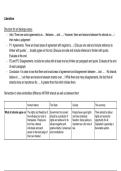
Structure for an ideology essay-
- Intro: There are some agreements on…. Between…. and….. / However, there are tensions between the strands on…./
then make a judgement
- P1: Agreements. There are broad areas of agreement with regards to…./ (Discuss one side and include reference to
thinker with quote)/ …. broadly agree on this too/ (Discuss one side and include reference to thinker with quote).
Evaluate at the end.
- P2 and P3: Disagreements. Include two sides with at least one key thinker per paragraph and quote. Evaluate at the end
of each paragraph.
- Conclusion: It is clear to see that there are broad areas of agreement and disagreement between ... and …. / All strands
believe in….. / yet there are tensions between strands over… / While there are many disagreements, the fact that all
strands show an importance for….. Is greater than that which divides them.
Remember to show similarities/ difference WITHIN strands as well as between them
Human Nature The State Society The economy
What all strands agree on The rights and freedoms of Government by consent People have equal rights There should be labour
the individual as ‘ends in should be a protector of and have individual rights and economic
themselves’. People are rights and achieve for its freedom. Social justice is opportunity for all.
born free, rational citizens negative and important as is the rule of Capitalism is generally a
individuals and each positive liberty. Consensual law. favourable system.
person is the best judge of and constitutional
their own interest.
, Classical Liberalism
Human Nature Individuals have complete autonomy and so have the right to pursue their own unique goals and interests without interference.
Rationality guides this as individuals make decisions based on their self interest and desire to maximise their well being.
Humans have natural rights that are inalienable. ‘Negative liberty’ is the absence of restraint, and we should assume that we
are ‘naturally free’ until something stops that. As individuals ultimately know what's best for themselves, they should not look
to the state for support. Individuals are ultimately unique, but we are all first and foremost, individuals.
State There must be a limited government, and its number one goal should be to protect individual rights, maintaining law and order
and following the rule of law as well as guaranteeing freedoms of movement and association. The state should not interfere
with the personal decisions of individuals, as long as they do not come into conflict with the rights of other individuals.
Individuals also have a right to private property, and so the state must enforce that. There must be little to no taxation, and the
state should be non aggressive or coercive. Governments should pursue ‘the greatest good for the greatest number’ through a
representative democracy, who would not side with the majority view but would decide the best thing for society as a whole to
avoid a ‘tyranny of the majority’. Some 19th century liberals thought that democratic participation should be limited to those
who owned property, as they were more responsible in their use of political power.
Society They believe that society is composed of free and autonomous individuals. There can be voluntary association and
cooperation among individuals, but they should be based on mutual consent and shared interest. All people are equal under
the law, and so everyone is entitled to their natural rights. Having complete freedom would maximise human progress. Society
should also be a meritocracy, and that there should be just self reliance and self help and no welfare state. The state should
not be paternalistic as it prevents individuals in a society from making their own moral choices.
Economy They believe in Laissez- Faire capitalism and the idea of the ’invisible hand’ that would guide the economy. Wealth would also
trickle down to the rest of the population, as long as the state let it happen. Businesses and individuals should be free to
engage in voluntary exchanges without government regulation, and should be free to maximise their wealth. Property is private
and markets are completely free. Self interest is a natural motivator within an economy and the government has a limited role
in economic intervention: only coming in when rights are at risk of being breached. Therefore, they support deregulation and
free trade as each consumer should be allowed to purchase whatever they want within their income restraints.
Structure for an ideology essay-
- Intro: There are some agreements on…. Between…. and….. / However, there are tensions between the strands on…./
then make a judgement
- P1: Agreements. There are broad areas of agreement with regards to…./ (Discuss one side and include reference to
thinker with quote)/ …. broadly agree on this too/ (Discuss one side and include reference to thinker with quote).
Evaluate at the end.
- P2 and P3: Disagreements. Include two sides with at least one key thinker per paragraph and quote. Evaluate at the end
of each paragraph.
- Conclusion: It is clear to see that there are broad areas of agreement and disagreement between ... and …. / All strands
believe in….. / yet there are tensions between strands over… / While there are many disagreements, the fact that all
strands show an importance for….. Is greater than that which divides them.
Remember to show similarities/ difference WITHIN strands as well as between them
Human Nature The State Society The economy
What all strands agree on The rights and freedoms of Government by consent People have equal rights There should be labour
the individual as ‘ends in should be a protector of and have individual rights and economic
themselves’. People are rights and achieve for its freedom. Social justice is opportunity for all.
born free, rational citizens negative and important as is the rule of Capitalism is generally a
individuals and each positive liberty. Consensual law. favourable system.
person is the best judge of and constitutional
their own interest.
, Classical Liberalism
Human Nature Individuals have complete autonomy and so have the right to pursue their own unique goals and interests without interference.
Rationality guides this as individuals make decisions based on their self interest and desire to maximise their well being.
Humans have natural rights that are inalienable. ‘Negative liberty’ is the absence of restraint, and we should assume that we
are ‘naturally free’ until something stops that. As individuals ultimately know what's best for themselves, they should not look
to the state for support. Individuals are ultimately unique, but we are all first and foremost, individuals.
State There must be a limited government, and its number one goal should be to protect individual rights, maintaining law and order
and following the rule of law as well as guaranteeing freedoms of movement and association. The state should not interfere
with the personal decisions of individuals, as long as they do not come into conflict with the rights of other individuals.
Individuals also have a right to private property, and so the state must enforce that. There must be little to no taxation, and the
state should be non aggressive or coercive. Governments should pursue ‘the greatest good for the greatest number’ through a
representative democracy, who would not side with the majority view but would decide the best thing for society as a whole to
avoid a ‘tyranny of the majority’. Some 19th century liberals thought that democratic participation should be limited to those
who owned property, as they were more responsible in their use of political power.
Society They believe that society is composed of free and autonomous individuals. There can be voluntary association and
cooperation among individuals, but they should be based on mutual consent and shared interest. All people are equal under
the law, and so everyone is entitled to their natural rights. Having complete freedom would maximise human progress. Society
should also be a meritocracy, and that there should be just self reliance and self help and no welfare state. The state should
not be paternalistic as it prevents individuals in a society from making their own moral choices.
Economy They believe in Laissez- Faire capitalism and the idea of the ’invisible hand’ that would guide the economy. Wealth would also
trickle down to the rest of the population, as long as the state let it happen. Businesses and individuals should be free to
engage in voluntary exchanges without government regulation, and should be free to maximise their wealth. Property is private
and markets are completely free. Self interest is a natural motivator within an economy and the government has a limited role
in economic intervention: only coming in when rights are at risk of being breached. Therefore, they support deregulation and
free trade as each consumer should be allowed to purchase whatever they want within their income restraints.