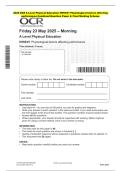
2025 OCR A Level Physical Education H555/01 Physiological factors affecting
performance Combined Question Paper & Final Marking Scheme
Oxford Cambridge and RSA
Friday 23 May 2025 – Morning
A Level Physical Education
H555/01 Physiological factors affecting performance
Time allowed: 2 hours
*1359264736*
You can use:
• a calculator
* H 5 5 5 0 1 *
Please write clearly in black ink. Do not write in the barcodes.
Centre number Candidate number
First name(s)
Last name
INSTRUCTIONS
• Use black ink. You can use an HB pencil, but only for graphs and diagrams.
• Write your answer to each question in the space provided. If you need extra space use
the lined pages at the end of this booklet. The question numbers must be clearly shown.
• Answer all the questions.
• Where appropriate, your answer should be supported with working. Marks might be
given for using a correct method, even if your answer is wrong.
INFORMATION
• The total mark for this paper is 90.
• The marks for each question are shown in brackets [ ].
• Quality of extended response will be assessed in questions marked with an asterisk (*).
• This document has 20 pages.
ADVICE
• Read each question carefully before you start your answer.
© OCR 2025 [601/8322/6] OCR is an exempt Charity
DC (CJ/SW) 332311/2 Turn over
, 2
Section A
1
(a) Which of the following are both muscles that contract to cause movement at the ankle?
Put a tick (✓) in the box next to the one correct answer.
A Gastrocnemius and adductor longus
B Semitendinosus and soleus
C Soleus and tibialis anterior
D Teres minor and gastrocnemius
[1]
(b) Which of the following are both muscles that contract to cause movement at the hip?
Put a tick (✓) in the box next to the one correct answer.
A Adductor brevis and iliopsoas
B Gluteus minumus and latissimus dorsi
C Trapezius and gluteus maximus
D Vastus intermedius and pectoralis major
[1]
2 The cardiac cycle involves systole and diastole.
Describe systole.
..........................................................................................................................................................
..........................................................................................................................................................
..........................................................................................................................................................
......................................................................................................................................................[2]
3
(a) Explain the term excess post-exercise oxygen consumption (EPOC) in the recovery process.
..........................................................................................................................................................
......................................................................................................................................................[1]
(b) State the effect of exercise intensity on EPOC.
..........................................................................................................................................................
......................................................................................................................................................[1]
© OCR 2025
, 3
4 One example of a sports injury is torn cartilage, which may be treated using PRICE and will
require further medical attention.
Identify two other appropriate treatments for torn cartilage.
1 .......................................................................................................................................................
2 .......................................................................................................................................................
[2]
5 The following statements describe Bernoulli’s principle.
Complete the statements by using words from the box below:
air resistance equal flight
friction higher lower
According to Bernoulli’s principle, faster moving fluids have..................................... pressure which
might create a lift force.
A downwards lift force causes an increase in ................................... .
[2]
© OCR 2025 Turn over
, 4
Section B
6
(a) Functional characteristics of muscle fibre types include the speed and force of contraction,
aerobic and anaerobic capacity, and fatigue resistance.
Evaluate the functional characteristics of slow oxidative muscle fibres for a hockey player.
..........................................................................................................................................................
..........................................................................................................................................................
..........................................................................................................................................................
..........................................................................................................................................................
..........................................................................................................................................................
..........................................................................................................................................................
..........................................................................................................................................................
..........................................................................................................................................................
..........................................................................................................................................................
..........................................................................................................................................................
..........................................................................................................................................................
..........................................................................................................................................................
..........................................................................................................................................................
..........................................................................................................................................................
..........................................................................................................................................................
......................................................................................................................................................[5]
© OCR 2025
performance Combined Question Paper & Final Marking Scheme
Oxford Cambridge and RSA
Friday 23 May 2025 – Morning
A Level Physical Education
H555/01 Physiological factors affecting performance
Time allowed: 2 hours
*1359264736*
You can use:
• a calculator
* H 5 5 5 0 1 *
Please write clearly in black ink. Do not write in the barcodes.
Centre number Candidate number
First name(s)
Last name
INSTRUCTIONS
• Use black ink. You can use an HB pencil, but only for graphs and diagrams.
• Write your answer to each question in the space provided. If you need extra space use
the lined pages at the end of this booklet. The question numbers must be clearly shown.
• Answer all the questions.
• Where appropriate, your answer should be supported with working. Marks might be
given for using a correct method, even if your answer is wrong.
INFORMATION
• The total mark for this paper is 90.
• The marks for each question are shown in brackets [ ].
• Quality of extended response will be assessed in questions marked with an asterisk (*).
• This document has 20 pages.
ADVICE
• Read each question carefully before you start your answer.
© OCR 2025 [601/8322/6] OCR is an exempt Charity
DC (CJ/SW) 332311/2 Turn over
, 2
Section A
1
(a) Which of the following are both muscles that contract to cause movement at the ankle?
Put a tick (✓) in the box next to the one correct answer.
A Gastrocnemius and adductor longus
B Semitendinosus and soleus
C Soleus and tibialis anterior
D Teres minor and gastrocnemius
[1]
(b) Which of the following are both muscles that contract to cause movement at the hip?
Put a tick (✓) in the box next to the one correct answer.
A Adductor brevis and iliopsoas
B Gluteus minumus and latissimus dorsi
C Trapezius and gluteus maximus
D Vastus intermedius and pectoralis major
[1]
2 The cardiac cycle involves systole and diastole.
Describe systole.
..........................................................................................................................................................
..........................................................................................................................................................
..........................................................................................................................................................
......................................................................................................................................................[2]
3
(a) Explain the term excess post-exercise oxygen consumption (EPOC) in the recovery process.
..........................................................................................................................................................
......................................................................................................................................................[1]
(b) State the effect of exercise intensity on EPOC.
..........................................................................................................................................................
......................................................................................................................................................[1]
© OCR 2025
, 3
4 One example of a sports injury is torn cartilage, which may be treated using PRICE and will
require further medical attention.
Identify two other appropriate treatments for torn cartilage.
1 .......................................................................................................................................................
2 .......................................................................................................................................................
[2]
5 The following statements describe Bernoulli’s principle.
Complete the statements by using words from the box below:
air resistance equal flight
friction higher lower
According to Bernoulli’s principle, faster moving fluids have..................................... pressure which
might create a lift force.
A downwards lift force causes an increase in ................................... .
[2]
© OCR 2025 Turn over
, 4
Section B
6
(a) Functional characteristics of muscle fibre types include the speed and force of contraction,
aerobic and anaerobic capacity, and fatigue resistance.
Evaluate the functional characteristics of slow oxidative muscle fibres for a hockey player.
..........................................................................................................................................................
..........................................................................................................................................................
..........................................................................................................................................................
..........................................................................................................................................................
..........................................................................................................................................................
..........................................................................................................................................................
..........................................................................................................................................................
..........................................................................................................................................................
..........................................................................................................................................................
..........................................................................................................................................................
..........................................................................................................................................................
..........................................................................................................................................................
..........................................................................................................................................................
..........................................................................................................................................................
..........................................................................................................................................................
......................................................................................................................................................[5]
© OCR 2025