1
For Expert help and assignment solutions, +254707240657
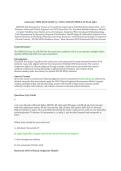
NURS 5462 MSK Questions and Answers
(100% Correct Answers) Already Graded
A+
Readings and Review Materials [ Ans: ] ▪ Please refer to this
website as you review this presentation—select the joint/body
area to go along with the slides
http://meded.ucsd.edu/clinicalmed/joints2.htm
© 2025 Assignment Expert
Taking the History [ Ans: ] May or may not involve trauma,
OLDCARTS
Associated symptoms—warning signs [ Ans: ] - History of
Guru01 - Stuvia
substantial trauma—fracture, major soft tissue injury - Hot swollen
joint—infection, RA, gout - Constitutional symptoms [fever,
malaise, weight loss, fatigue]—infection, sepsis - Focal
neurological weakness—radiculopathy - Diffuse weakness—
degenerative, neoplastic disease, toxins - Neurogenic pain
[burning, numbness, paresthesia, asymmetric]—radiculopathy,
entrapment, neuropathy - Claudication—peripheral
arterial/vascular, stenosis, arteritis 4/8/201
Taking the History 2 [ Ans: ] CHD - Medications: NSAIDS, Rx or
OTC, HRT, calcium - LMP, menstrual cycles, menopause: female
athletes, post-menopausal • PMH - Previous injury or trauma—
fracture, surgeries, arthroscopy - Cancer, arthritis, sickle cell,
osteoporosis, renal or neurologic disease
Taking the History 3 [ Ans: ] • FH - Congenital abnormalities of
hip, foot - Scoliosis or back problems - Arthritis—RA, degenerative,
ankylosing spondylitis, gout - Genetic—osteogenesis imperfecta,
hypercalciuria ▪ Personal/Social - Work, exercise, hobbies
4/8/2018- Tobacco, alcohol, drug use
Physical Exam [ Ans: ] ▪ Height ▪ Weight ▪ Uncover and examine
both sides ▪ Observe gait if weight bearing joint involved ▪
, 2
For Expert help and assignment solutions, +254707240657
Inspection - Skin—injuries or contusions - Swelling, deformities,
bruising, erythema ▪ Palpation—one finger point tenderness -
Compare non-injured to injured area - Palpate all surfaces—
bones, joints, soft tissue - Examine above and below area of injury
▪ Range of motion [ Ans: ] —active and passive - Examine above
and below area of injury - Internal and external rotation -
Abduction and adduction - Document ROM in degrees!!!
Traditional Management [ Ans: ] ▪ Rest ▪ Ice ▪
Compression/immobilization ▪ Elevation (RICE) ▪ Acetaminophen,
NSAIDs, muscle relaxants - Oral steroids may be considered in
some cases ▪ Physical therapy, exercise ▪ The tincture of time ▪
Manipulation, acupuncture, other [ESI, TENS, etc], conservative Rx
© 2025 Assignment Expert
x4-6 weeks
NSAIDs [ Ans: ] Inhibit cyclooxygenase (COX) enzyme—provide
anti-inflammatory/analgesic effects - Dose dependent - NSAIDs
Guru01 - Stuvia
differ in analgesic and anti-inflammatory effec
NSAIDs [ Ans: ] - Gastritis, ulceration, bleed - Impaired renal
function—NSAIDs inhibit renal prostaglandins, affecting regulation
of renal blood flow and glomerular filtration - Hypertension/Edema
- Platelet inhibition and bleeding - CV risk—potential damage to
arterial wall, possible arterial clotting - Drug interaction with ASA—
they ↓ cardioprotective benefits and ↑ risk of GI bleed 4/8/2018
Evidence: BMJ Clinical Evidence 2007; 12: 1108 [ Ans: ] - Plateau
for effectiveness; SE ↑ with dose ↑ - COX-2 ↓ risk for PUD but ↑ risk for
MI/CV events - Paracetamol similar to NSAIDs for acute MSK pain
but ↓ effective than NSAIDs for OA [Paracetamol not used in US
2nd to risk of GU malignancy] - **PPI > H2 antagonists ↓ GI SE -
Insufficient evidence whether topical NSAIDs beneficial
NSAIDs ▪ Adverse effects: [ Ans: ] - Gastritis, ulceration, bleed -
Impaired renal function—NSAIDs inhibit renal prostaglandins,
affecting regulation of renal blood flow and glomerular filtration -
Hypertension/Edema - Platelet inhibition and bleeding - CV risk—
potential damage to arterial wall, possible arterial clotting - **Drug
, 3
For Expert help and assignment solutions, +254707240657
interaction with ASA—they ↓ cardioprotective benefits and ↑ risk of
GI blee
NSAIDs ▪ Recommendations: [ Ans: ] - GI risk in general—
nonacelated aspirin products lowest risk [Disalsid, Trilisate];
Ibuprofen/Naproxen intermediate risk,
Diclofenac/Piroxicam/Ketorolac greatest risk ▪ Use lowest dose
possible , risk ↑ with dose ▪ Short course best ▪ Use acetaminophen
when possible - Avoid in patients > 65 yrs., H/O PUD, on steroids,
anticoagulants, ASA ▪ AGS, May, 2009: NSAIDs considered rarely
and with extreme caution; Acetaminophen, opioids best for
elderly
Osteoarthritis [ Ans: ] ▪ Also referred to as Degenerative Joint
© 2025 Assignment Expert
Disease [DJD] ▪ Factors that influence DJD - Age - Heredity -
Repetitive stress - Prior joint disease - Diabetes - Weight, ▪ Common
above 65 ▪ Decrease in the repair process of the body ▪ Maximal
Guru01 - Stuvia
stress to articular cartilage ▪ Worse over weight bearing joints and
large joints
Osteoarthritis 2 [ Ans: ] ▪ Go slow, no cure ▪ Water aerobics are
wonderful ▪ Use of cane, crutches, walker when needed ▪ Physical
Therapy: heat, exercise, stretching ▪ Rest as needed ▪ Ice ▪ Stay off
limb if possible ▪ TENS unit ▪ Analgesics / Anti-inflammatory ▪ May
need joint replacement
Sprain [ Ans: ] —acute injury to ligament when joint stressed
beyond normal range of motion ➢Ligaments—surround joint,
responsible for stability/mobility ➢Stretching leads to ligament
strain or rupture ➢Pain, marked swelling, hemorrhage, loss of
function
• Severity of ligament sprains [ Ans: ] ➢Grade I—stretching or
microscopic tearing, no joint instability/laxity [NSAIDS, RICE,
progressive weight bearing] ➢Grade II—partial, mild-moderate
instability/laxity [immobilize 4-6 weeks, no to partial weight
bearing] ➢Grade III—complete rupture, obvious instability and
laxity [immobilize, no weight bearing—refer to ortho]
For Expert help and assignment solutions, +254707240657
NURS 5462 MSK Questions and Answers
(100% Correct Answers) Already Graded
A+
Readings and Review Materials [ Ans: ] ▪ Please refer to this
website as you review this presentation—select the joint/body
area to go along with the slides
http://meded.ucsd.edu/clinicalmed/joints2.htm
© 2025 Assignment Expert
Taking the History [ Ans: ] May or may not involve trauma,
OLDCARTS
Associated symptoms—warning signs [ Ans: ] - History of
Guru01 - Stuvia
substantial trauma—fracture, major soft tissue injury - Hot swollen
joint—infection, RA, gout - Constitutional symptoms [fever,
malaise, weight loss, fatigue]—infection, sepsis - Focal
neurological weakness—radiculopathy - Diffuse weakness—
degenerative, neoplastic disease, toxins - Neurogenic pain
[burning, numbness, paresthesia, asymmetric]—radiculopathy,
entrapment, neuropathy - Claudication—peripheral
arterial/vascular, stenosis, arteritis 4/8/201
Taking the History 2 [ Ans: ] CHD - Medications: NSAIDS, Rx or
OTC, HRT, calcium - LMP, menstrual cycles, menopause: female
athletes, post-menopausal • PMH - Previous injury or trauma—
fracture, surgeries, arthroscopy - Cancer, arthritis, sickle cell,
osteoporosis, renal or neurologic disease
Taking the History 3 [ Ans: ] • FH - Congenital abnormalities of
hip, foot - Scoliosis or back problems - Arthritis—RA, degenerative,
ankylosing spondylitis, gout - Genetic—osteogenesis imperfecta,
hypercalciuria ▪ Personal/Social - Work, exercise, hobbies
4/8/2018- Tobacco, alcohol, drug use
Physical Exam [ Ans: ] ▪ Height ▪ Weight ▪ Uncover and examine
both sides ▪ Observe gait if weight bearing joint involved ▪
, 2
For Expert help and assignment solutions, +254707240657
Inspection - Skin—injuries or contusions - Swelling, deformities,
bruising, erythema ▪ Palpation—one finger point tenderness -
Compare non-injured to injured area - Palpate all surfaces—
bones, joints, soft tissue - Examine above and below area of injury
▪ Range of motion [ Ans: ] —active and passive - Examine above
and below area of injury - Internal and external rotation -
Abduction and adduction - Document ROM in degrees!!!
Traditional Management [ Ans: ] ▪ Rest ▪ Ice ▪
Compression/immobilization ▪ Elevation (RICE) ▪ Acetaminophen,
NSAIDs, muscle relaxants - Oral steroids may be considered in
some cases ▪ Physical therapy, exercise ▪ The tincture of time ▪
Manipulation, acupuncture, other [ESI, TENS, etc], conservative Rx
© 2025 Assignment Expert
x4-6 weeks
NSAIDs [ Ans: ] Inhibit cyclooxygenase (COX) enzyme—provide
anti-inflammatory/analgesic effects - Dose dependent - NSAIDs
Guru01 - Stuvia
differ in analgesic and anti-inflammatory effec
NSAIDs [ Ans: ] - Gastritis, ulceration, bleed - Impaired renal
function—NSAIDs inhibit renal prostaglandins, affecting regulation
of renal blood flow and glomerular filtration - Hypertension/Edema
- Platelet inhibition and bleeding - CV risk—potential damage to
arterial wall, possible arterial clotting - Drug interaction with ASA—
they ↓ cardioprotective benefits and ↑ risk of GI bleed 4/8/2018
Evidence: BMJ Clinical Evidence 2007; 12: 1108 [ Ans: ] - Plateau
for effectiveness; SE ↑ with dose ↑ - COX-2 ↓ risk for PUD but ↑ risk for
MI/CV events - Paracetamol similar to NSAIDs for acute MSK pain
but ↓ effective than NSAIDs for OA [Paracetamol not used in US
2nd to risk of GU malignancy] - **PPI > H2 antagonists ↓ GI SE -
Insufficient evidence whether topical NSAIDs beneficial
NSAIDs ▪ Adverse effects: [ Ans: ] - Gastritis, ulceration, bleed -
Impaired renal function—NSAIDs inhibit renal prostaglandins,
affecting regulation of renal blood flow and glomerular filtration -
Hypertension/Edema - Platelet inhibition and bleeding - CV risk—
potential damage to arterial wall, possible arterial clotting - **Drug
, 3
For Expert help and assignment solutions, +254707240657
interaction with ASA—they ↓ cardioprotective benefits and ↑ risk of
GI blee
NSAIDs ▪ Recommendations: [ Ans: ] - GI risk in general—
nonacelated aspirin products lowest risk [Disalsid, Trilisate];
Ibuprofen/Naproxen intermediate risk,
Diclofenac/Piroxicam/Ketorolac greatest risk ▪ Use lowest dose
possible , risk ↑ with dose ▪ Short course best ▪ Use acetaminophen
when possible - Avoid in patients > 65 yrs., H/O PUD, on steroids,
anticoagulants, ASA ▪ AGS, May, 2009: NSAIDs considered rarely
and with extreme caution; Acetaminophen, opioids best for
elderly
Osteoarthritis [ Ans: ] ▪ Also referred to as Degenerative Joint
© 2025 Assignment Expert
Disease [DJD] ▪ Factors that influence DJD - Age - Heredity -
Repetitive stress - Prior joint disease - Diabetes - Weight, ▪ Common
above 65 ▪ Decrease in the repair process of the body ▪ Maximal
Guru01 - Stuvia
stress to articular cartilage ▪ Worse over weight bearing joints and
large joints
Osteoarthritis 2 [ Ans: ] ▪ Go slow, no cure ▪ Water aerobics are
wonderful ▪ Use of cane, crutches, walker when needed ▪ Physical
Therapy: heat, exercise, stretching ▪ Rest as needed ▪ Ice ▪ Stay off
limb if possible ▪ TENS unit ▪ Analgesics / Anti-inflammatory ▪ May
need joint replacement
Sprain [ Ans: ] —acute injury to ligament when joint stressed
beyond normal range of motion ➢Ligaments—surround joint,
responsible for stability/mobility ➢Stretching leads to ligament
strain or rupture ➢Pain, marked swelling, hemorrhage, loss of
function
• Severity of ligament sprains [ Ans: ] ➢Grade I—stretching or
microscopic tearing, no joint instability/laxity [NSAIDS, RICE,
progressive weight bearing] ➢Grade II—partial, mild-moderate
instability/laxity [immobilize 4-6 weeks, no to partial weight
bearing] ➢Grade III—complete rupture, obvious instability and
laxity [immobilize, no weight bearing—refer to ortho]