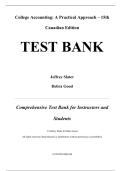
College Accounting: A Practical Approach – 14th
ST
Canadian Edition
UV
TEST BANK
IA
_A
Jeffrey Slater
PP
Debra Good
RO
Comprehensive Test Bank for Instructors and
VE
Students
D?
© Jeffrey Slater & Debra Good
??
All rights reserved. Reproduction or distribution without permission is prohibited.
©STUDYSTREAM
, College Accounting, 14e (Slater)
Chapter 1 Accounting Concepts and Procedures
ST
1.1 Learning Objective 1-1
1) The type of business organization that can continue indefinitely is known as a:
A) corporation.
UV
B) partnership.
C) sole proprietorship.
D) All of the above
Answer: C
Diff: 2
LO: 1-1
IA
AACSB: Reflective Thinking
Learning Outcome: Define accounting terms, accounting concepts and principles
2) The purpose of the accounting process is to provide financial information about:
_A
A) sole proprietorships.
B) small businesses.
C) large corporations.
D) All of these answers are correct.
Answer: D
PP
Diff: 1
LO: 1-1
AACSB: Reflective Thinking
Learning Outcome: Define accounting terms, accounting concepts and principles
3) Accounting provides information to:
RO
A) investors.
B) government.
C) managers.
D) All of these answers are correct.
Answer: D
Diff: 2
VE
LO: 1-1
AACSB: Reflective Thinking
Learning Outcome: Define accounting terms, accounting concepts and principles
4) Which of the following is a characteristic of a sole proprietorship?
D?
A) Business owned by more than one person
B) Easy to form
C) Each stockholder acts as an owner of the company
D) Can continue indefinitely
Answer: B
Diff: 1
??
LO: 1-1
AACSB: Reflective Thinking
Learning Outcome: Define accounting terms, accounting concepts and principles
1
Copyright © 2019 Pearson Education, Inc.
, 5) A partnership is a business which:
A) is easy to form.
B) ends with the death of a partner.
ST
C) is owned by more than one person.
D) All of these answers are correct.
Answer: D
Diff: 1
LO: 1-1
UV
AACSB: Reflective Thinking
Learning Outcome: Define accounting terms, accounting concepts and principles
6) Which is an advantage of a sole proprietorship form of business?
A) There is limited personal risk.
B) The business can continue indefinitely.
IA
C) The owner makes all the decisions.
D) The business is legally separate from the owner.
Answer: C
Diff: 1
_A
LO: 1-1
AACSB: Reflective Thinking
Learning Outcome: Define accounting terms, accounting concepts and principles
7) Which of the following is NOT a type of business organization?
A) Corporation
PP
B) Partnership
C) Sole proprietorship
D) An Accounting organization
Answer: D
Diff: 1
RO
LO: 1-1
AACSB: Reflective Thinking
Learning Outcome: Define accounting terms, accounting concepts and principles
8) A corporation:
A) is legally separate from its owners.
VE
B) is owned by stockholders.
C) has limited risk to stockholders.
D) All of the above
Answer: D
Diff: 2
D?
LO: 1-1
AACSB: Reflective Thinking
Learning Outcome: Define accounting terms, accounting concepts and principles
??
2
Copyright © 2019 Pearson Education, Inc.
, 9) The Sarbanes-Oxley Act was passed to:
A) prevent financial statement fraud at public companies.
B) replace inventory accounting procedures.
ST
C) improve the accuracy of the company's financial reporting.
D) Both A and C are correct.
Answer: D
Diff: 2
LO: 1-1
UV
AACSB: Reflective Thinking
Learning Outcome: Define accounting terms, accounting concepts and principles
10) A law firm would be considered a:
A) merchandise company.
B) manufacturer.
IA
C) service company.
D) retailer.
Answer: C
Diff: 1
_A
LO: 1-1
AACSB: Reflective Thinking
Learning Outcome: Define accounting terms, accounting concepts and principles
11) Generally Accepted Accounting Principles are the procedures and guidelines that must be followed
every other year.
PP
Answer: FALSE
Diff: 1
LO: 1-1
AACSB: Reflective Thinking
Learning Outcome: Define accounting terms, accounting concepts and principles
RO
12) The function of accounting includes analyzing, recording, classifying, summarizing, reporting,
strategic management and environmental assessment.
Answer: FALSE
Diff: 1
LO: 1-1
VE
AACSB: Reflective Thinking
Learning Outcome: Define accounting terms, accounting concepts and principles
13) A sole proprietorship ends with the death of the owner.
Answer: TRUE
Diff: 1
D?
LO: 1-1
AACSB: Reflective Thinking
Learning Outcome: Define accounting terms, accounting concepts and principles
??
3
Copyright © 2019 Pearson Education, Inc.
ST
Canadian Edition
UV
TEST BANK
IA
_A
Jeffrey Slater
PP
Debra Good
RO
Comprehensive Test Bank for Instructors and
VE
Students
D?
© Jeffrey Slater & Debra Good
??
All rights reserved. Reproduction or distribution without permission is prohibited.
©STUDYSTREAM
, College Accounting, 14e (Slater)
Chapter 1 Accounting Concepts and Procedures
ST
1.1 Learning Objective 1-1
1) The type of business organization that can continue indefinitely is known as a:
A) corporation.
UV
B) partnership.
C) sole proprietorship.
D) All of the above
Answer: C
Diff: 2
LO: 1-1
IA
AACSB: Reflective Thinking
Learning Outcome: Define accounting terms, accounting concepts and principles
2) The purpose of the accounting process is to provide financial information about:
_A
A) sole proprietorships.
B) small businesses.
C) large corporations.
D) All of these answers are correct.
Answer: D
PP
Diff: 1
LO: 1-1
AACSB: Reflective Thinking
Learning Outcome: Define accounting terms, accounting concepts and principles
3) Accounting provides information to:
RO
A) investors.
B) government.
C) managers.
D) All of these answers are correct.
Answer: D
Diff: 2
VE
LO: 1-1
AACSB: Reflective Thinking
Learning Outcome: Define accounting terms, accounting concepts and principles
4) Which of the following is a characteristic of a sole proprietorship?
D?
A) Business owned by more than one person
B) Easy to form
C) Each stockholder acts as an owner of the company
D) Can continue indefinitely
Answer: B
Diff: 1
??
LO: 1-1
AACSB: Reflective Thinking
Learning Outcome: Define accounting terms, accounting concepts and principles
1
Copyright © 2019 Pearson Education, Inc.
, 5) A partnership is a business which:
A) is easy to form.
B) ends with the death of a partner.
ST
C) is owned by more than one person.
D) All of these answers are correct.
Answer: D
Diff: 1
LO: 1-1
UV
AACSB: Reflective Thinking
Learning Outcome: Define accounting terms, accounting concepts and principles
6) Which is an advantage of a sole proprietorship form of business?
A) There is limited personal risk.
B) The business can continue indefinitely.
IA
C) The owner makes all the decisions.
D) The business is legally separate from the owner.
Answer: C
Diff: 1
_A
LO: 1-1
AACSB: Reflective Thinking
Learning Outcome: Define accounting terms, accounting concepts and principles
7) Which of the following is NOT a type of business organization?
A) Corporation
PP
B) Partnership
C) Sole proprietorship
D) An Accounting organization
Answer: D
Diff: 1
RO
LO: 1-1
AACSB: Reflective Thinking
Learning Outcome: Define accounting terms, accounting concepts and principles
8) A corporation:
A) is legally separate from its owners.
VE
B) is owned by stockholders.
C) has limited risk to stockholders.
D) All of the above
Answer: D
Diff: 2
D?
LO: 1-1
AACSB: Reflective Thinking
Learning Outcome: Define accounting terms, accounting concepts and principles
??
2
Copyright © 2019 Pearson Education, Inc.
, 9) The Sarbanes-Oxley Act was passed to:
A) prevent financial statement fraud at public companies.
B) replace inventory accounting procedures.
ST
C) improve the accuracy of the company's financial reporting.
D) Both A and C are correct.
Answer: D
Diff: 2
LO: 1-1
UV
AACSB: Reflective Thinking
Learning Outcome: Define accounting terms, accounting concepts and principles
10) A law firm would be considered a:
A) merchandise company.
B) manufacturer.
IA
C) service company.
D) retailer.
Answer: C
Diff: 1
_A
LO: 1-1
AACSB: Reflective Thinking
Learning Outcome: Define accounting terms, accounting concepts and principles
11) Generally Accepted Accounting Principles are the procedures and guidelines that must be followed
every other year.
PP
Answer: FALSE
Diff: 1
LO: 1-1
AACSB: Reflective Thinking
Learning Outcome: Define accounting terms, accounting concepts and principles
RO
12) The function of accounting includes analyzing, recording, classifying, summarizing, reporting,
strategic management and environmental assessment.
Answer: FALSE
Diff: 1
LO: 1-1
VE
AACSB: Reflective Thinking
Learning Outcome: Define accounting terms, accounting concepts and principles
13) A sole proprietorship ends with the death of the owner.
Answer: TRUE
Diff: 1
D?
LO: 1-1
AACSB: Reflective Thinking
Learning Outcome: Define accounting terms, accounting concepts and principles
??
3
Copyright © 2019 Pearson Education, Inc.