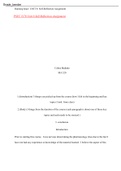
CMN 548 Module 1 study guide
1. GUIDE SADOCK Complete the following table which outlines the elements of the initial psychiatric interview:
Chapter 7.1 - 7.2,
7.6
Name, age, sex, marital status, religion, education, address, phone number, occupation, source
2. Identifying data of referral
Topic
Be direct in obtaining identifying data. Request specific answers.
3. Identifying data
Questions
If patient cannot cooperate, get information from family member or friend; if referred by a
physician, obtain medical record.
4. Identifying data
Comments and
helpful hints Brief statement in patient's own words of why patient is in the hospital or is being seen in
consultation
5. Chief complaint
(CC) topic Why are you going to see a psychiatrist? What brought you to the hospital? What seems to be
the problem?
6. Chief complaint
(CC) questions Record answers verbatim; a bizarré complaint points to psychotic process.
7. Chief complaint
(CC) comments
and helpful hints Development of symptoms from time of onset to present; relation of life events, conflicts,
stressors: drugs; change from previous level of functioning
8. History of pre-
sent illness (HPI): When did you first notice something happening to you? Were you upset about anything
when symptoms began? Did they begin suddenly or gradually?
9. History of pre-
sent illness (HPI):
questions Record in patient's own words as much as possible. Get history of previous hospi- talizations
and treatment. Sudden onset of symptoms may indicate drug-induced disorder.
10. History of pre-
sent illness (HPI):
www.stuvia.com
, CMN 548 Module 1 study guide
CMN 548 Module 1 study guide
comments and
helpful hints
11. Previous psychi- Psychiatric disorders; psychosomatic; medical, neurologic illnesses (e.g., cranio- cerebral traum
atric and medical convulsions).
disorders:
12. Previous psychi- Did you ever lose consciousness? Have a seizure?
atric and medical
disorders: QUES-
TIONS
Ascertain extent of illness, treatment, medications, outcomes, hospitals, doctors. Determine
13. Previous psychi-
whether illness serves some additional purpose (secondary gain).
atric and medical
disorders: com-
ments and help-
ful hints
Substance use disorders can mimic or induce psychiatric syndromes, elevate risk of suicide
14. substance
and violence, and have important impact on safe medication prescribing.
use/abuse
Various tools can be used to aid in gathering the substance use history. Examples include the
commonly used CAGE questionnaire which has been modified to include other drugs (and now
called CAGE-AID)
The interviewer is interested in obtaining an accounting of major medical disor- ders both
to develop a complete history and to identify illness that could mimic a psychiatric disorder,
15. Past medical his-
tory contribute to the context of the presentation or factor into treatment planning.
Psychiatric, medical, and genetic illness in mother, father, siblings; age of parents and
occupations; if deceased, date and cause; feelings about each family member,
16. Family History
(FH): topic
www.stuvia.com
, CMN 548 Module 1 study guide
CMN 548 Module 1 study guide
finances .
Because many psychiatric illnesses have a genetic predisposition, if not cause, a careful
review of family history is important to the assessment and can aid in diagnosis and
establishing expected prognosis .
17. Family History Have any members in your family been depressed? Alcoholic? In a mental hospital? In jail?
(FH): question Describe your living conditions. Did you have your own room?
18. Family History Genetic loading in anxiety, depression, schizophrenia. Get medication history of family
(FH): comments (medications effective in family members for similar disorders may be effective in
and helpful hints patient).
19. developmental The developmental and social history reviews the stages of the patient's life
and social history from gestation to the present with an eye toward understanding the important exposures,
relationships, and events that shaped the person's life story.
It is often helpful to review the social history chronologically; doing so provides a natural flow
to the questions and ensures a complete history.
20. Review of sys- As in a general medical interview, the review of systems is intended to capture any current
tems physical signs and symptoms not already identified in the HPI or past medical history
(including Table 7.1-2 and is organized by asking sentinel questions about the major
systems of the body).
21. review of sys- Sleep phase problems (initial, middle, terminal insomnia), total sleep time, ab- normal
tems: sleep sleep events
22. review of sys- Depression: persistent sadness, reduced interest or pleasure in usual activities, tearfulness,
tems: mood de- reduced or excessive sleep, reduced or increased appetite, weight loss or gain, low energy,
pression reduced concentration, low libido, excessive or inappro- priate guilt, psychomotor change
(slowing or agitation), negative self-appraisal, helpless and hopeless thinking thoughts of
death or suicide. A common mnemon- ic used to remember the symptoms of major
depression is SIGECAPS (Sleep,
www.stuvia.com
, CMN 548 Module 1 study guide
CMN 548 Module 1 study guide
Interest, Guilt, Energy, Concentration, Appetite, Psychomotor agitation or slowing, Suicidality).
Hypomania/Mania: elevated, expansive or irritable mood, decreased need for or inability
23. review of sys- to sleep, excessive energy, marked increase in goal and pleasure directed activity, increase
tems: mood Hy- amount and pace of speech and thought, grandiosity, heightened libido, impulsivity and/or
pomania/mania recklessness in behaviors such as spending and sex
Anxiety
Experience of panic attacks, somatic symptoms of anxiety, phobic, or social avoid- ance
24. review of sys-
tems: anxiety Experience of hallucinations, delusions, disorganized behavior, speech or thought, negative
symptoms
25. review of sys- Repetitive intrusive and unwanted thoughts, compulsive behaviors to neutralize anxiety,
tems: psychosis hoarding behaviors
26. review of sys-
tems: obses- sive- Traumatic exposure; intrusive and avoidance symptoms, negative alterations in cognitions and
compulsive mood, excessive arousal and reactivity
27. review of sys- Substance use, gambling, impulse control problems, disordered eating, repetitive self-harm
tems: trauma
The MSE is the functional equivalent of the physical examination in other areas of medicine.
28. review of sys-
It is a systematic collection of the observations (e.g., signs such as blunt af- fect or rapid
tems: behavior
speech) and reported mental experiences (e.g., symptoms such as depressed mood or
29. mental status hallucinations) that produce a picture of the patient's current mental state. The
exam interviewer makes these observations throughout an
www.stuvia.com
1. GUIDE SADOCK Complete the following table which outlines the elements of the initial psychiatric interview:
Chapter 7.1 - 7.2,
7.6
Name, age, sex, marital status, religion, education, address, phone number, occupation, source
2. Identifying data of referral
Topic
Be direct in obtaining identifying data. Request specific answers.
3. Identifying data
Questions
If patient cannot cooperate, get information from family member or friend; if referred by a
physician, obtain medical record.
4. Identifying data
Comments and
helpful hints Brief statement in patient's own words of why patient is in the hospital or is being seen in
consultation
5. Chief complaint
(CC) topic Why are you going to see a psychiatrist? What brought you to the hospital? What seems to be
the problem?
6. Chief complaint
(CC) questions Record answers verbatim; a bizarré complaint points to psychotic process.
7. Chief complaint
(CC) comments
and helpful hints Development of symptoms from time of onset to present; relation of life events, conflicts,
stressors: drugs; change from previous level of functioning
8. History of pre-
sent illness (HPI): When did you first notice something happening to you? Were you upset about anything
when symptoms began? Did they begin suddenly or gradually?
9. History of pre-
sent illness (HPI):
questions Record in patient's own words as much as possible. Get history of previous hospi- talizations
and treatment. Sudden onset of symptoms may indicate drug-induced disorder.
10. History of pre-
sent illness (HPI):
www.stuvia.com
, CMN 548 Module 1 study guide
CMN 548 Module 1 study guide
comments and
helpful hints
11. Previous psychi- Psychiatric disorders; psychosomatic; medical, neurologic illnesses (e.g., cranio- cerebral traum
atric and medical convulsions).
disorders:
12. Previous psychi- Did you ever lose consciousness? Have a seizure?
atric and medical
disorders: QUES-
TIONS
Ascertain extent of illness, treatment, medications, outcomes, hospitals, doctors. Determine
13. Previous psychi-
whether illness serves some additional purpose (secondary gain).
atric and medical
disorders: com-
ments and help-
ful hints
Substance use disorders can mimic or induce psychiatric syndromes, elevate risk of suicide
14. substance
and violence, and have important impact on safe medication prescribing.
use/abuse
Various tools can be used to aid in gathering the substance use history. Examples include the
commonly used CAGE questionnaire which has been modified to include other drugs (and now
called CAGE-AID)
The interviewer is interested in obtaining an accounting of major medical disor- ders both
to develop a complete history and to identify illness that could mimic a psychiatric disorder,
15. Past medical his-
tory contribute to the context of the presentation or factor into treatment planning.
Psychiatric, medical, and genetic illness in mother, father, siblings; age of parents and
occupations; if deceased, date and cause; feelings about each family member,
16. Family History
(FH): topic
www.stuvia.com
, CMN 548 Module 1 study guide
CMN 548 Module 1 study guide
finances .
Because many psychiatric illnesses have a genetic predisposition, if not cause, a careful
review of family history is important to the assessment and can aid in diagnosis and
establishing expected prognosis .
17. Family History Have any members in your family been depressed? Alcoholic? In a mental hospital? In jail?
(FH): question Describe your living conditions. Did you have your own room?
18. Family History Genetic loading in anxiety, depression, schizophrenia. Get medication history of family
(FH): comments (medications effective in family members for similar disorders may be effective in
and helpful hints patient).
19. developmental The developmental and social history reviews the stages of the patient's life
and social history from gestation to the present with an eye toward understanding the important exposures,
relationships, and events that shaped the person's life story.
It is often helpful to review the social history chronologically; doing so provides a natural flow
to the questions and ensures a complete history.
20. Review of sys- As in a general medical interview, the review of systems is intended to capture any current
tems physical signs and symptoms not already identified in the HPI or past medical history
(including Table 7.1-2 and is organized by asking sentinel questions about the major
systems of the body).
21. review of sys- Sleep phase problems (initial, middle, terminal insomnia), total sleep time, ab- normal
tems: sleep sleep events
22. review of sys- Depression: persistent sadness, reduced interest or pleasure in usual activities, tearfulness,
tems: mood de- reduced or excessive sleep, reduced or increased appetite, weight loss or gain, low energy,
pression reduced concentration, low libido, excessive or inappro- priate guilt, psychomotor change
(slowing or agitation), negative self-appraisal, helpless and hopeless thinking thoughts of
death or suicide. A common mnemon- ic used to remember the symptoms of major
depression is SIGECAPS (Sleep,
www.stuvia.com
, CMN 548 Module 1 study guide
CMN 548 Module 1 study guide
Interest, Guilt, Energy, Concentration, Appetite, Psychomotor agitation or slowing, Suicidality).
Hypomania/Mania: elevated, expansive or irritable mood, decreased need for or inability
23. review of sys- to sleep, excessive energy, marked increase in goal and pleasure directed activity, increase
tems: mood Hy- amount and pace of speech and thought, grandiosity, heightened libido, impulsivity and/or
pomania/mania recklessness in behaviors such as spending and sex
Anxiety
Experience of panic attacks, somatic symptoms of anxiety, phobic, or social avoid- ance
24. review of sys-
tems: anxiety Experience of hallucinations, delusions, disorganized behavior, speech or thought, negative
symptoms
25. review of sys- Repetitive intrusive and unwanted thoughts, compulsive behaviors to neutralize anxiety,
tems: psychosis hoarding behaviors
26. review of sys-
tems: obses- sive- Traumatic exposure; intrusive and avoidance symptoms, negative alterations in cognitions and
compulsive mood, excessive arousal and reactivity
27. review of sys- Substance use, gambling, impulse control problems, disordered eating, repetitive self-harm
tems: trauma
The MSE is the functional equivalent of the physical examination in other areas of medicine.
28. review of sys-
It is a systematic collection of the observations (e.g., signs such as blunt af- fect or rapid
tems: behavior
speech) and reported mental experiences (e.g., symptoms such as depressed mood or
29. mental status hallucinations) that produce a picture of the patient's current mental state. The
exam interviewer makes these observations throughout an
www.stuvia.com