10/31/23, 5:28 Test bank - medical surgical nursing 10th edition ignatavicius
AM workman-
Medical Surgical Nursing 10th d d b m b
Edition Ignatavicius Workman d d
Test Bank
b m b m b
Chapter 01: Overview of Professional Nursing Concepts for
d d d d d d d d d d d d d d d d Medical-
Surgical Nursing Ignatavicius: Medical-Surgical Nursing, 10th Edition
d d d d d d
MULTIPLE d CHOICE
1. A d new nurse is working with a preceptor on a medical-surgical
d d d d d d d d d
d unit. The preceptor advises the new nurse that which is the
d d d d d d d d d d
d priority when working as a professional nurse? d d d d d d
a. Attending to holistic client needs d d d d
b. Ensuring client safety d d
c. Not making medication errors d d d
d. Providing client-focused care d d
ANS: d B
All actions are d appropriate for the professional nurse. bmHowever, d d d d d d d
ensuring client safety is the priority. Health care errors mhave been
d d d d d d d d d d d
widely
d reported for 25 years, many of which dresult in client d d d d d d d d d
minjury,
d death, and increased health care costs. There d are several d d d d d d d d
national
d and international organizations that have either recommended
d d d d d d d
or mandated safetybminitiatives.
d d d
Every nurse has the responsibility bmto mguard
d the client’s safety. The d d d d d d d d d
other actions are important
d d d d
for quality nursing, but theybmarebmnotbmas vital as providing safety. Not making
d d d d d d d d d d
medication errors does provide b safety, but is too narrow in scope
d d d d d d d d d d d d
to be the best answer.
d d d d d
DIF: Understanding bTOP: bmIntegrated Process: Nursing Process: Intervention KEY: Client d d d d d d d d
safety
d
MSC: Client NeedsbmCategory: Safe
d and Effective Care Environment: Safety and d d d d d d d d
Infection Control
d d
2. A nursebmisbmorienting a new client and family to the medical-surgical
d d d d d d d d d d d d unit.
Whatbminformation does the nurse provide to best help the client d d d d d d d d d d promote
his d
bmor herbmownb safety?
d d d
a. Encourage the client and family to be active partners. d d d d d d d d
b. Havebmthe client monitor hand hygiene in caregivers. d d d d d d
c. Offer the family the opportunity to stay with the client.d d d d d d d d d
d. Tell the client to always wear his or her armband.
d d d d d d d d d
ANS: d A
Each action could be important for the client or family to perform.
d d d d d d d d d d d
However, encouraging the client to be active in his or her health
d d d d d d d d d d d d d care
as a safety
d d d
partner is the most critical. The other actions are very limited in
d d d d d d d d d d d
scope and do not provide the broad protection that being active
d d d d d d d d d d d
and involved does.
d d d
DIF: Understanding TOP: Integrated d
Process: Teaching/Learning KEY: Client safety
d d d d d
MSC: Client Needs Category: Safe and Effective
d d d d d d d d Care d Environment: d Safety d and
Infection Control
d d
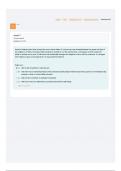
3. A d nurse is caring for a postoperative client on the surgical unit.
d d d d d d d d d d
d The client’s blood pressure was 142/76 mm Hg 30 minutes ago,
d d d d d d d d d d
d and now is 88/50 mm Hg. What action would the nurse take
d d d d d d d d d d d
about:blank
1/593
,10/31/23, 5:28 Test bank - medical surgical nursing 10th edition ignatavicius
d first? a. Call the Rapid Response Team.
d d d d d d
b. Document and continue to monitor.
d d d d
c. Notify the primary health care provider.
d d d d d
d. Repeat the blood pressure in 15 minutes.
d d d d d d
about:blank
2/593
,10/31/23, 5:28 Test bank - medical surgical nursing 10th edition ignatavicius
AM workman-
Btestbanks.com
about:blank
3/593
, 10/31/23, 5:28 Test bank - medical surgical nursing 10th edition ignatavicius
AM workman-
ANS: d A
The purpose of the Rapid Response Team (RRT) is to intervene
d d d d d d d d d d
d when clients are deteriorating before they suffer either respiratory or
d d d d d d d d d
d cardiac arrest. Since d d
the client has manifested a significant change, the nurse would call the
d d d d d d d d d d d
d RRT.
Changes in blood pressure, mental status, heart rate, temperature,
d d d d d d d d
d oxygen saturation, and last 2 hours’ urine output are particularly
d d d d d d d d d
d significant and are d d
part of the Modified Early Warning System guide. Documentation is
d d d d d d d d d
d vital, but the nurse must do more than document. The primary
d d d d d d d d d d
d health care provider would be notified, but this is not more
d d d d d d d d d d
d important than calling the RRT. The client’s blood pressure would
d d d d d d d d d
d be reassessed frequently, but the priority is
d d d d d d
getting the rapid care to the client.
d d d d d d
DIF: Applying TOP: Integrated Process: Communication and d d d d d
Documentation KEY: Rapid Response Team (RRT), Clinical
d d d d d d d
judgment
d
MSC: Client Needs Category: Physiological Integrity: Physiological
d d d d d d d d Adaptation
4. A d nurse wishes to provide client-centered care in all interactions.
d d d d d d d d d Which
d action by the nurse best demonstrates this concept?
d d d d d d d
a. Assesses for cultural influences affecting health care.
d d d d d d
b. Ensures that all the client’s basic needs are met.
d d d d d d d d
c. Tells the client and family about all upcomingbmtests.b
d d d d d d d d
d. Thoroughly orients the client and family to thebmroom. d d d d d d d
ANS: d A
Showing respect for the dclient and family’s b preferences and needs d d d d d d d d d
is
d essential tod ensure a holistic or “whole-person” b approach to d d d d d d d d d
care. By assessing the effect of the client’s culture on bmhealth b
d d d d d d d d d d d d
care, this nurse is practicing clientfocused care. Providing for bmbasic b
d d d d d d d d d d d
needs does not demonstrate this competence.
d d d d d d
Simply telling the client mabout mall
d upcoming tests is not d d d d d d d d
providing empowering
d education. Orienting mthe dclient and family d d d d d d
to
d the room d is an important safety bmmeasure, bmbut not directly
d d d d d d d d d
related to demonstrating clientcentered care. b
d d d d d d
DIF: Understanding TOP: d Integrated d Process: Culture and d d
Spirituality KEY: bm Client-centered d d d d care, d Culture MSC: Client Needs Category: d d d
Psychosocial mIntegrity
d d
5. A clientbmis mgoingbmto be admitted for a scheduled surgical procedure. Which
d d d d d d d d d d
actionbmdoesbmthe nurse explain is the most important thing the client can d d d d d d d d d d
do
d
bmto protectbmagainst errors?
d d d
a. Bring ma list of all medications and what they are for.
d d d d d d d d d d
b. Keepbmthe provider’s phone number by the telephone. d d d d d d
c. Make sure that all providers wash hands before entering the room.
d d d d d d d d d d
d. Write down the name of each caregiver who comes in the room.
d d d d d d d d d d d
ANS: d A
Medication reconciliation is a formal process in which the client’s actual current
d d d d d d d d d d d
medications are compared to the prescribed medications at the time
d d d d d d d d d d
ofd
admission, transfer, or discharge. This National client Safety Goal is
d d d d d d d d d
important to reduce medication errors. The client would not have to be
d d d d d d d d d d d d
responsible for
d providers washing their hands, and even if the
d d d d d d d d d
client does so, this is too
d d d d d d
narrow to be the most important action to prevent errors.
d d d d d d d d d
Keeping the provider’s phone number nearby and documenting
d d d d d d d d
everyone who enters the room also do not guarantee safety.
d d d d d d d d d d
about:blank
4/593
AM workman-
Medical Surgical Nursing 10th d d b m b
Edition Ignatavicius Workman d d
Test Bank
b m b m b
Chapter 01: Overview of Professional Nursing Concepts for
d d d d d d d d d d d d d d d d Medical-
Surgical Nursing Ignatavicius: Medical-Surgical Nursing, 10th Edition
d d d d d d
MULTIPLE d CHOICE
1. A d new nurse is working with a preceptor on a medical-surgical
d d d d d d d d d
d unit. The preceptor advises the new nurse that which is the
d d d d d d d d d d
d priority when working as a professional nurse? d d d d d d
a. Attending to holistic client needs d d d d
b. Ensuring client safety d d
c. Not making medication errors d d d
d. Providing client-focused care d d
ANS: d B
All actions are d appropriate for the professional nurse. bmHowever, d d d d d d d
ensuring client safety is the priority. Health care errors mhave been
d d d d d d d d d d d
widely
d reported for 25 years, many of which dresult in client d d d d d d d d d
minjury,
d death, and increased health care costs. There d are several d d d d d d d d
national
d and international organizations that have either recommended
d d d d d d d
or mandated safetybminitiatives.
d d d
Every nurse has the responsibility bmto mguard
d the client’s safety. The d d d d d d d d d
other actions are important
d d d d
for quality nursing, but theybmarebmnotbmas vital as providing safety. Not making
d d d d d d d d d d
medication errors does provide b safety, but is too narrow in scope
d d d d d d d d d d d d
to be the best answer.
d d d d d
DIF: Understanding bTOP: bmIntegrated Process: Nursing Process: Intervention KEY: Client d d d d d d d d
safety
d
MSC: Client NeedsbmCategory: Safe
d and Effective Care Environment: Safety and d d d d d d d d
Infection Control
d d
2. A nursebmisbmorienting a new client and family to the medical-surgical
d d d d d d d d d d d d unit.
Whatbminformation does the nurse provide to best help the client d d d d d d d d d d promote
his d
bmor herbmownb safety?
d d d
a. Encourage the client and family to be active partners. d d d d d d d d
b. Havebmthe client monitor hand hygiene in caregivers. d d d d d d
c. Offer the family the opportunity to stay with the client.d d d d d d d d d
d. Tell the client to always wear his or her armband.
d d d d d d d d d
ANS: d A
Each action could be important for the client or family to perform.
d d d d d d d d d d d
However, encouraging the client to be active in his or her health
d d d d d d d d d d d d d care
as a safety
d d d
partner is the most critical. The other actions are very limited in
d d d d d d d d d d d
scope and do not provide the broad protection that being active
d d d d d d d d d d d
and involved does.
d d d
DIF: Understanding TOP: Integrated d
Process: Teaching/Learning KEY: Client safety
d d d d d
MSC: Client Needs Category: Safe and Effective
d d d d d d d d Care d Environment: d Safety d and
Infection Control
d d
3. A d nurse is caring for a postoperative client on the surgical unit.
d d d d d d d d d d
d The client’s blood pressure was 142/76 mm Hg 30 minutes ago,
d d d d d d d d d d
d and now is 88/50 mm Hg. What action would the nurse take
d d d d d d d d d d d
about:blank
1/593
,10/31/23, 5:28 Test bank - medical surgical nursing 10th edition ignatavicius
d first? a. Call the Rapid Response Team.
d d d d d d
b. Document and continue to monitor.
d d d d
c. Notify the primary health care provider.
d d d d d
d. Repeat the blood pressure in 15 minutes.
d d d d d d
about:blank
2/593
,10/31/23, 5:28 Test bank - medical surgical nursing 10th edition ignatavicius
AM workman-
Btestbanks.com
about:blank
3/593
, 10/31/23, 5:28 Test bank - medical surgical nursing 10th edition ignatavicius
AM workman-
ANS: d A
The purpose of the Rapid Response Team (RRT) is to intervene
d d d d d d d d d d
d when clients are deteriorating before they suffer either respiratory or
d d d d d d d d d
d cardiac arrest. Since d d
the client has manifested a significant change, the nurse would call the
d d d d d d d d d d d
d RRT.
Changes in blood pressure, mental status, heart rate, temperature,
d d d d d d d d
d oxygen saturation, and last 2 hours’ urine output are particularly
d d d d d d d d d
d significant and are d d
part of the Modified Early Warning System guide. Documentation is
d d d d d d d d d
d vital, but the nurse must do more than document. The primary
d d d d d d d d d d
d health care provider would be notified, but this is not more
d d d d d d d d d d
d important than calling the RRT. The client’s blood pressure would
d d d d d d d d d
d be reassessed frequently, but the priority is
d d d d d d
getting the rapid care to the client.
d d d d d d
DIF: Applying TOP: Integrated Process: Communication and d d d d d
Documentation KEY: Rapid Response Team (RRT), Clinical
d d d d d d d
judgment
d
MSC: Client Needs Category: Physiological Integrity: Physiological
d d d d d d d d Adaptation
4. A d nurse wishes to provide client-centered care in all interactions.
d d d d d d d d d Which
d action by the nurse best demonstrates this concept?
d d d d d d d
a. Assesses for cultural influences affecting health care.
d d d d d d
b. Ensures that all the client’s basic needs are met.
d d d d d d d d
c. Tells the client and family about all upcomingbmtests.b
d d d d d d d d
d. Thoroughly orients the client and family to thebmroom. d d d d d d d
ANS: d A
Showing respect for the dclient and family’s b preferences and needs d d d d d d d d d
is
d essential tod ensure a holistic or “whole-person” b approach to d d d d d d d d d
care. By assessing the effect of the client’s culture on bmhealth b
d d d d d d d d d d d d
care, this nurse is practicing clientfocused care. Providing for bmbasic b
d d d d d d d d d d d
needs does not demonstrate this competence.
d d d d d d
Simply telling the client mabout mall
d upcoming tests is not d d d d d d d d
providing empowering
d education. Orienting mthe dclient and family d d d d d d
to
d the room d is an important safety bmmeasure, bmbut not directly
d d d d d d d d d
related to demonstrating clientcentered care. b
d d d d d d
DIF: Understanding TOP: d Integrated d Process: Culture and d d
Spirituality KEY: bm Client-centered d d d d care, d Culture MSC: Client Needs Category: d d d
Psychosocial mIntegrity
d d
5. A clientbmis mgoingbmto be admitted for a scheduled surgical procedure. Which
d d d d d d d d d d
actionbmdoesbmthe nurse explain is the most important thing the client can d d d d d d d d d d
do
d
bmto protectbmagainst errors?
d d d
a. Bring ma list of all medications and what they are for.
d d d d d d d d d d
b. Keepbmthe provider’s phone number by the telephone. d d d d d d
c. Make sure that all providers wash hands before entering the room.
d d d d d d d d d d
d. Write down the name of each caregiver who comes in the room.
d d d d d d d d d d d
ANS: d A
Medication reconciliation is a formal process in which the client’s actual current
d d d d d d d d d d d
medications are compared to the prescribed medications at the time
d d d d d d d d d d
ofd
admission, transfer, or discharge. This National client Safety Goal is
d d d d d d d d d
important to reduce medication errors. The client would not have to be
d d d d d d d d d d d d
responsible for
d providers washing their hands, and even if the
d d d d d d d d d
client does so, this is too
d d d d d d
narrow to be the most important action to prevent errors.
d d d d d d d d d
Keeping the provider’s phone number nearby and documenting
d d d d d d d d
everyone who enters the room also do not guarantee safety.
d d d d d d d d d d
about:blank
4/593