

BIO 1500 - Week 11
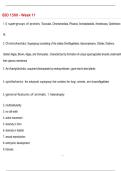
1. 6 supergroups of protists: Excavata, Chromalveolata, Rhizaria, Archaeplastida, Amoebozoa, Opisthokon-
ta
2. Chromalveolata: Supergroup consisting of the clades Dinoflagellates, Apicomplexans, Ciliates, Diatoms,
Golden Algae, Brown, Algae, and Oomycetes ; characterized by formation of unique spacing(called alveoli) underneath
their plasma membrane
3. Archaeplastida: acquired chloroplasts by endosymbiosis ; gave rise to land plants
4. opisthokonta: the eukaryotic supergroup that contains the fungi, animals, and choanoflagellates
5. general features of animals: 1. heterotrophy
2. multicellularity
3. no cell walls
4. active movement
5. diversity in form
6. diversity in habitat
7. sexual reproduction
8. embryonic development
9. tissues
1/4
, 6. 5 key transitions to body plans through animal evolution: 1. differentiated tissues
2. symmetry
3. evolution of a body cavity
4. embryonic development
5. segmentation
7. parazoa: no true tissues and organs ; sponges ; cells can dedifferentiate to change function ; has specialized
cells
8. eumatazoa: "True animals"; a clade of all animals except for sponges and a few others that have true tissues
9. choanocytes: flagellated collar cells, generate a water current through the sponge and ingest suspended food
10. groups with radial symmetry: cnidaria, echinoderms
11. cnidarians: jellyfish ; carnivores ; incomplete digestion ; either medusa or polyp body form
12. incomplete digestion: Type of body plan in which the same opening serves as both the mouth and the
anus
13. advantages of bilateral symmetry: cephalization and greater mobility
2/4
1. 6 supergroups of protists: Excavata, Chromalveolata, Rhizaria, Archaeplastida, Amoebozoa, Opisthokon-
ta
2. Chromalveolata: Supergroup consisting of the clades Dinoflagellates, Apicomplexans, Ciliates, Diatoms,
Golden Algae, Brown, Algae, and Oomycetes ; characterized by formation of unique spacing(called alveoli) underneath
their plasma membrane
3. Archaeplastida: acquired chloroplasts by endosymbiosis ; gave rise to land plants
4. opisthokonta: the eukaryotic supergroup that contains the fungi, animals, and choanoflagellates
5. general features of animals: 1. heterotrophy
2. multicellularity
3. no cell walls
4. active movement
5. diversity in form
6. diversity in habitat
7. sexual reproduction
8. embryonic development
9. tissues
1/4
, 6. 5 key transitions to body plans through animal evolution: 1. differentiated tissues
2. symmetry
3. evolution of a body cavity
4. embryonic development
5. segmentation
7. parazoa: no true tissues and organs ; sponges ; cells can dedifferentiate to change function ; has specialized
cells
8. eumatazoa: "True animals"; a clade of all animals except for sponges and a few others that have true tissues
9. choanocytes: flagellated collar cells, generate a water current through the sponge and ingest suspended food
10. groups with radial symmetry: cnidaria, echinoderms
11. cnidarians: jellyfish ; carnivores ; incomplete digestion ; either medusa or polyp body form
12. incomplete digestion: Type of body plan in which the same opening serves as both the mouth and the
anus
13. advantages of bilateral symmetry: cephalization and greater mobility
2/4


