2025/2026 D072 FUNDAMENTALS FOR SUCCESS IN
BUSINESS VERIFIED 100% ANSWERS
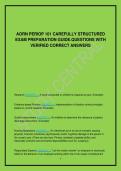
Ability - ANS-Possession of the means to do something
Active Listening - ANS-Giving the sender full, undisrupted attention with the intention of fully receiving
his or her message
Aggressive Communicator - ANS-Forceful communication style often carried out in a loud and hostile
manner
Assertive communicator - ANS-Productive communication style used by those who express their ideas
while listening attentively to others
Attraction-Selection-Attrition (A-S-A) - ANS-A theory holding that (1) Individuals are attracted to
organization whose members are similar to themselves in terms of personality, values, interests and
other attribute; (2) organizations are more likely to select those who possess knowledge, skills, and
abilities similar to the ones their existing members possess; and (3) over time, those who do not fit in
well are more likely to leave
Attrition - ANS-The unpredictable and uncontrollable but normal reduction of work force due to
resignations, retirement, sickness, or death
Autocratic Style - ANS-Leadership style that keeps close control over subordinates and does not seek
much input from others
Barrier to Effective Communication - ANS-Factor that prevents the receiver from receiving and
understanding the message accurately
Behavioral Event Interviews - ANS-Guided interview questions where individuals describe their thoughts
and feelings during specific situations and a coach helps establish a development plan
, Channel - ANS-Means of passing information from sender to recipient, such as via face-to-face meeting
or telephone calls
Code of Ethics - ANS-Guide that publicly sets out an organization's key values and ethical obligations
Coercive power - ANS-Ability to take something away or punish someone for noncompliance
Communication - ANS-Sharing understanding and meanings via oral, nonverbal, and written forms
Communication Style - ANS-Dominant way in which an individual interacts and exchanges information
with others
Consideration - ANS-The relationship oriented between behaviors of a leader
Corporate Culture - ANS-The attitudes, values, and standards of behavior that distinguishes one
organization form another
Corporate Social Responsibility (CSR) - ANS-Philosophy in which a company voluntarily engages in
actions that benefit society, be it economically, socially, politically, or environmentally
Cultutal Diversity - ANS-The existence of a variety of cultural or ethnic groups within a workplace
CVF Model - ANS-Framework for assessing organizational culture and organizational dynamics
Design Thinking - ANS-A method of problem-solving strategy wherein the data collected are expressed
visually in order to create new strategies, ways, and methods to solve problems, create opportunities or
strengthen weaknesses
Effective Communication - ANS-When information transmitted is interpreted by the receiver in the way
it was intended by the sender
BUSINESS VERIFIED 100% ANSWERS
Ability - ANS-Possession of the means to do something
Active Listening - ANS-Giving the sender full, undisrupted attention with the intention of fully receiving
his or her message
Aggressive Communicator - ANS-Forceful communication style often carried out in a loud and hostile
manner
Assertive communicator - ANS-Productive communication style used by those who express their ideas
while listening attentively to others
Attraction-Selection-Attrition (A-S-A) - ANS-A theory holding that (1) Individuals are attracted to
organization whose members are similar to themselves in terms of personality, values, interests and
other attribute; (2) organizations are more likely to select those who possess knowledge, skills, and
abilities similar to the ones their existing members possess; and (3) over time, those who do not fit in
well are more likely to leave
Attrition - ANS-The unpredictable and uncontrollable but normal reduction of work force due to
resignations, retirement, sickness, or death
Autocratic Style - ANS-Leadership style that keeps close control over subordinates and does not seek
much input from others
Barrier to Effective Communication - ANS-Factor that prevents the receiver from receiving and
understanding the message accurately
Behavioral Event Interviews - ANS-Guided interview questions where individuals describe their thoughts
and feelings during specific situations and a coach helps establish a development plan
, Channel - ANS-Means of passing information from sender to recipient, such as via face-to-face meeting
or telephone calls
Code of Ethics - ANS-Guide that publicly sets out an organization's key values and ethical obligations
Coercive power - ANS-Ability to take something away or punish someone for noncompliance
Communication - ANS-Sharing understanding and meanings via oral, nonverbal, and written forms
Communication Style - ANS-Dominant way in which an individual interacts and exchanges information
with others
Consideration - ANS-The relationship oriented between behaviors of a leader
Corporate Culture - ANS-The attitudes, values, and standards of behavior that distinguishes one
organization form another
Corporate Social Responsibility (CSR) - ANS-Philosophy in which a company voluntarily engages in
actions that benefit society, be it economically, socially, politically, or environmentally
Cultutal Diversity - ANS-The existence of a variety of cultural or ethnic groups within a workplace
CVF Model - ANS-Framework for assessing organizational culture and organizational dynamics
Design Thinking - ANS-A method of problem-solving strategy wherein the data collected are expressed
visually in order to create new strategies, ways, and methods to solve problems, create opportunities or
strengthen weaknesses
Effective Communication - ANS-When information transmitted is interpreted by the receiver in the way
it was intended by the sender