NR 451 WEEK 1 DISCUSSION 1, TYPES OF NURSING MODELS AND FRAMEWORKS OF EBP
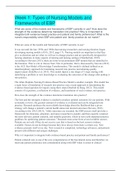
Week 1: Types of Nursing Models and Frameworks of EBP What are some of the models and frameworks of EBP currently in use? How does the strength of the evidence determine translation into practice? Why is it important to integrate both evidence-based practice and patient and family preferences? What is the nurse's responsibility when EBP and patient and family practice do not match? What are some of the models and frameworks of EBP currently in use? It was not until the late 1950s and 1960s that nursing researchers and nursing theorists began developing nusring models (ANA, 2015, page 17). Nursing models are important in that they give us direction and are what we will use to change practice and are specifically designed for nursing situations in many aspects of nursing and nursing settings (Chamberlain, 2018). According to Stevens (2013), there are forty-seven prominent EBP models that are identified in the literature. That is a lot to choose from. One in particular, that is disscussed by Stevens (2013) is the ACE Star Model of Knowledge Transformation. This model is defined defined as an interdisciplinary approach for translating research into practice and attaining quality improvement (Schaffer et al, 2013). This model dipicts a star shape of 5 steps starting with identifying a problem or new knowledge to evaluating the outcomes of the change after putting it into practice. The Johns Hopkins Nursing Evidence-Based Practice Model is another example. This model has a main focus of translation of research into practice uses a team approach to determining the evidence-based question for inquiry using three steps (Dearholt & Dang, 2012). This model consists of a question, a collection of evidence, and translation of such evidence into practice. How does the strength of the evidence determine translation into practice? The best and the strongest evidence is needed to produce optimal outcomes for our patients. With systematic reviews, the greatest amount of evidence is evaluated and can be integrated into practice. Research produces the most reliable knowledge about the likelihood that a given strategy will change a patient's current health status into desired outcomes (Stevens, 2013). According to the ANA (2015), "while outcomes are essential, the EBP process itself provides a framework for clinicians, educators, and nurse researcher to ponder, and then expertly construct the most relevant, patient centered, and testable questions, which in turn yeild important practice guidlines for optimizing patient outcomes." Research must come from several credible sources. Patients are not safe if they do not receive care that is based on the best current evidence available. Nurses do not do things because they have always been done a certain way. New evidence presents itself every day. New research is completed, technology advances, and patients present with different and unique challenges. Why is it important to integrate both evidence-based practice and patient and family preferences? Patient centered care is one of the core compentencies of the baccularate nurse and therefore we must take patient preference into consideration along with EBP when it comes to clinical decision making. Research using systematic review allows nurses to know what works by having the evidence to back it. At times this may present a challenge because of patient preferences. Religion, beliefs, and personal experiences may result in barriers to implementing EBP into care. Having knowledge of the patient's spiritualuality, cultural background, decision-making processes, and health-related values, is just as important in planning appropriate care using EBP. What is the nurse's responsibility when EBP and patient and family practice do not match? The nurse's responsibilty is to educate the family about the evidence behind the recommended intervetions so they can make the best decision regarding care. Validate any concerns the patient and family may have. Explain in detail what options they have and ask them to repeat it back to you to make sure they understand. Smirnoff (2013) suggests engaging the patient in a discussion of the pros and cons of treatment(s) and have them relate them to their values and needs as appropriate and participate in shared decision making. EBP is just the foundation of safe care. Patient preference makes the ultimate decision in the plan of care. References American Nurses Association. (2015). Nursing: Scope and standards of practice(3rd ed.). Silver Spring, MD. Chamberlain College of Nursing. (2018). NR439 Capstone Course. Lesson week 1.Downers Grove, IL: DeVry Education Group. Dearholt, S. L., & Dang, D. (2012). Johns Hopkins nursing evidence-based practice: Model and guidelines (2nd ed.). Indianapolis, IN: Sigma Theta Tau International Schaffer, M. A., Sandau, K. E., & Diedrick, L. (2013). Evidence-based practice models for organizational change: Overview and practical applications. Journal of Advanced Nursing, 69(5), 1197–1209 Smirnoff, L. (2013). Incorporating patient and family preferences into evidence-based medicine. BMC Medical Informatics and Decision Making. 13(Suppl 3):S6 Stevens, K. R. (2013). The impact of evidence-based practice in nursing and the next big ideas. Online Journal of Issues in Nursing, 18(2), manuscript 4. doi:10.3912/OJIN.Vol18No02Man04
École, étude et sujet
- Établissement
-
Chamberlain College Nursing
- Cours
-
NR 451 (NR451)
Infos sur le Document
- Publié le
- 16 janvier 2021
- Nombre de pages
- 2
- Écrit en
- 2020/2021
- Type
- Cas
- Professeur(s)
- Professor
- Grade
- A+
Sujets
-
nr 451 week 1 discussion 1
-
types of nursing models and frameworks of ebp
-
week 1 types of nursing models and frameworks of ebp what are some of the models and frameworks of ebp currently in use how

Document également disponible en groupe