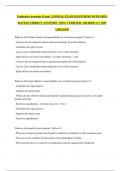
Midterm Exam: NUR631 / NUR 631 (Latest
Update) Advanced Physiology
and Pathophysiology Study Guide | Questions
and Verified Answers | 100% Correct – GCU
Question 1: What is the primary source of energy for cellular function?
A. Protein
B. Lipid
C. ATP
D. Nucleic acid
Correct Answer: C. ATP
Rationale: ATP, produced via oxidative phosphorylation in mitochondria, drives cellular
processes like active transport and muscle contraction. In pathology, ATP depletion in ischemia
leads to cell injury.
Question 2: The cell membrane is primarily composed of:
A. Phospholipids and proteins
B. Carbohydrates and lipids
C. Proteins and nucleic acids
D. Lipids and cholesterol only
Correct Answer: A. Phospholipids and proteins
Rationale: The fluid mosaic model describes a bilayer of phospholipids with embedded proteins
for transport and signaling. Pathological alterations, like lipid peroxidation, disrupt membrane
integrity.
Question 3: In cellular respiration, the Krebs cycle occurs in the:
A. Cytoplasm
B. Mitochondrial matrix
C. Nucleus
D. Endoplasmic reticulum
Correct Answer: B. Mitochondrial matrix
Rationale: The Krebs cycle generates NADH and FADH2 for electron transport chain. In
hypoxia, impaired Krebs cycle contributes to lactic acidosis.
,Question 4: What is the role of the sodium-potassium pump in cellular homeostasis?
A. Glucose transport
B. Maintain membrane potential
C. Protein synthesis
D. DNA replication
Correct Answer: B. Maintain membrane potential
Rationale: The Na/K ATPase pump exchanges 3 Na+ out for 2 K+ in, creating -70 mV
potential. Failure in pathology leads to cell swelling.
Question 5: The primary site of protein synthesis is the:
A. Mitochondria
B. Nucleus
C. Ribosome
D. Lysosome
Correct Answer: C. Ribosome
Rationale: Ribosomes translate mRNA into polypeptides. In cancer, dysregulated synthesis
drives cell proliferation.
Question 6: Lysosomes function in:
A. Energy production
B. Intracellular digestion
C. Lipid synthesis
D. DNA replication
Correct Answer: B. Intracellular digestion
Rationale: Lysosomal enzymes degrade macromolecules. Lysosomal rupture in injury releases
hydrolases, causing autodigestion.
Question 7: The endoplasmic reticulum is involved in:
A. ATP production
B. Protein and lipid synthesis
C. DNA storage
D. Waste elimination
Correct Answer: B. Protein and lipid synthesis
Rationale: Rough ER for proteins, smooth ER for lipids. ER stress in pathology contributes to
apoptosis.
Question 8: Mitochondrial dysfunction primarily affects:
A. Protein synthesis
, B. Energy production
C. DNA replication
D. Lipid storage
Correct Answer: B. Energy production
Rationale: Mitochondria generate ATP via oxidative phosphorylation. Dysfunction causes
fatigue in mitochondrial diseases.
Question 9: The cytoskeleton provides:
A. Energy
B. Structural support and motility
C. Genetic material
D. Digestive enzymes
Correct Answer: B. Structural support and motility
Rationale: Microtubules, actin, intermediate filaments enable shape and movement. Cytoskeletal
defects cause neuromuscular disorders.
Question 10: Cellular adhesion is mediated by:
A. Integrins and cadherins
B. ATP synthase
C. Lysosomal enzymes
D. Nuclear pores
Correct Answer: A. Integrins and cadherins
Rationale: Adhesion molecules maintain tissue integrity. Dysregulation promotes metastasis in
cancer.
Question 11: In cellular injury, free radicals cause damage via:
A. Lipid peroxidation
B. Protein hydration
C. DNA condensation
D. Glucose oxidation
Correct Answer: A. Lipid peroxidation
Rationale: ROS attack polyunsaturated fatty acids in membranes, leading to cell lysis.
Question 12: Reversible cell injury is characterized by:
A. Necrosis
B. Cellular swelling and fatty change
C. Apoptosis
D. Autolysis
Update) Advanced Physiology
and Pathophysiology Study Guide | Questions
and Verified Answers | 100% Correct – GCU
Question 1: What is the primary source of energy for cellular function?
A. Protein
B. Lipid
C. ATP
D. Nucleic acid
Correct Answer: C. ATP
Rationale: ATP, produced via oxidative phosphorylation in mitochondria, drives cellular
processes like active transport and muscle contraction. In pathology, ATP depletion in ischemia
leads to cell injury.
Question 2: The cell membrane is primarily composed of:
A. Phospholipids and proteins
B. Carbohydrates and lipids
C. Proteins and nucleic acids
D. Lipids and cholesterol only
Correct Answer: A. Phospholipids and proteins
Rationale: The fluid mosaic model describes a bilayer of phospholipids with embedded proteins
for transport and signaling. Pathological alterations, like lipid peroxidation, disrupt membrane
integrity.
Question 3: In cellular respiration, the Krebs cycle occurs in the:
A. Cytoplasm
B. Mitochondrial matrix
C. Nucleus
D. Endoplasmic reticulum
Correct Answer: B. Mitochondrial matrix
Rationale: The Krebs cycle generates NADH and FADH2 for electron transport chain. In
hypoxia, impaired Krebs cycle contributes to lactic acidosis.
,Question 4: What is the role of the sodium-potassium pump in cellular homeostasis?
A. Glucose transport
B. Maintain membrane potential
C. Protein synthesis
D. DNA replication
Correct Answer: B. Maintain membrane potential
Rationale: The Na/K ATPase pump exchanges 3 Na+ out for 2 K+ in, creating -70 mV
potential. Failure in pathology leads to cell swelling.
Question 5: The primary site of protein synthesis is the:
A. Mitochondria
B. Nucleus
C. Ribosome
D. Lysosome
Correct Answer: C. Ribosome
Rationale: Ribosomes translate mRNA into polypeptides. In cancer, dysregulated synthesis
drives cell proliferation.
Question 6: Lysosomes function in:
A. Energy production
B. Intracellular digestion
C. Lipid synthesis
D. DNA replication
Correct Answer: B. Intracellular digestion
Rationale: Lysosomal enzymes degrade macromolecules. Lysosomal rupture in injury releases
hydrolases, causing autodigestion.
Question 7: The endoplasmic reticulum is involved in:
A. ATP production
B. Protein and lipid synthesis
C. DNA storage
D. Waste elimination
Correct Answer: B. Protein and lipid synthesis
Rationale: Rough ER for proteins, smooth ER for lipids. ER stress in pathology contributes to
apoptosis.
Question 8: Mitochondrial dysfunction primarily affects:
A. Protein synthesis
, B. Energy production
C. DNA replication
D. Lipid storage
Correct Answer: B. Energy production
Rationale: Mitochondria generate ATP via oxidative phosphorylation. Dysfunction causes
fatigue in mitochondrial diseases.
Question 9: The cytoskeleton provides:
A. Energy
B. Structural support and motility
C. Genetic material
D. Digestive enzymes
Correct Answer: B. Structural support and motility
Rationale: Microtubules, actin, intermediate filaments enable shape and movement. Cytoskeletal
defects cause neuromuscular disorders.
Question 10: Cellular adhesion is mediated by:
A. Integrins and cadherins
B. ATP synthase
C. Lysosomal enzymes
D. Nuclear pores
Correct Answer: A. Integrins and cadherins
Rationale: Adhesion molecules maintain tissue integrity. Dysregulation promotes metastasis in
cancer.
Question 11: In cellular injury, free radicals cause damage via:
A. Lipid peroxidation
B. Protein hydration
C. DNA condensation
D. Glucose oxidation
Correct Answer: A. Lipid peroxidation
Rationale: ROS attack polyunsaturated fatty acids in membranes, leading to cell lysis.
Question 12: Reversible cell injury is characterized by:
A. Necrosis
B. Cellular swelling and fatty change
C. Apoptosis
D. Autolysis