

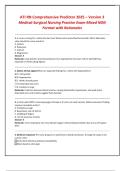
ATI RN Comprehensive Predictor 2025 – Version 3
Medical-Surgical Nursing Practice Exam Mixed NGN
Format with Rationales
1. A nurse is caring for a client who has heart failure and is prescribed furosemide. Which laboratory
value should the nurse monitor?
A. Sodium
B. Potassium
C. Calcium
D. Magnesium
Answer: B
Rationale: Loop diuretics promote potassium loss; hypokalemia increases risk for dysrhythmias,
especially in clients taking digoxin.
2. (Select all that apply) Which are expected findings for a client with hypovolemia?
☑ A. Tachycardia
☑ B. Hypotension
☑ C. Weak, thready pulse
☐ D. Distended neck veins
☐ E. Crackles in lungs
Rationale: Fluid loss decreases blood volume, causing tachycardia, hypotension, and weak pulse.
Distended veins and crackles suggest fluid overload.
3. A client with COPD is receiving oxygen therapy at 2 L/min via nasal cannula. Which assessment finding
requires immediate action?
A. Productive cough
B. Respiratory rate of 10/min
C. Clubbing of fingers
D. Use of accessory muscles
Answer: B
Rationale: A low respiratory rate may indicate oxygen-induced hypoventilation due to loss of hypoxic
drive.
4. (Ordered response) The nurse prepares to administer a blood transfusion. Arrange the steps in the
correct order:
1️⃣ Verify client identity and blood compatibility
2️⃣ Obtain baseline vital signs
,3️⃣ Start infusion slowly and monitor
4️⃣ Stay with client for first 15 minutes
5️⃣ Document the procedure and client response
Correct Order: 1️ → 2️ → 3️ → 4️ → 5️
Rationale: Verification and baseline data come before infusion; monitoring and documentation follow
administration.
5. A nurse reviews the ECG of a client showing peaked T waves. Which electrolyte imbalance should the
nurse suspect?
A. Hypokalemia
B. Hyperkalemia
C. Hypocalcemia
D. Hyponatremia
Answer: B
Rationale: Tall, peaked T waves are classic indicators of hyperkalemia due to increased cardiac
excitability.
6. (Select all that apply) Which nursing actions are appropriate for a client with pneumonia?
☑ A. Encourage coughing and deep breathing
☑ B. Administer antibiotics as prescribed
☑ C. Provide humidified oxygen
☐ D. Restrict fluids to 1,000 mL/day
☑ E. Place in semi-Fowler’s position
Rationale: Positioning, airway clearance, hydration, and oxygenation improve ventilation and recovery.
7. The nurse is teaching a client about a low-sodium diet. Which food choice indicates understanding?
A. Canned soup
B. Fresh fruit salad
C. Pickles
D. Smoked sausage
Answer: B
Rationale: Fresh foods have minimal sodium content; processed foods are high in sodium.
8. A client with type 2 diabetes reports tremors, sweating, and confusion. What should the nurse do
first?
A. Administer glucagon IM
B. Check blood glucose level
C. Give 4 oz of orange juice
D. Notify the provider
, Answer: B
Rationale: The nurse must confirm hypoglycemia before administering carbohydrates or medication.
9. (Select all that apply) Which findings indicate hypoxia?
☑ A. Restlessness
☑ B. Cyanosis
☑ C. Tachycardia
☐ D. Bradycardia
☑ E. Confusion
Rationale: Early hypoxia manifests as restlessness and tachycardia; late signs include confusion and
cyanosis.
10. The nurse provides discharge teaching to a client with new colostomy. Which statement indicates a
need for further teaching?
A. “I will empty my pouch when it is one-third full.”
B. “I can use deodorizing drops in the bag.”
C. “I’ll irrigate my stoma with cold tap water daily.”
D. “I’ll check the skin around the stoma each day.”
Answer: C
Rationale: Irrigation requires lukewarm water; cold water can cause cramping.
11. (Select all that apply) Appropriate interventions for a client with DVT include:
☑ A. Elevate the affected leg
☑ B. Apply warm compresses
☐ C. Massage the calf
☐ D. Encourage ambulation
☑ E. Administer anticoagulants
Rationale: Leg elevation and anticoagulants promote venous return; massage or early ambulation can
dislodge the clot.
12. The nurse monitors a client with cirrhosis for complications. Which finding suggests hepatic
encephalopathy?
A. Jaundice
B. Asterixis
C. Abdominal distension
D. Ecchymosis
Answer: B
Rationale: Asterixis (flapping tremor) is a sign of elevated ammonia and neurological dysfunction.
Medical-Surgical Nursing Practice Exam Mixed NGN
Format with Rationales
1. A nurse is caring for a client who has heart failure and is prescribed furosemide. Which laboratory
value should the nurse monitor?
A. Sodium
B. Potassium
C. Calcium
D. Magnesium
Answer: B
Rationale: Loop diuretics promote potassium loss; hypokalemia increases risk for dysrhythmias,
especially in clients taking digoxin.
2. (Select all that apply) Which are expected findings for a client with hypovolemia?
☑ A. Tachycardia
☑ B. Hypotension
☑ C. Weak, thready pulse
☐ D. Distended neck veins
☐ E. Crackles in lungs
Rationale: Fluid loss decreases blood volume, causing tachycardia, hypotension, and weak pulse.
Distended veins and crackles suggest fluid overload.
3. A client with COPD is receiving oxygen therapy at 2 L/min via nasal cannula. Which assessment finding
requires immediate action?
A. Productive cough
B. Respiratory rate of 10/min
C. Clubbing of fingers
D. Use of accessory muscles
Answer: B
Rationale: A low respiratory rate may indicate oxygen-induced hypoventilation due to loss of hypoxic
drive.
4. (Ordered response) The nurse prepares to administer a blood transfusion. Arrange the steps in the
correct order:
1️⃣ Verify client identity and blood compatibility
2️⃣ Obtain baseline vital signs
,3️⃣ Start infusion slowly and monitor
4️⃣ Stay with client for first 15 minutes
5️⃣ Document the procedure and client response
Correct Order: 1️ → 2️ → 3️ → 4️ → 5️
Rationale: Verification and baseline data come before infusion; monitoring and documentation follow
administration.
5. A nurse reviews the ECG of a client showing peaked T waves. Which electrolyte imbalance should the
nurse suspect?
A. Hypokalemia
B. Hyperkalemia
C. Hypocalcemia
D. Hyponatremia
Answer: B
Rationale: Tall, peaked T waves are classic indicators of hyperkalemia due to increased cardiac
excitability.
6. (Select all that apply) Which nursing actions are appropriate for a client with pneumonia?
☑ A. Encourage coughing and deep breathing
☑ B. Administer antibiotics as prescribed
☑ C. Provide humidified oxygen
☐ D. Restrict fluids to 1,000 mL/day
☑ E. Place in semi-Fowler’s position
Rationale: Positioning, airway clearance, hydration, and oxygenation improve ventilation and recovery.
7. The nurse is teaching a client about a low-sodium diet. Which food choice indicates understanding?
A. Canned soup
B. Fresh fruit salad
C. Pickles
D. Smoked sausage
Answer: B
Rationale: Fresh foods have minimal sodium content; processed foods are high in sodium.
8. A client with type 2 diabetes reports tremors, sweating, and confusion. What should the nurse do
first?
A. Administer glucagon IM
B. Check blood glucose level
C. Give 4 oz of orange juice
D. Notify the provider
, Answer: B
Rationale: The nurse must confirm hypoglycemia before administering carbohydrates or medication.
9. (Select all that apply) Which findings indicate hypoxia?
☑ A. Restlessness
☑ B. Cyanosis
☑ C. Tachycardia
☐ D. Bradycardia
☑ E. Confusion
Rationale: Early hypoxia manifests as restlessness and tachycardia; late signs include confusion and
cyanosis.
10. The nurse provides discharge teaching to a client with new colostomy. Which statement indicates a
need for further teaching?
A. “I will empty my pouch when it is one-third full.”
B. “I can use deodorizing drops in the bag.”
C. “I’ll irrigate my stoma with cold tap water daily.”
D. “I’ll check the skin around the stoma each day.”
Answer: C
Rationale: Irrigation requires lukewarm water; cold water can cause cramping.
11. (Select all that apply) Appropriate interventions for a client with DVT include:
☑ A. Elevate the affected leg
☑ B. Apply warm compresses
☐ C. Massage the calf
☐ D. Encourage ambulation
☑ E. Administer anticoagulants
Rationale: Leg elevation and anticoagulants promote venous return; massage or early ambulation can
dislodge the clot.
12. The nurse monitors a client with cirrhosis for complications. Which finding suggests hepatic
encephalopathy?
A. Jaundice
B. Asterixis
C. Abdominal distension
D. Ecchymosis
Answer: B
Rationale: Asterixis (flapping tremor) is a sign of elevated ammonia and neurological dysfunction.


