PSYCH NOTES
CHAPTER SIX
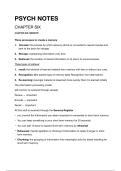
CHAPTER SIX: MEMORY
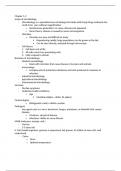
Three processes to create a memory
1. Encode: the process by which sensory stimuli is converted to neural impulse and
sent to the brain for storage.
2. Storage: maintaining information over time.
3. Retrieval: the location of stored information in its return to consciousness.
Three types of retrieval
1. recall: the retrieval of learned material from memory with few or without any cues.
2. Recognition: (the easiest type of memory task) Recognition from alternatives.
3. Re-learning: (savings) material is relearned more quickly than it is learned initially
The Information processing model
(All memory is received through senses)
Review — important
Encode — important
Recall — Important
All this stu is received through the Sensory Register
- you commit the information you deem important to remember to short term memory
- You can keep something in your short term memory for 20 seconds
- You can add 10 secs to expand short term memory by rehearsal
- Rehearsal: mental repetition or thinking of information to retain it longer in short
term memory.
- Chunking: the grouping of information into meaningful units for easier handling for
short term memory.
ff
CHAPTER SIX
CHAPTER SIX: MEMORY
Three processes to create a memory
1. Encode: the process by which sensory stimuli is converted to neural impulse and
sent to the brain for storage.
2. Storage: maintaining information over time.
3. Retrieval: the location of stored information in its return to consciousness.
Three types of retrieval
1. recall: the retrieval of learned material from memory with few or without any cues.
2. Recognition: (the easiest type of memory task) Recognition from alternatives.
3. Re-learning: (savings) material is relearned more quickly than it is learned initially
The Information processing model
(All memory is received through senses)
Review — important
Encode — important
Recall — Important
All this stu is received through the Sensory Register
- you commit the information you deem important to remember to short term memory
- You can keep something in your short term memory for 20 seconds
- You can add 10 secs to expand short term memory by rehearsal
- Rehearsal: mental repetition or thinking of information to retain it longer in short
term memory.
- Chunking: the grouping of information into meaningful units for easier handling for
short term memory.
ff