
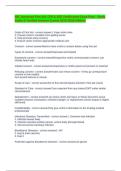
NSC Advanced First Aid, CPR & AED Certification Exam Prep – Study
Guide & Verified Answers (Latest 2025/2026 Edition)
Goals of First Aid - correct answer1. Keep victim alive
2. Prevent victim's condition from getting worse
3. Help promote early recovery
4. Ensure victim receives appropriate medical care
Consent - correct answerNeed to have victim's consent before using first aid
Types of consent - correct answerExpressed and Implied
Expressed consent - correct answerResponsive victim communicates consent, can
include head nods
Implied consent - correct answerUnresponsive or child's parent not present or reached
Refusing consent - correct answerVictim can refuse consent - if they go unresponsive
consent is now implied
Get second witness to refusal
Scope of care - correct answerSet of first aid techniques learned in first aid course
Standard of Care - correct answerCare expected from any trained EMT under similar
circumstances
Abandoment - correct answerIf you leave victim and injury or illness becomes worse
Justified reasons: Exhaustion, imminent danger, or replacement comes (equal or higher
skill level)
Confidentiality - correct answerOnly give victim's information to the treating medical
professionals
Infectious Diseases Transmitted - correct answer1. Someone has infection
2. Infection leaves body
3. Infection reaches another person, enters body (through blood)
4. Second person develops infection
Bloodborne Diseases - correct answer1. HIV
2. Hep B (Has vaccine)
3. Hep C
Protection against bloodborne diseases - correct answeruse gloves
,Steps in an Emergency - correct answer1. Recognize the emergency
2. Check the scene
3. Check the victim
4. Call 9-1-1
5. Give first aid
6. Have victim seek medical attention
10 Body Systems - correct answer1. Respiratory
2. Cardiovascular
3. Nervous
4. Musculoskeletal
5. Integumentary
6. Gastrointestinal
7. Endocrine
8. Immune
9. Urinary
10. Reproductive
Assessment - correct answer1. Initial assessment
2. Secondary assessment
3. Monitor for change
Initial Assessment - correct answerCheck for life-threatening conditions
Move only if - immediate danger or cannot give lifesaving care
How to check for responsiveness - correct answerTap on shoulder and ask "Are you
okay?", doesn't respond then call 9-1-1 and provide care
AVPU Scale - correct answerAlert
Verbal - Response to verbal
Painful - Responses to pain
Unresponsive
Initial Assessment Steps - correct answer1. Check for responsiveness and normal
breathing
2. Unresponsive - Call 9-1-1, if unresponsive and not breathing provide BLS
3. Breathing - Check for severe bleeding and other threats
4. Care for life threatening conditions
Recovery Position - correct answerKeeps airway open, allows fluids to drain, prevents
from inhaling stomach contents
HAINES
High Arm IN Endangered Spine
, Extend arms over victim's head, position arm closest to you over victim's chest, bend
victim's leg closest to you at the knee, put forearm under victim's shoulder while
supporting the neck and carefully roll, bend both legs and open mouth
SAMPLE - correct answerSigns and symptoms
Allergies
Medications
Previous problems
Last food or drink
Events
Physical Exam - correct answerHead to toe
DOTS
Deformities
Open injuries and wounds
Tenderness
Swelling
Universal sign of choking - correct answerHands around the throat
Choking care for Responsive Adult and Child - correct answer1. Consent
2. 9-1-1
3. Stand behind with one leg in between theirs
4. Locate navel, create fist with hand above navel
5. Grasp fist with other hand and thrust inward and upward
Choking care for Responsive Infant - correct answer1. 5 back blows
2. Check for expelled object
3. 5 chest thrusts
4. Continue cycle, if alone call 9-1-1 after 1 minute
Effects of blood loss - correct answercauses a decrease in oxygen supply to the body;
blood pressure drops; heart pumps faster to compensate for the decreased volume and
BP; body will attempt to clot the blood to halt bleeding; usually requiring 6-7 minutes;
uncontrolled, bleeding can result in shock and death
Class 1 blood loss - correct answerUp to 15%
Class 2 blood loss - correct answer15-30%
Class 3 blood loss - correct answer30-40%
At 30% body can no longer compensate
Class 4 blood loss - correct answer>40%
Types of External Bleeding - correct answer1. Arterial
Guide & Verified Answers (Latest 2025/2026 Edition)
Goals of First Aid - correct answer1. Keep victim alive
2. Prevent victim's condition from getting worse
3. Help promote early recovery
4. Ensure victim receives appropriate medical care
Consent - correct answerNeed to have victim's consent before using first aid
Types of consent - correct answerExpressed and Implied
Expressed consent - correct answerResponsive victim communicates consent, can
include head nods
Implied consent - correct answerUnresponsive or child's parent not present or reached
Refusing consent - correct answerVictim can refuse consent - if they go unresponsive
consent is now implied
Get second witness to refusal
Scope of care - correct answerSet of first aid techniques learned in first aid course
Standard of Care - correct answerCare expected from any trained EMT under similar
circumstances
Abandoment - correct answerIf you leave victim and injury or illness becomes worse
Justified reasons: Exhaustion, imminent danger, or replacement comes (equal or higher
skill level)
Confidentiality - correct answerOnly give victim's information to the treating medical
professionals
Infectious Diseases Transmitted - correct answer1. Someone has infection
2. Infection leaves body
3. Infection reaches another person, enters body (through blood)
4. Second person develops infection
Bloodborne Diseases - correct answer1. HIV
2. Hep B (Has vaccine)
3. Hep C
Protection against bloodborne diseases - correct answeruse gloves
,Steps in an Emergency - correct answer1. Recognize the emergency
2. Check the scene
3. Check the victim
4. Call 9-1-1
5. Give first aid
6. Have victim seek medical attention
10 Body Systems - correct answer1. Respiratory
2. Cardiovascular
3. Nervous
4. Musculoskeletal
5. Integumentary
6. Gastrointestinal
7. Endocrine
8. Immune
9. Urinary
10. Reproductive
Assessment - correct answer1. Initial assessment
2. Secondary assessment
3. Monitor for change
Initial Assessment - correct answerCheck for life-threatening conditions
Move only if - immediate danger or cannot give lifesaving care
How to check for responsiveness - correct answerTap on shoulder and ask "Are you
okay?", doesn't respond then call 9-1-1 and provide care
AVPU Scale - correct answerAlert
Verbal - Response to verbal
Painful - Responses to pain
Unresponsive
Initial Assessment Steps - correct answer1. Check for responsiveness and normal
breathing
2. Unresponsive - Call 9-1-1, if unresponsive and not breathing provide BLS
3. Breathing - Check for severe bleeding and other threats
4. Care for life threatening conditions
Recovery Position - correct answerKeeps airway open, allows fluids to drain, prevents
from inhaling stomach contents
HAINES
High Arm IN Endangered Spine
, Extend arms over victim's head, position arm closest to you over victim's chest, bend
victim's leg closest to you at the knee, put forearm under victim's shoulder while
supporting the neck and carefully roll, bend both legs and open mouth
SAMPLE - correct answerSigns and symptoms
Allergies
Medications
Previous problems
Last food or drink
Events
Physical Exam - correct answerHead to toe
DOTS
Deformities
Open injuries and wounds
Tenderness
Swelling
Universal sign of choking - correct answerHands around the throat
Choking care for Responsive Adult and Child - correct answer1. Consent
2. 9-1-1
3. Stand behind with one leg in between theirs
4. Locate navel, create fist with hand above navel
5. Grasp fist with other hand and thrust inward and upward
Choking care for Responsive Infant - correct answer1. 5 back blows
2. Check for expelled object
3. 5 chest thrusts
4. Continue cycle, if alone call 9-1-1 after 1 minute
Effects of blood loss - correct answercauses a decrease in oxygen supply to the body;
blood pressure drops; heart pumps faster to compensate for the decreased volume and
BP; body will attempt to clot the blood to halt bleeding; usually requiring 6-7 minutes;
uncontrolled, bleeding can result in shock and death
Class 1 blood loss - correct answerUp to 15%
Class 2 blood loss - correct answer15-30%
Class 3 blood loss - correct answer30-40%
At 30% body can no longer compensate
Class 4 blood loss - correct answer>40%
Types of External Bleeding - correct answer1. Arterial


