VCE Unit 2: Establishing a business
AOS 1: Legal requirements and financial considerations
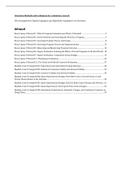
Checklist for Success - If you understand these things, then you are set up well for success!
Highlighted points can be found further down in notes, along with more information.
o The key legal requirements when establishing a business.
o How external professionals help businesses be established.
o How important creating bank accounts, financial control systems and record keeping
strategies is.
o How important choosing the right supplier for the business is and understand the pros and
cons of suppliers that act in a corporately socially responsible way.
o How policies and procedures are essential within a business to ensure they are legally doing
the right thing and create routines within the business.
o How particular technological and global issues affect decisions when establishing a
business, including creating customer databases and contracts with other businesses
overseas.
Notes
Key Legal Requirements:
Register the business name
Register a domain name (if applicable)
Follow the rules in Australia’s Competition and Consumer Act (2010)
Comply with the Australian Consumer Law (ACCC)
Comply with tax rules (income tax and GST)
Have workplace insurance
Comply with work health and safety regulations
Follow local government requirements (such as zoning).
,The Role of the Australian Competition and Consumer Commission (ACCC)
The ACCC enforces the Competition and Consumer Act (2010). This includes:
The Competition Law - preventing anti-competitive practices (e.g. price fixing)
The Consumer Law - protecting consumers from deceptive information
Encouraging Competition - working to ensure all businesses have an equal opportunity
Product Safety - the ACCC investigates possible hazards and recalls unsafe products that
have been sold, along with suggesting safety regulations
Regulating Infrastructure - the ACCC regulates airports, electricity, gas and phone bills to
ensure reasonable pricing
Compliance and enforcement - the ACCC looks into potential breaches of law and
enforces penalties.
Fair Competition
The Competition and Consumer Act (2010)
Anti-competitive practices (these are illegal):
Cartels - when two more businesses who would usually be in competition agree to work
together, maximising profits and creating a monopoly like power
Misuse of market power - the act restricts businesses with more market power from
weakening competition
Exclusive dealing - takes place when one business prohibits another they are trading with
from dealing with other businesses
Resale price maintenance - when the supplier sets the price that the retailer must sell a
product at. This is different to recommended retail prices (RRP)
Mergers and acquisitions:
Merger - when two businesses combine to form one
Acquisition - when one business takes over another (e.g. by buying out all the shares)
The act restricts any merger or acquisition from happening that would minimise
competition.
, Consumer Protection - the role of the ACCC
The Australian Consumer Law
The following are illegal under the Competition and Consumer Act (2010):
Misleading or deceptive conduct - a business must not provide consumers with
misleading information
Unconscionable conduct - behaviour in business transactions that is unjust or
unreasonable and goes against common ethical beliefs
Unfair contract terms - contracts that are harmful to the consumer are not allowed and
contracts must be clear
Bait advertising - advertising goods at a discounted price without a sufficient supply for
customers to buy
False or misleading representations of goods or services offered by the business
Offering gifts or prizes along with goods and services and then not providing them
Pyramid schemes - when a person or business makes money by recruiting new members
instead of providing a legitimate good or service. The people at the top make money by
collecting fees and payments made by those further down.
Establishing Bank Accounts
A separate entity – when a business has its own bank account rather than using the owner’s
one. This makes it easier to keep a record of finances, making tax time easier.
Factors to consider:
Bank fees
Overdraft facilities
Interest rates
Convenience and support (e.g. nearby branches)
Credit card options
Security features .
AOS 1: Legal requirements and financial considerations
Checklist for Success - If you understand these things, then you are set up well for success!
Highlighted points can be found further down in notes, along with more information.
o The key legal requirements when establishing a business.
o How external professionals help businesses be established.
o How important creating bank accounts, financial control systems and record keeping
strategies is.
o How important choosing the right supplier for the business is and understand the pros and
cons of suppliers that act in a corporately socially responsible way.
o How policies and procedures are essential within a business to ensure they are legally doing
the right thing and create routines within the business.
o How particular technological and global issues affect decisions when establishing a
business, including creating customer databases and contracts with other businesses
overseas.
Notes
Key Legal Requirements:
Register the business name
Register a domain name (if applicable)
Follow the rules in Australia’s Competition and Consumer Act (2010)
Comply with the Australian Consumer Law (ACCC)
Comply with tax rules (income tax and GST)
Have workplace insurance
Comply with work health and safety regulations
Follow local government requirements (such as zoning).
,The Role of the Australian Competition and Consumer Commission (ACCC)
The ACCC enforces the Competition and Consumer Act (2010). This includes:
The Competition Law - preventing anti-competitive practices (e.g. price fixing)
The Consumer Law - protecting consumers from deceptive information
Encouraging Competition - working to ensure all businesses have an equal opportunity
Product Safety - the ACCC investigates possible hazards and recalls unsafe products that
have been sold, along with suggesting safety regulations
Regulating Infrastructure - the ACCC regulates airports, electricity, gas and phone bills to
ensure reasonable pricing
Compliance and enforcement - the ACCC looks into potential breaches of law and
enforces penalties.
Fair Competition
The Competition and Consumer Act (2010)
Anti-competitive practices (these are illegal):
Cartels - when two more businesses who would usually be in competition agree to work
together, maximising profits and creating a monopoly like power
Misuse of market power - the act restricts businesses with more market power from
weakening competition
Exclusive dealing - takes place when one business prohibits another they are trading with
from dealing with other businesses
Resale price maintenance - when the supplier sets the price that the retailer must sell a
product at. This is different to recommended retail prices (RRP)
Mergers and acquisitions:
Merger - when two businesses combine to form one
Acquisition - when one business takes over another (e.g. by buying out all the shares)
The act restricts any merger or acquisition from happening that would minimise
competition.
, Consumer Protection - the role of the ACCC
The Australian Consumer Law
The following are illegal under the Competition and Consumer Act (2010):
Misleading or deceptive conduct - a business must not provide consumers with
misleading information
Unconscionable conduct - behaviour in business transactions that is unjust or
unreasonable and goes against common ethical beliefs
Unfair contract terms - contracts that are harmful to the consumer are not allowed and
contracts must be clear
Bait advertising - advertising goods at a discounted price without a sufficient supply for
customers to buy
False or misleading representations of goods or services offered by the business
Offering gifts or prizes along with goods and services and then not providing them
Pyramid schemes - when a person or business makes money by recruiting new members
instead of providing a legitimate good or service. The people at the top make money by
collecting fees and payments made by those further down.
Establishing Bank Accounts
A separate entity – when a business has its own bank account rather than using the owner’s
one. This makes it easier to keep a record of finances, making tax time easier.
Factors to consider:
Bank fees
Overdraft facilities
Interest rates
Convenience and support (e.g. nearby branches)
Credit card options
Security features .