

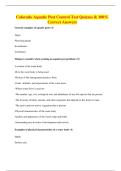
Colorado Aquatic Pest Control Test Quizzes & 100%
Correct Answers
General examples of aquatic pests (4)
Algae
Flowering plants
Invertebrates
Vertebrates
Things to consider when scouting an aquatic pest problem (11)
-Location of the water body
-How the water body is being used
-History of the management practices there
-Goals, attitudes, and expectations of the water users
-Where water flows in and out
-The number, age, size, ecological role, and abundance of any fish species that are present
-The diversity of birds, animals, and other organisms that depend on this body of water
-The native and non-native vegetation that is present
-Physical characteristics of the water body
-Quality and appearance of the waters edge and banks
-Surrounding area in terms of development and activity
Examples of physical characteristics of a water body (4)
Depth
Surface area
,Sedimentation
Shape
Things to note when doing a scouting visit (4)
Water temp and clarity
Pest presence
Pest development and density
Infested areas; note the pest's desired habitat
Two critical abiotic factors that influence insect and plant pests in aquatic environments
Temperature
Time
Three major objectives of aquatic pest prevention
Stop the spread
Eliminate nutrient sources that support the pest
Engineer habitats to be less desirable to the pest
Guidelines to help prevent the spread of aquatic pests (3)
-Monitor and eradicate small, new infestations
-Communicate with neighbors and other applicators about nearby weedy areas, infestation levels,
and control practices
-Make sure boats and other vehicles are cleaned thoroughly to prevent the spread of weeds or
mollusks
, What procedure helps stop the spread of invasives from boats and other recreation
equipment?
The Drain, Clean, and Dry
Drain steps in the drain, clean, and dry procedure (5)
Drain every surface or space that holds water
Eliminate water from your engine
Remove drain plug from boats and put boat on an incline
Drain live wells, bilges, ballast tanks, and transom wells
Empty water from kayaks, canoes, rafts, etc.
Clean steps in the drain, clean, and dry procedure (5)
-Remove all visible plant or animal fragments, along with mud or other debris
-Check your trailer, including the wheel and axel, in and around the boat itself
-Clean and check and dry off all parts and equipment that came into contact with the water
-Empty bait buckets into trash. Do not empty into the lake or reservoir
-Apply potassium chloride over surfaces that came in contact with the water
Dry step in the drain, clean, and dry procedure (1)
Allow everything to dry completely before launching into another water body
Potassium chloride (KCl)
Effective molluscicide that works on both adults and veligers
Apply it as a 200 ppm solution (1 teaspoon into 2 gallons of water)
Not corrosive and is harmless to other aquatic organisms
Correct Answers
General examples of aquatic pests (4)
Algae
Flowering plants
Invertebrates
Vertebrates
Things to consider when scouting an aquatic pest problem (11)
-Location of the water body
-How the water body is being used
-History of the management practices there
-Goals, attitudes, and expectations of the water users
-Where water flows in and out
-The number, age, size, ecological role, and abundance of any fish species that are present
-The diversity of birds, animals, and other organisms that depend on this body of water
-The native and non-native vegetation that is present
-Physical characteristics of the water body
-Quality and appearance of the waters edge and banks
-Surrounding area in terms of development and activity
Examples of physical characteristics of a water body (4)
Depth
Surface area
,Sedimentation
Shape
Things to note when doing a scouting visit (4)
Water temp and clarity
Pest presence
Pest development and density
Infested areas; note the pest's desired habitat
Two critical abiotic factors that influence insect and plant pests in aquatic environments
Temperature
Time
Three major objectives of aquatic pest prevention
Stop the spread
Eliminate nutrient sources that support the pest
Engineer habitats to be less desirable to the pest
Guidelines to help prevent the spread of aquatic pests (3)
-Monitor and eradicate small, new infestations
-Communicate with neighbors and other applicators about nearby weedy areas, infestation levels,
and control practices
-Make sure boats and other vehicles are cleaned thoroughly to prevent the spread of weeds or
mollusks
, What procedure helps stop the spread of invasives from boats and other recreation
equipment?
The Drain, Clean, and Dry
Drain steps in the drain, clean, and dry procedure (5)
Drain every surface or space that holds water
Eliminate water from your engine
Remove drain plug from boats and put boat on an incline
Drain live wells, bilges, ballast tanks, and transom wells
Empty water from kayaks, canoes, rafts, etc.
Clean steps in the drain, clean, and dry procedure (5)
-Remove all visible plant or animal fragments, along with mud or other debris
-Check your trailer, including the wheel and axel, in and around the boat itself
-Clean and check and dry off all parts and equipment that came into contact with the water
-Empty bait buckets into trash. Do not empty into the lake or reservoir
-Apply potassium chloride over surfaces that came in contact with the water
Dry step in the drain, clean, and dry procedure (1)
Allow everything to dry completely before launching into another water body
Potassium chloride (KCl)
Effective molluscicide that works on both adults and veligers
Apply it as a 200 ppm solution (1 teaspoon into 2 gallons of water)
Not corrosive and is harmless to other aquatic organisms


