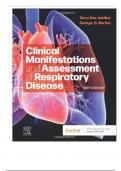
TEST BANK FOR MEDICAL SURGICAL
NURSING 11TH EDITION IGNATAVICIUS
1.
The caregiver is assessing a group of clients. Which clients are at greater risk for hypothermia or
frostbite? (Select all that apply)
A. An older woman with hypertension
B. A young man with a body mass index of 42
C. A young man who has just consumed six martinis
D. An older man who smokes a pack of cigarettes a day
E. A young woman who is anorexic
F. A young woman who is diabetic
✅ Correct Answers: C, D, E, F
💡 Explanation: Clients with poor nutrition, fatigue, and chronic illness are more prone to
hypothermia; those who smoke, drink alcohol, or have impaired circulation are more likely to get
frostbite.
2.
The caregiver is caring for four clients. Which client assessment is most indicative of having
pain?
A. Client stating that he is “anxious”
B. Heart rate of 105 beats/min and restlessness
C. Blood pressure 150/70 mm Hg and sleeping
D. Postoperative client with a neck incision
✅ Correct Answer: B
💡 Explanation: Restlessness and tachycardia are reliable physiologic indicators of acute pain.
3.
When describing client education approaches, the caregiver educator would explain that
informal teaching is an approach that:
A. Follows formalized plans
B. Has standardized content
C. Often occurs one-to-one
D. Addresses group needs
1
,✅ Correct Answer: C
💡 Explanation: Informal teaching is typically individualized and occurs during routine nursing
care interactions.
4.
A client expresses a strong interest in returning to work, family, and hobbies after a stroke.
Which theory type should guide the caregiver’s motivational plan of care?
A. Field
B. Biological
C. Cognitive
D. Sociologic
✅ Correct Answer: C
💡 Explanation: Cognitive theories emphasize attention, relevance, confidence, and satisfaction
(ARCS), promoting learning and motivation.
5.
Which statement made by a caregiver represents the need for further education regarding pain
management in older adult clients?
A. Older adults tend to report pain less often than younger adults
B. Older clients usually have more experience with pain than younger adults
C. Older adults are at greatest risk for undertreated pain
D. Older clients have a different pain mechanism and do not feel it as much
✅ Correct Answer: D
💡 Explanation: Pain perception does not diminish with age; this is a misconception requiring
correction.
6.
The caregiver is working at a first aid booth on a hot day. A spectator’s temp is 104.1°F, pulse
132, respirations 26, and BP 106/66 mm Hg. He stumbles while walking. What is the caregiver’s
priority action?
A. Administer Tylenol 650 mg orally
B. Encourage rest and reassess in 15 minutes
C. Sponge the victim with cool water and remove his shirt
D. Encourage drinking of cool water or sports drink
✅ Correct Answer: C
2
,💡 Explanation: Immediate cooling is essential in heat stroke; physical cooling is more effective
than oral fluids or medication.
7.
A client receiving IV potassium chloride reports that the IV site burns. What is the caregiver’s
first action?
A. Assess for a blood return
B. Notify the physician
C. Document the finding
D. Stop the IV infusion
✅ Correct Answer: D
💡 Explanation: Potassium is a severe tissue irritant; the infusion must be stopped immediately
to prevent tissue damage.
8.
A caregiver is caring for an older adult client living alone. Which economic situation presents the
most serious problem?
A. Social Security as the basis of income
B. Stock market fluctuations
C. Costs of creating a living will
D. Increased provider benefits
✅ Correct Answer: A
💡 Explanation: Fixed incomes limit the ability to meet rising living costs, increasing financial
vulnerability.
9.
Controlling pain is important to promote wellness. Unrelieved pain has been associated with:
A. Prolonged stress response and harmful systemic effects
B. Decreased tumor growth and longevity
C. Large tidal volumes and decreased lung capacity
D. Decreased carbohydrate, protein, and fat destruction
✅ Correct Answer: A
💡 Explanation: Persistent pain prolongs the stress response, causing hormonal and metabolic
imbalances.
3
, 10.
Which intervention in a client with dehydration-induced confusion is most likely to relieve the
confusion?
A. Increasing the IV flow rate to 250 mL/hr
B. Applying oxygen by mask or nasal cannula
C. Placing the client in a high Fowler’s position
D. Measuring intake and output every 4 hours
✅ Correct Answer: B
💡 Explanation: Oxygen improves cerebral perfusion and helps reduce confusion related to
hypoxia.
11.
Which client is at greatest risk for dehydration?
A. Younger adult client on bedrest
B. Older adult client with cognitive impairment
C. Older adult client receiving hypotonic IV fluid
D. Younger adult client receiving hypertonic IV fluid
✅ Correct Answer: B
💡 Explanation: Cognitive impairment prevents individuals from seeking fluids or expressing
thirst.
12.
A caregiver is caring for several clients. Which client should be assessed most carefully for
hyperkalemia?
A. Client with heart failure using a salt substitute
B. Client with type 2 diabetes taking an oral antidiabetic agent
C. Client taking a thiazide diuretic for hypertension
D. Client taking NSAIDs daily
✅ Correct Answer: A
💡 Explanation: Most salt substitutes contain potassium chloride, increasing risk of
hyperkalemia in cardiac clients.
13.
Decreased renal blood flow and reduced glomerular filtration in older adults can lead to which
medication-related risk?
4
NURSING 11TH EDITION IGNATAVICIUS
1.
The caregiver is assessing a group of clients. Which clients are at greater risk for hypothermia or
frostbite? (Select all that apply)
A. An older woman with hypertension
B. A young man with a body mass index of 42
C. A young man who has just consumed six martinis
D. An older man who smokes a pack of cigarettes a day
E. A young woman who is anorexic
F. A young woman who is diabetic
✅ Correct Answers: C, D, E, F
💡 Explanation: Clients with poor nutrition, fatigue, and chronic illness are more prone to
hypothermia; those who smoke, drink alcohol, or have impaired circulation are more likely to get
frostbite.
2.
The caregiver is caring for four clients. Which client assessment is most indicative of having
pain?
A. Client stating that he is “anxious”
B. Heart rate of 105 beats/min and restlessness
C. Blood pressure 150/70 mm Hg and sleeping
D. Postoperative client with a neck incision
✅ Correct Answer: B
💡 Explanation: Restlessness and tachycardia are reliable physiologic indicators of acute pain.
3.
When describing client education approaches, the caregiver educator would explain that
informal teaching is an approach that:
A. Follows formalized plans
B. Has standardized content
C. Often occurs one-to-one
D. Addresses group needs
1
,✅ Correct Answer: C
💡 Explanation: Informal teaching is typically individualized and occurs during routine nursing
care interactions.
4.
A client expresses a strong interest in returning to work, family, and hobbies after a stroke.
Which theory type should guide the caregiver’s motivational plan of care?
A. Field
B. Biological
C. Cognitive
D. Sociologic
✅ Correct Answer: C
💡 Explanation: Cognitive theories emphasize attention, relevance, confidence, and satisfaction
(ARCS), promoting learning and motivation.
5.
Which statement made by a caregiver represents the need for further education regarding pain
management in older adult clients?
A. Older adults tend to report pain less often than younger adults
B. Older clients usually have more experience with pain than younger adults
C. Older adults are at greatest risk for undertreated pain
D. Older clients have a different pain mechanism and do not feel it as much
✅ Correct Answer: D
💡 Explanation: Pain perception does not diminish with age; this is a misconception requiring
correction.
6.
The caregiver is working at a first aid booth on a hot day. A spectator’s temp is 104.1°F, pulse
132, respirations 26, and BP 106/66 mm Hg. He stumbles while walking. What is the caregiver’s
priority action?
A. Administer Tylenol 650 mg orally
B. Encourage rest and reassess in 15 minutes
C. Sponge the victim with cool water and remove his shirt
D. Encourage drinking of cool water or sports drink
✅ Correct Answer: C
2
,💡 Explanation: Immediate cooling is essential in heat stroke; physical cooling is more effective
than oral fluids or medication.
7.
A client receiving IV potassium chloride reports that the IV site burns. What is the caregiver’s
first action?
A. Assess for a blood return
B. Notify the physician
C. Document the finding
D. Stop the IV infusion
✅ Correct Answer: D
💡 Explanation: Potassium is a severe tissue irritant; the infusion must be stopped immediately
to prevent tissue damage.
8.
A caregiver is caring for an older adult client living alone. Which economic situation presents the
most serious problem?
A. Social Security as the basis of income
B. Stock market fluctuations
C. Costs of creating a living will
D. Increased provider benefits
✅ Correct Answer: A
💡 Explanation: Fixed incomes limit the ability to meet rising living costs, increasing financial
vulnerability.
9.
Controlling pain is important to promote wellness. Unrelieved pain has been associated with:
A. Prolonged stress response and harmful systemic effects
B. Decreased tumor growth and longevity
C. Large tidal volumes and decreased lung capacity
D. Decreased carbohydrate, protein, and fat destruction
✅ Correct Answer: A
💡 Explanation: Persistent pain prolongs the stress response, causing hormonal and metabolic
imbalances.
3
, 10.
Which intervention in a client with dehydration-induced confusion is most likely to relieve the
confusion?
A. Increasing the IV flow rate to 250 mL/hr
B. Applying oxygen by mask or nasal cannula
C. Placing the client in a high Fowler’s position
D. Measuring intake and output every 4 hours
✅ Correct Answer: B
💡 Explanation: Oxygen improves cerebral perfusion and helps reduce confusion related to
hypoxia.
11.
Which client is at greatest risk for dehydration?
A. Younger adult client on bedrest
B. Older adult client with cognitive impairment
C. Older adult client receiving hypotonic IV fluid
D. Younger adult client receiving hypertonic IV fluid
✅ Correct Answer: B
💡 Explanation: Cognitive impairment prevents individuals from seeking fluids or expressing
thirst.
12.
A caregiver is caring for several clients. Which client should be assessed most carefully for
hyperkalemia?
A. Client with heart failure using a salt substitute
B. Client with type 2 diabetes taking an oral antidiabetic agent
C. Client taking a thiazide diuretic for hypertension
D. Client taking NSAIDs daily
✅ Correct Answer: A
💡 Explanation: Most salt substitutes contain potassium chloride, increasing risk of
hyperkalemia in cardiac clients.
13.
Decreased renal blood flow and reduced glomerular filtration in older adults can lead to which
medication-related risk?
4