Manager, Organization, and the Team
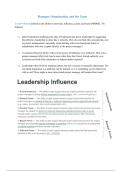
Leadership is defined as the ability to motivate, influence, coach, and learn (PMBOK, 7th
Edition).
1. Gitte Frederiksen challenges the idea of traditional top-down leadership by suggesting
that effective leadership is more like a network. How do you think this concept plays out
in project management, especially when dealing with cross-functional teams or
stakeholders who don’t report directly to the project manager?
2. A common thread in all the videos is the power of influence over authority. How can a
project manager effectively lead a team when they don’t have formal authority over
everyone involved (like contractors or subject matter experts)?
3. Leadership often involves inspiring others, but not everyone is naturally charismatic. Do
you think inspiration is a skill that can be learned, or is it something you're either born
with or not? How might a more introverted project manager still inspire their team?
, Important Skills & Competencies for PM
1. People skills
2. Leadership
3. Listening
4. Integrity, ethical behavior, consistent
5. Strong at building trust
6. Verbal communication
7. Strong at building teams
8. Conflict resolution, conflict management
9. Critical thinking, problem solving
10.Understands, balances priorities
★ Environmental Knowledge
★ PMBOK
★ Soft Skills
★ Standards
★ Application Knowledge
The Project Manager’s Roles
1. Facilitator
- Facilitator vs. Supervisor: Must ensure that those working on project have the
appropriate knowledge, resources, and time to accomplish their responsibilities.
- Systems Approach: Must understand how everything impacts the overall project.
2. Communicator: Must communicate effectively with the various stakeholders of the
project.
Leadership Styles:
● Directing
● Facilitating
● Coaching
● Supporting
● Autocratic
● Consensus
Most successful project managers are the ones that can adapt their style based on the
given situation.
, Communication Path for a Project Manager
PM’s Project Responsibilities
● Acquire resources
● Fight fires/obstacles
● Leadership (EQ)
● Negotiation and Conflict Resolution
Project Stakeholder Management includes the processes required to identify the
people, groups, or organizations that could impact or be impacted by the project.
To analyze stakeholder expectations and their impact on the project, and to develop appropriate
management strategies for effectively engaging stakeholders in project decisions and execution.
Not a Zero Sum Game
● PMs need to understand how to manage competing objectives of multiple stakeholders.
○ Their responsibility to look for synergies across the stakeholder base.
Identifying and Analyzing Stakeholders is a key component of any project.
- Stakeholder Register
- Issues Log
Best Practices…
- Identify ALL key stakeholders
- Be clear from the start
- Explain the expectations
- Develop a contingency plan
- Avoid surprises
Leadership is defined as the ability to motivate, influence, coach, and learn (PMBOK, 7th
Edition).
1. Gitte Frederiksen challenges the idea of traditional top-down leadership by suggesting
that effective leadership is more like a network. How do you think this concept plays out
in project management, especially when dealing with cross-functional teams or
stakeholders who don’t report directly to the project manager?
2. A common thread in all the videos is the power of influence over authority. How can a
project manager effectively lead a team when they don’t have formal authority over
everyone involved (like contractors or subject matter experts)?
3. Leadership often involves inspiring others, but not everyone is naturally charismatic. Do
you think inspiration is a skill that can be learned, or is it something you're either born
with or not? How might a more introverted project manager still inspire their team?
, Important Skills & Competencies for PM
1. People skills
2. Leadership
3. Listening
4. Integrity, ethical behavior, consistent
5. Strong at building trust
6. Verbal communication
7. Strong at building teams
8. Conflict resolution, conflict management
9. Critical thinking, problem solving
10.Understands, balances priorities
★ Environmental Knowledge
★ PMBOK
★ Soft Skills
★ Standards
★ Application Knowledge
The Project Manager’s Roles
1. Facilitator
- Facilitator vs. Supervisor: Must ensure that those working on project have the
appropriate knowledge, resources, and time to accomplish their responsibilities.
- Systems Approach: Must understand how everything impacts the overall project.
2. Communicator: Must communicate effectively with the various stakeholders of the
project.
Leadership Styles:
● Directing
● Facilitating
● Coaching
● Supporting
● Autocratic
● Consensus
Most successful project managers are the ones that can adapt their style based on the
given situation.
, Communication Path for a Project Manager
PM’s Project Responsibilities
● Acquire resources
● Fight fires/obstacles
● Leadership (EQ)
● Negotiation and Conflict Resolution
Project Stakeholder Management includes the processes required to identify the
people, groups, or organizations that could impact or be impacted by the project.
To analyze stakeholder expectations and their impact on the project, and to develop appropriate
management strategies for effectively engaging stakeholders in project decisions and execution.
Not a Zero Sum Game
● PMs need to understand how to manage competing objectives of multiple stakeholders.
○ Their responsibility to look for synergies across the stakeholder base.
Identifying and Analyzing Stakeholders is a key component of any project.
- Stakeholder Register
- Issues Log
Best Practices…
- Identify ALL key stakeholders
- Be clear from the start
- Explain the expectations
- Develop a contingency plan
- Avoid surprises