AQA CHEMISTRY PAPER 2 EXAM
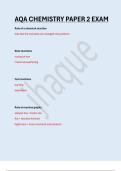
Rate of a chemical reaction
how fast the reactants are changed into products
Slow reactions
rusting of iron
chemical weathering
Fast reactions
burning
explosions
Rate of reaction graphs
steeper line = faster rate
flat = reaction finished
higher line = more reactants and products
,Collision theory in rate of reaction
1. collision frequency of reacting particles
more collisions = faster rate
2. energy transferred during a collision
particles need to collide with enough energy to be successful
Factors affecting rate of reaction
1. temperature
particles have more energy, collide more frequently
2. concentration or pressure
more particles in an area = more frequent collisions
3. surface area
smaller pieces = more area for collisions to happen on
,Catalyst
a substance that speeds up the rate of reaction without being used up itself
Catalyst's affect on rate of reaction
speed it up by decreasing activation energy
do this by creating an alternative reaction pathway with lower activation energy
e.g. enzyme
Rate of reaction equation
amount of reactant used up or amount of product formed / time
Precipitate
a solid formed in a reaction
Precipitate and colour change showing rate of reaction
can observe how long it takes for a solution to lose or gain colour
can observe how long it takes a solution to become cloudy
, Change in mass showing rate of reaction
1. put reaction on scale
2. is a gas is produced, the mass will decrease
3. the quicker it decreases, the faster the reaction
Volume of gas showing rate of reaction
gas syringe to measure vol of gas being produced
more gas given off in one time interval = faster rate
Finding reaction rates from graphs
1. calculating mean rate
overall change in y axis / total time taken
2. calculating rate at a point
draw a tangent at the point and find the gradient
Reversible reaction
a+b↔c+d
Rate of reversible reactions
Rate of a chemical reaction
how fast the reactants are changed into products
Slow reactions
rusting of iron
chemical weathering
Fast reactions
burning
explosions
Rate of reaction graphs
steeper line = faster rate
flat = reaction finished
higher line = more reactants and products
,Collision theory in rate of reaction
1. collision frequency of reacting particles
more collisions = faster rate
2. energy transferred during a collision
particles need to collide with enough energy to be successful
Factors affecting rate of reaction
1. temperature
particles have more energy, collide more frequently
2. concentration or pressure
more particles in an area = more frequent collisions
3. surface area
smaller pieces = more area for collisions to happen on
,Catalyst
a substance that speeds up the rate of reaction without being used up itself
Catalyst's affect on rate of reaction
speed it up by decreasing activation energy
do this by creating an alternative reaction pathway with lower activation energy
e.g. enzyme
Rate of reaction equation
amount of reactant used up or amount of product formed / time
Precipitate
a solid formed in a reaction
Precipitate and colour change showing rate of reaction
can observe how long it takes for a solution to lose or gain colour
can observe how long it takes a solution to become cloudy
, Change in mass showing rate of reaction
1. put reaction on scale
2. is a gas is produced, the mass will decrease
3. the quicker it decreases, the faster the reaction
Volume of gas showing rate of reaction
gas syringe to measure vol of gas being produced
more gas given off in one time interval = faster rate
Finding reaction rates from graphs
1. calculating mean rate
overall change in y axis / total time taken
2. calculating rate at a point
draw a tangent at the point and find the gradient
Reversible reaction
a+b↔c+d
Rate of reversible reactions